



What the hanger has to hold
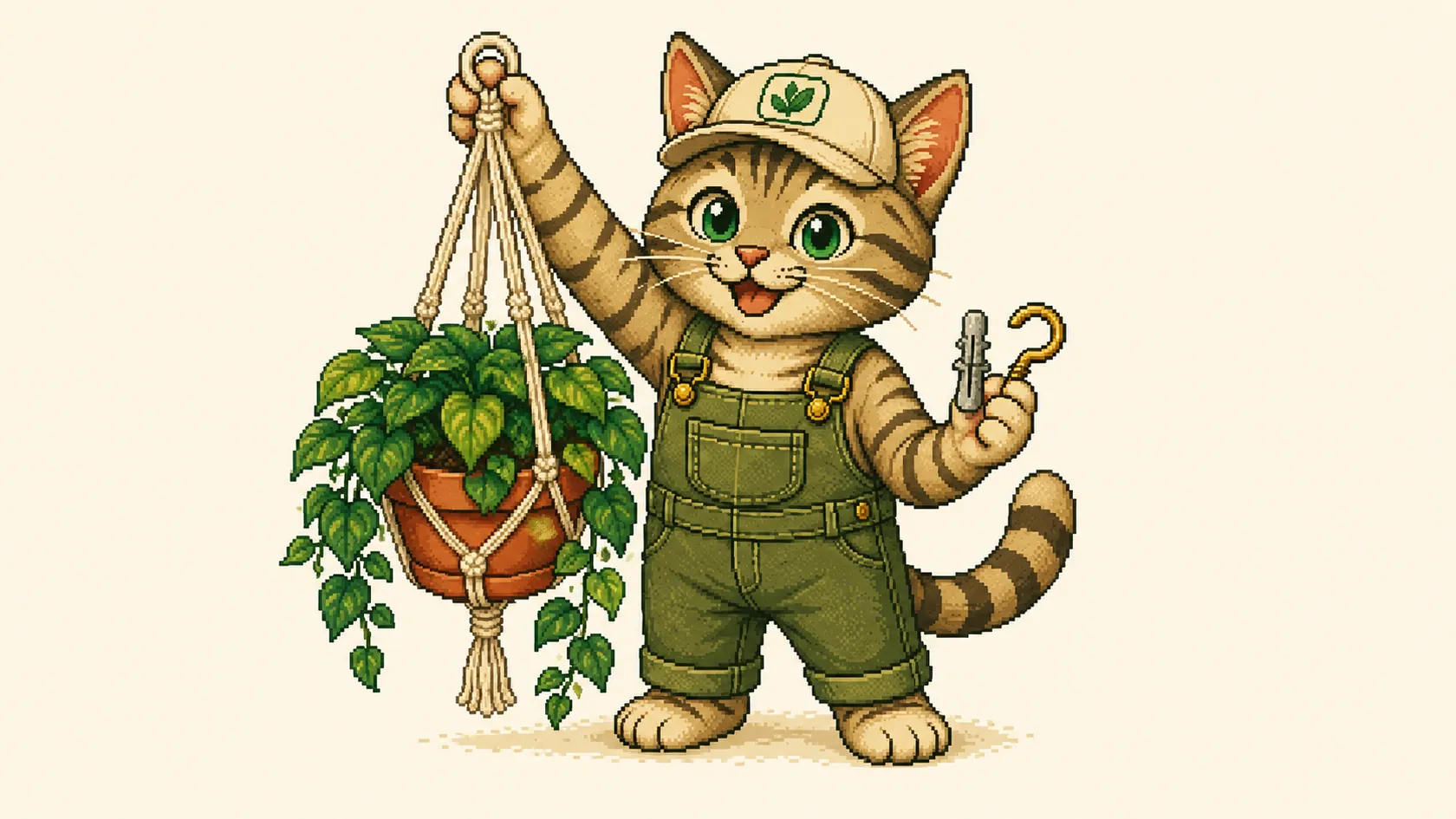
Water the plant, let it drain, and lift the pot before you buy anything. That weight in your hands is what the hook has to hold every time you water, and a large pot of wet mix is much heavier than the same pot dry.
The weak point is almost never the cotton cord. It is what the hook is screwed into. A hook driven into plaster or drywall alone pulls out, so it belongs in a joist or in an anchor rated for the load.
A ceiling hook takes the weight straight down, which is what it is built for. A hook screwed into the side of a shelf or a door frame takes it at an angle and works loose over time.
Give the hanger a firm tug once it is up, before the plant goes in it. Better to find a loose fixing with your hand than with a wet pot.
Matching the hanger to the pot
Measure the pot across the middle and at the base. The cradle of the hanger holds the widest part, and a pot that tapers sharply toward the bottom can slip through a wide-set net.
A pot with a rim sits more securely than a smooth cylinder, because the knots catch under the lip.
Keep the drainage hole. The simplest setup leaves the plant in a plastic grow pot with holes and puts a solid outer pot or a deep saucer around it inside the cradle, so water has somewhere to go and the floor stays dry.
Hang the empty hanger first and see where the pot will sit. Cords that are too long put the plant at head height in a doorway, and shortening the loop at the top is easier than remaking the knots.
Where to hang it
Light gets weaker fast as you move away from the window, and a hanger often ends up further into the room than a windowsill. A plant that trails well in a bright spot stretches and goes bare near the ceiling in a dim corner.
Warm air collects at the top of a room, so a hanging pot above a radiator dries out faster than the same pot on the floor.
Watch the traffic. A hanger over a walkway, a door swing, or a dining table gets knocked, and the leaves get pulled every time someone passes.
Think about how you will reach it. If you need a stool every time, watering slips, and the plant pays for it.
Watering a plant that hangs
The easiest routine is to take the pot down, water it over the sink until it runs out of the bottom, let it drain, and hang it back up.
If you would rather leave it up, use a can with a long narrow spout and water slowly in several rounds, with a deep saucer inside the cradle to catch what comes through. Tip that saucer out afterward, because a hanging pot standing in water rots at the roots like any other.
Hanging pots dry faster than pots at floor level, so check by feel rather than by the day of the week. Feel the soil an inch or two down, and lift the pot to compare the weight with a freshly watered one.
Trailing stems hide the soil. Push the foliage aside and check the mix itself, not the top of the leaf pile.

Plants that suit a hanger
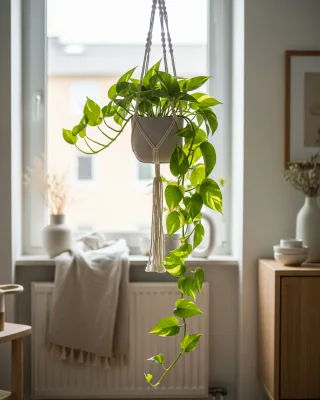
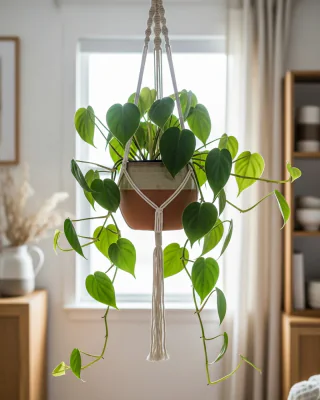
Pothos and heartleaf philodendron are the reliable ones. They trail for a long time, tolerate a spot away from the window, and recover from a missed week.
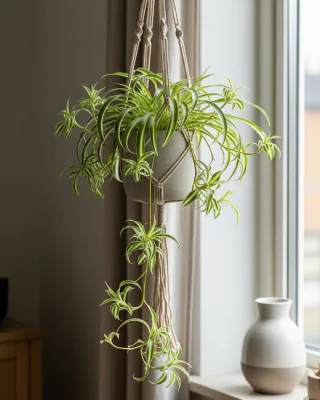
Spider plant sends its plantlets out on long stems, which look best hanging and give you cuttings at the same time.
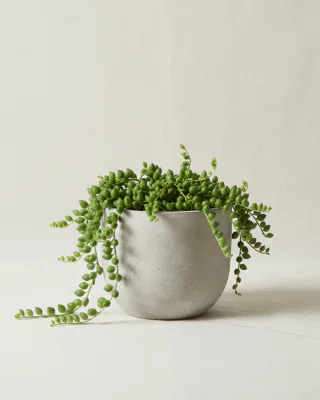
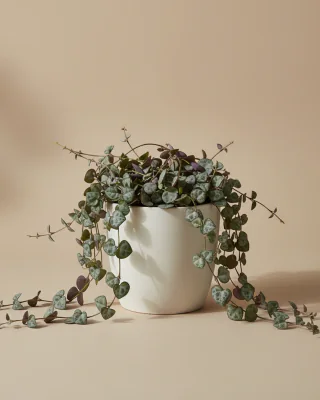
String of pearls and string of hearts want a bright position and a mix that dries out quickly. In a dim corner they stretch and go thin.
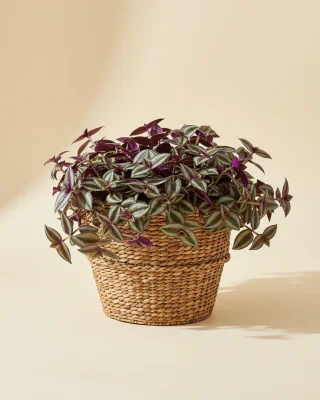
Inch plant grows fast and colors up in bright light, and it stays full if you cut the long stems back now and then.
A wax plant hangs well and flowers only once it has settled, so leave it where it is rather than moving it around.
Keeping a hanging plant in shape
Turn the pot a quarter turn every couple of weeks. A hanging plant gets its light from one side and goes lopsided otherwise.
Check the undersides from below, which is the one advantage of a plant over your head. Pests are found there long before they show on top.
Cut back long bare stems above a leaf node in the growing season. The plant branches below the cut, and the pieces you cut off root in a glass of water.
Look over the cord and the hook a few times a year. Cotton frays where it rubs on the pot rim, and a hook loosens slowly enough that you only notice when it lets go.

Related plants
Keep reading
Common questions
How much weight can a macrame plant hanger hold?
The cord is rarely the limit. The fixing is. Weigh the pot just after watering and choose a hook and anchor rated above that weight, fixed into a joist rather than into plaster alone.
How do you water a plant in a macrame hanger?
Take it down and water it over the sink until water runs out of the bottom, then let it drain and hang it back. If it stays up, water slowly with a long-spouted can into a deep saucer inside the cradle and tip that saucer out afterward.
Which plants are best for macrame hangers?
Pothos, heartleaf philodendron, spider plant, and inch plant trail well and forgive an irregular routine. String of pearls and string of hearts suit a hanger too, but only in a bright spot.
Can you hang a pot with no drainage hole?
It works only if you water in small measured amounts, and there is nowhere for excess water to go. The safer version is a grow pot with holes inside a solid outer pot, so you can tip the excess out.
Do hanging plants dry out faster?
Usually yes, because warm air collects near the ceiling and the pot is exposed on all sides. Check the soil by feel and by the weight of the pot rather than keeping to the schedule you used on the shelf.
How do you stop a hanging plant from going bald on one side?
Turn it a quarter turn every couple of weeks so every side gets its share of light, and cut long bare stems back above a leaf node during the growing season. New shoots then come from the nodes below the cut.
Last reviewed: 2026-09-07