



Hanging plants for darker spots
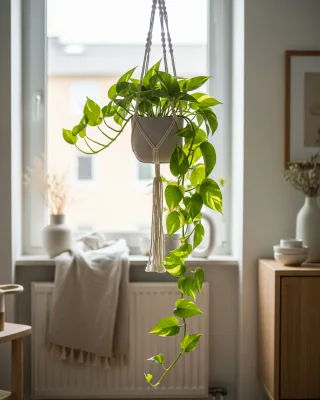
Golden pothos asks the least of all of them. It trails for yards, forgives dryness and keeps growing away from the window, where the pale markings come in fainter.
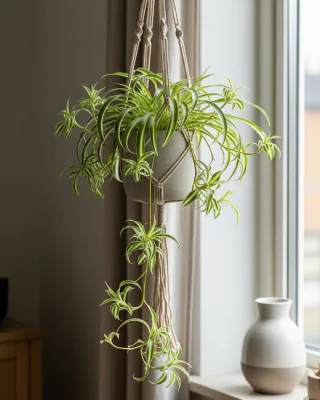
Spider plant hangs its plantlets on long stems out of the pot and fills a basket quickly. It answers hard water with brown leaf tips.
Heartleaf philodendron makes soft, heart-shaped leaves on thin stems and stays full even in moderate light. It takes a root ball that dries out in between.
Baby rubber plant grows compactly and spills only slightly over the rim, which suits a shelf rather than a high basket. Its thick leaves store water, so the pot stays heavy for a long time.
Hanging plants for bright windows
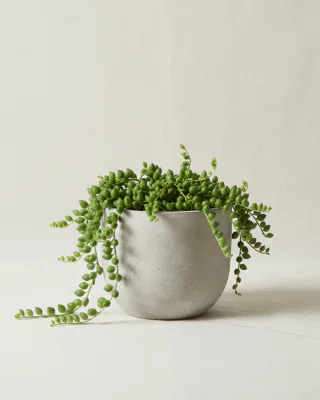
String of pearls makes chains of round leaves and needs plenty of light. It stores water in those beads and rots from the base if watered too often.
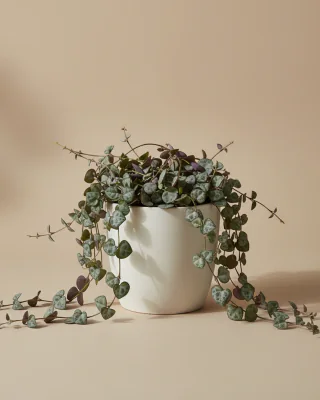
String of hearts drops thread-thin stems with heart-shaped, silver-marked leaves. It draws water from small tubers in the mix and goes a long time without watering.
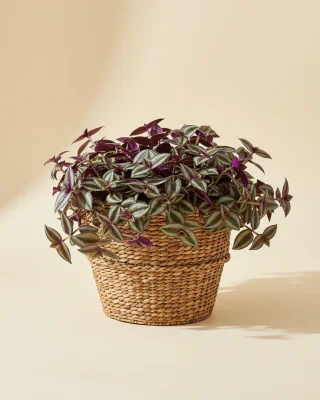
Inch plant grows fast and only colors up strongly in good light. It goes bare from the base and lives on being cut back and rerooted regularly.
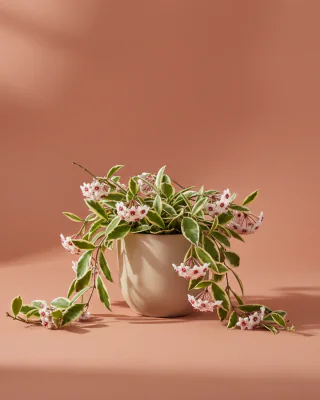
Wax plant has firm, leathery leaves and flowers on older stems. Do not cut the bare stalks off after flowering, because next year’s flowers sit on them.
Donkey’s tail builds thick, heavy strings of fleshy leaves. The leaves drop at the slightest touch, so it hangs best where nobody walks past it.
Hanging it safely
Weigh the pot watered before you choose the hook. Mix, water and cachepot together add up to several pounds on a medium basket.
A concrete ceiling takes a matching anchor. Drywall takes a toggle anchor, or better, a fixing straight into the framing behind it. A hook sitting in the drywall alone pulls out over time.
In a rental with no drilling, a tension rod in the window frame, a shelf bracket or a macrame hanger on an existing curtain rod all work, as long as that rod’s own fixing carries the weight.
Hang the plant so you can reach it standing up. Anything you can only check from a ladder rarely gets watered and even more rarely gets checked for pests.
- Use the watered weight as the measure
- In drywall use a toggle anchor or fix into the framing
- Hang it within reach, or it will not get checked
- A cachepot with no hole needs an inner pot you can lift out

Watering a plant that hangs above you
The simplest way is to lift the inner pot out, water it through in the sink, let it drain and hang it back. That takes a few minutes and you see the leaf undersides while you do it.
If the plant stays up, pour small amounts one after another so nothing runs over the rim. A can with a long, narrow spout makes that easier.
Baskets with a built-in drip tray are convenient, but you cannot see how much is standing in there. Tip the rest out after twenty minutes, or the roots sit in water permanently.
Check hanging plants more often than the ones at floor level. Warm air collects under the ceiling, and a small basket dries through in a few days up there.

What to do about bare, thin vines
Long stems with leaves far apart are a light signal. Hang the plant closer to the window before you reach for the scissors.
Cut vines that are too long or bare back in spring, above a leaf node. The plant branches below the cut and fills in again at the top.
The pieces you cut off are ready-made cuttings. Golden pothos, heartleaf philodendron and inch plant root in a glass of water within a few weeks, and then go back into the same basket three or four at a time.
Turn the basket regularly so every side gets light. Otherwise the half facing away from the window stays thin.

Where a hanging plant works in a room
Beside a window is the best place. The plant gets light from the side rather than from above, and the vines hang free without touching the glass.
Above a radiator it gets too dry and too warm in winter. That is exactly where spider mites start, so sensitive species go on another wall.
Above a seat or a dining table the plant drips when you water it and loses leaves over time. Hang it there only if you can take it down to water.
On a shelf, a trailing plant already works from the second level up. That is the easiest version, because you only lift the pot out to water it and set it back.
In a bathroom with a window many species do well, because the air is regularly more humid. With no daylight a bathroom is still a poor spot.
Checking it from below
You almost always see a hanging plant from underneath, and that is exactly where pests sit. Pull a few vines down while you water and look at the leaf undersides and the leaf axils.
Dried leaves inside the basket do not fall out, they stay caught between the stems. Take them away, because damp collects underneath them.
Check the fixing twice a year. The cords of a macrame hanger wear through over time, and a hook can work loose without showing it from below.

Related plants
Keep reading
Common questions
What are the best plants for indoor hanging baskets?
Golden pothos, heartleaf philodendron and spider plant handle irregular watering and moderate light. They grow fast enough that a basket looks full within a season. For a very bright spot, string of hearts asks the least.
Which hanging plants need low light?
Golden pothos and heartleaf philodendron hold up several yards from a window. Variegated varieties lose their markings there and turn plain green. Neither grows with no daylight at all.
How do I hang a heavy plant from the ceiling?
Go by the weight when it is watered. A concrete ceiling holds with a matching anchor, and drywall needs a toggle anchor or a fixing into the framing behind it. A hook in the drywall alone pulls out over time.
How do I water hanging plants without making a mess?
Lift the inner pot out, water it through in the sink and hang it back once it has drained. If that is not possible, pour several small amounts with a narrow-spouted can and empty the drip tray after twenty minutes.
Why are my hanging plant’s vines bare at the top?
Usually light is short and the plant is putting its energy into length instead of leaves. Hang it brighter and cut the bare stems back in spring above a leaf node. The cuttings root and go back into the same pot.
How often should I water hanging houseplants?
More often than the same species at floor level, because it is warmer under the ceiling and the pots are small. Still decide by feeling an inch or two down. Succulent trailers such as string of pearls and donkey’s tail are the exception and want to dry out almost completely.
Last reviewed: 2026-09-12