



How to prune a Monstera
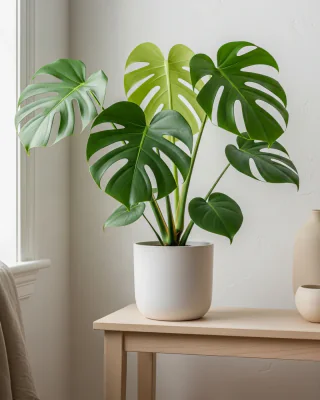
Monstera deliciosa
Quick answer
Before pruning, wear gloves, avoid sap on skin and eyes, wash your hands, and keep cut material away from pets. For an oversized Monstera deliciosa, shorten the long stem at a node or near a leaf bud. Pruning controls size and does not guarantee branching.
 Not sure it’s this plant?Check yours with a photo, free
Toxic to pets
How to prune a Monstera
- 01
Choose what to remove
Before pruning, wear gloves, avoid sap on skin and eyes, wash your hands, and keep cut material away from pets. Prune the long stem or leaf-bearing growth that is outgrowing its support. Make shaping cuts at a node or near a leaf bud, to bring an oversized vine back under control.
Pruning controls size and shape. It will not force new branching, and it will not make the plant a naturally smaller one.
- 02
Prune at the right time
A simple trim can be made at any time, but shaping is best done in spring or summer while the plant is growing. There is no single best month indoors.
- 03
Make one clean cut
For a length or shape cut, cut at a node or near a leaf bud. Follow with stable support and warm indoor conditions with bright, indirect light. A cut end may be used as a stem cutting.
- 04
When pruning will not help
Monstera deliciosa can become very large, so a cut may be a size decision rather than symptom treatment. Keep the advice on this species and do not transfer it to Monstera adansonii or an unidentified variegated plant.
- 05
Care for the plant after pruning
After pruning, keep the remaining plant supported in a stable, warm position with bright, indirect light and continue container care with a mix that stays evenly damp but well drained. Reassess growth before making repeated cuts.
All Monstera guides
Keep reading
Sources3 references
- Royal Botanic Gardens, Kew: Plants of the World OnlineTaxonomy · accepted name · classification
- North Carolina State University Extension Gardener Plant ToolboxModerate brightness · warm temperature · humidity · top-quarter to one-third dry-down · support · spring repotting · indoor size
- Royal Horticultural SocietyPartial shade · moist but well-drained · H1B · peat-free loam compost · bright indirect light · monthly feeding · pests · Indoor temperature · humidity · indirect light · arum safety context · size and cultivar distinctions
Last reviewed: