


Hyacinth drooping: what to check
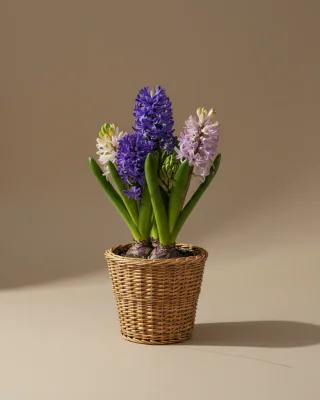
Hyacinthus orientalis
Quick answer
First separate a flower spike bending under its own weight from leaves or the whole hyacinth turning limp. Support a top-heavy spike. Check the potting mix and drainage before watering a limp plant.
 Not sure it’s this plant?Check yours with a photo, free
Toxic to pets
Is the plant leaning or limp?
First record whether the flower head or stem is bending under its weight, or whether leaves or the whole plant are limp. A bending spike alone is a different sign from a limp plant.
Check flower stage, support, potting mix or water level, drainage, bulb firmness, light, temperature, and whether the bulb is soil-forced, water-forced, or outdoors.
Possible causes and next checks
A heavy flower head can flop as it develops. Possible contributors to limp leaves or the whole plant include dry or waterlogged media, bulb injury, insufficient light, cold, or stress from indoor forcing.
Support a top-heavy flower head with a small cane beside the bulb without piercing the bulb. For limp foliage, check the potting mix, water level, and drainage. Keep a soil-grown container out of standing water and correct only the setting you observed.
What to watch next
After supporting the spike or correcting the observed water or drainage problem, watch stem firmness, leaf progression, bulb condition, and new growth. Continued limpness or soft tissue sends you back to the same checks. Recovery time varies.
What drooping cannot tell you
Drooping can reflect spike weight, leaf dieback, water, bulb condition, light, temperature, or forcing method, so posture alone does not tell you which change is needed. Match care to the setting: a soil pot, water glass, or outdoor bulb.
All hyacinth guides
Keep reading
Related plants
Last reviewed: