



How to prune lucky bamboo
Dracaena sanderiana
Quick answer
The green top and side shoots root in water and make new plants. A stalk that has turned fully yellow comes out, the New York Botanical Garden says.
- Pet safetyToxic to cats and dogs




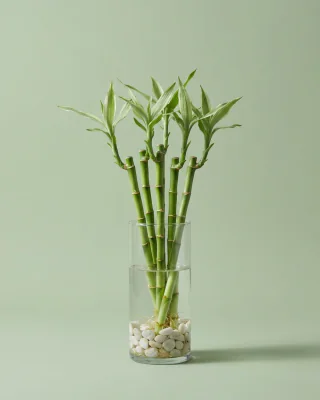
How to prune lucky bamboo
- 1
What you cut when pruning lucky bamboo
Lucky bamboo is not a bamboo. NC State describes the thick, green, fleshy stem that looks like bamboo, and a slow growth rate.
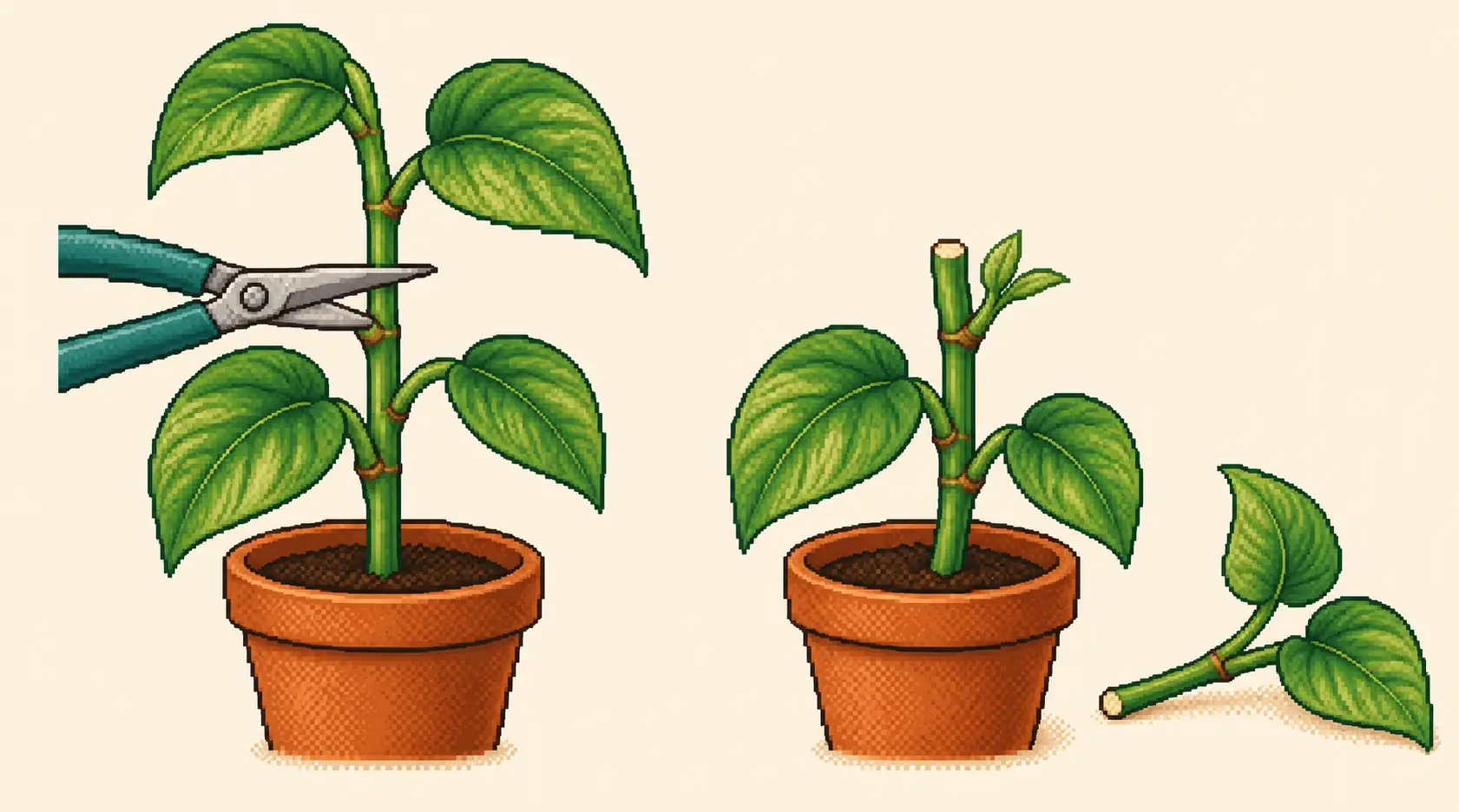
More about this
To prune lucky bamboo that has grown too tall or untidy, cut the stalks back to the length they had when first potted, as University of Arkansas Extension advises.
University of Arkansas Extension says the stalks are pieces of Dracaena sanderiana, a plant from Cameroon that grows only about 3 feet (90 cm) tall with finger-thick stems.
NC State notes that the stalks are often braided or trained into spirals, and leafy side shoots grow from them. So pruning means cutting a whole stalk, its top or those side shoots.
- 2
How to prune lucky bamboo that grew too tall
If your lucky bamboo gets leggy or tattered, University of Arkansas Extension suggests cutting the stalks back to the length they had when they were first potted.
More about this
If the green top still looks vigorous, the New York Botanical Garden (NYBG) cuts it off to grow a new plant. Take the top 4 inches (10 cm) with at least one node, one of the rings on the stalk, and leave only a few leaves at the top. NYBG says this works best in spring or late summer.
- 3
Cutting and rooting side shoots
New roots usually form within two to three weeks.
More about this
Clemson Extension describes how to turn a side shoot into a new plant: cut a young shoot off the main stalk, remove the lowest leaves and stand it in water.
NYBG roots the cut top in distilled water. Clemson fills the water high enough to cover the roots and at least 1 inch (2.5 cm) of the stem and changes it every week. Pebbles at the bottom give the roots something to grip and add weight so the container does not tip, NC State says.
- 4
Yellow stalks and yellow leaves
If only one stalk in a container turns yellow, NYBG removes it and changes the water. Too much fertilizer can burn the roots and turn the plant yellow from the bottom up, so change the water and stop feeding.
More about this
In soil, NC State says too much water causes yellow leaves and rotting stems.
UF/IFAS says yellow leaves are often the first sign of stress, and common causes are too much sun and alkaline tap water. Keep lucky bamboo in bright light without direct sun and not right in a window. Clemson says the leaves turn brown in direct sun.
- 5
The right water for lucky bamboo
NC State recommends chlorine-free water, and NYBG distilled water or rainwater.
More about this
Brown leaf tips come from too much salt or fluoride in the water, University of Arkansas Extension says, and rainwater prevents it.
If you only have tap water, UF/IFAS lets it stand uncovered for one to two days so some of the chlorine and fluorine escape. UF/IFAS says filtered water is the better choice.
- 6
Feeding in water and in soil
In soil, Clemson feeds once a month during the growing season.
More about this
University of Arkansas Extension says lucky bamboo in water alone slowly weakens, so it needs nutrients now and then. Clemson feeds plants in water every other month with a liquid houseplant fertilizer at a quarter of the label rate.
NYBG also uses a quarter strength at most and feeds no more than once a month. Too much fertilizer can burn the roots, NYBG warns.
- 7
Toxic to cats and dogs
The ASPCA lists dracaenas as toxic to cats and dogs. They contain saponins, and signs include vomiting (occasionally with blood), depression, anorexia, hypersalivation and dilated pupils in cats.
More about this
NC State also lists lucky bamboo as toxic to cats and dogs if eaten.
NC State and Clemson say the sap can irritate skin. Wear gloves when you prune, and clear away cut shoots and leaves right away, before a pet chews on them.


Common questions
Can you cut lucky bamboo back?
Yes. If it gets too tall or untidy, University of Arkansas Extension cuts the stalks back to the length they had when first potted.
What do I do with the top I cut off?
Root it in water. NYBG takes the top 4 inches (10 cm) with at least one node, leaves only a few leaves and stands it in distilled water.
How long does a lucky bamboo cutting take to root?
Clemson says a side shoot in water usually forms new roots within two to three weeks.
Why is my lucky bamboo turning yellow?
Often too much sun, too much fertilizer or unsuitable tap water, and in soil too much water. Remove a single yellow stalk and change the water.
Is lucky bamboo toxic to cats?
Yes. The ASPCA lists dracaenas as toxic to cats and dogs, and NC State lists lucky bamboo as toxic too. Keep the plant and clippings away from pets.
All lucky bamboo guides
Keep reading
Sources6 references
- NC State Extension Plant Toolbox: Dracaena sanderiana
- Clemson Cooperative Extension HGIC: How to grow and care for lucky bamboo
- New York Botanical Garden Plant Information: How can I save my lucky bamboo plant that is yellowing?
- University of Arkansas Cooperative Extension: Plant of the week, lucky bamboo (Gerald Klingaman)
- UF/IFAS Extension Nassau County: The leaves on my lucky bamboo are turning yellow
- ASPCA Animal Poison Control: Dracaena
- How we check our plant advice
How we check our plant advice → · Last reviewed: