


Aloe vera vs agave

Aloe vera has fleshy, gel-filled leaves. Agave has tougher, fibrous leaves. Parry’s agave has a sharp tip, and its rosette dies after flowering.
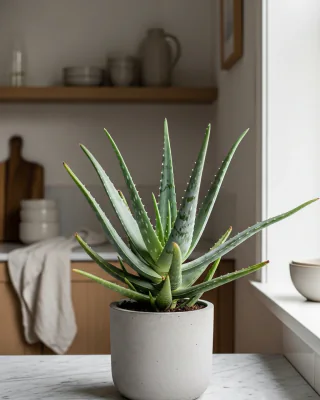
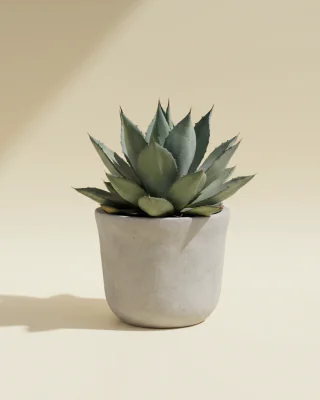
Side by side
| Aloe vera | Parry’s agave | |
|---|---|---|
| Plants compared | Aloe vera | Agave parryi |
| Leaf texture | Fleshy and gel-filled | Tough and fibrous |
| Leaf tips | Tapering leaves with small teeth along the edges | A prominent dark spine at each leaf tip |
| After flowering | The plant can keep growing | The flowering rosette dies, leaving offsets |
| Soil | Free-draining succulent mix | Well-drained sandy or rocky mix |
| Light | Bright / direct light | Full sun |
| Watering | When the soil has dried out completely | Allow the soil to dry completely between waterings. |
| Pet safety | Toxic to cats and dogs | |
Which should you choose?
Aloe vera
Choose aloe vera for fleshy green rosettes that produce offsets. Give it bright light and free-draining soil. Keep the plant away from pets.
Parry’s agave
Choose Parry’s agave for a firm, gray-green rosette and strong leaf shape. Leave room around the sharp tips. It needs strong light and soil that dries between waterings.
Check the plant label before choosing care. Similar common names can refer to different species.
More plant comparisons
 Pothos vs Heartleaf Philodendron
 Monstera vs Tree Philodendron
 Snake Plant vs ZZ Plant
 Calathea vs Prayer Plant (Maranta)
 Aloe Vera vs Jade Plant
 Cactus vs Succulent
 Alocasia vs Colocasia
 Philodendron Brasil vs pothos
 Monstera deliciosa vs Monstera adansonii
 Bird of paradise vs banana plant
 Peace lily vs anthurium
Common questions
Is agave a type of aloe vera?
No. Aloe and Agave are different genera. Their rosettes can look similar, but aloe leaves are softer and gel-filled, while agave leaves are tougher and fibrous. This comparison uses Agave parryi, not every agave species.
Does agave die after flowering?
The flowering rosette of Agave parryi dies after seed set. Its offsets can continue growing. Aloe vera does not have the same flowering cycle.
Are aloe vera and agave pet-safe?
Aloe vera is toxic to cats and dogs. Agave parryi is toxic to cats and dogs. Keep both out of reach. Agave’s sharp leaf tips are also a physical hazard.
Sources5 references
Last reviewed: