



Norfolk pine fertilizer
Araucaria heterophylla
Quick answer
Do not feed in winter. The New York Botanical Garden warns that too many feedings make the tree weak.
- Pet safetyPet-safe (non-toxic)



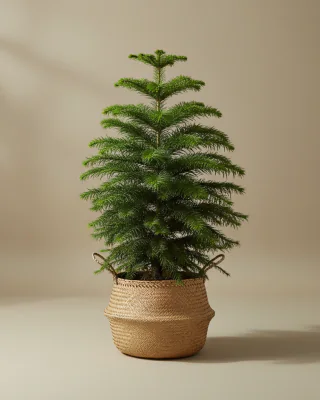
Norfolk pine fertilizer
- 1
Best fertilizer for a Norfolk Island pine
The RHS uses a balanced fertilizer.
More about this
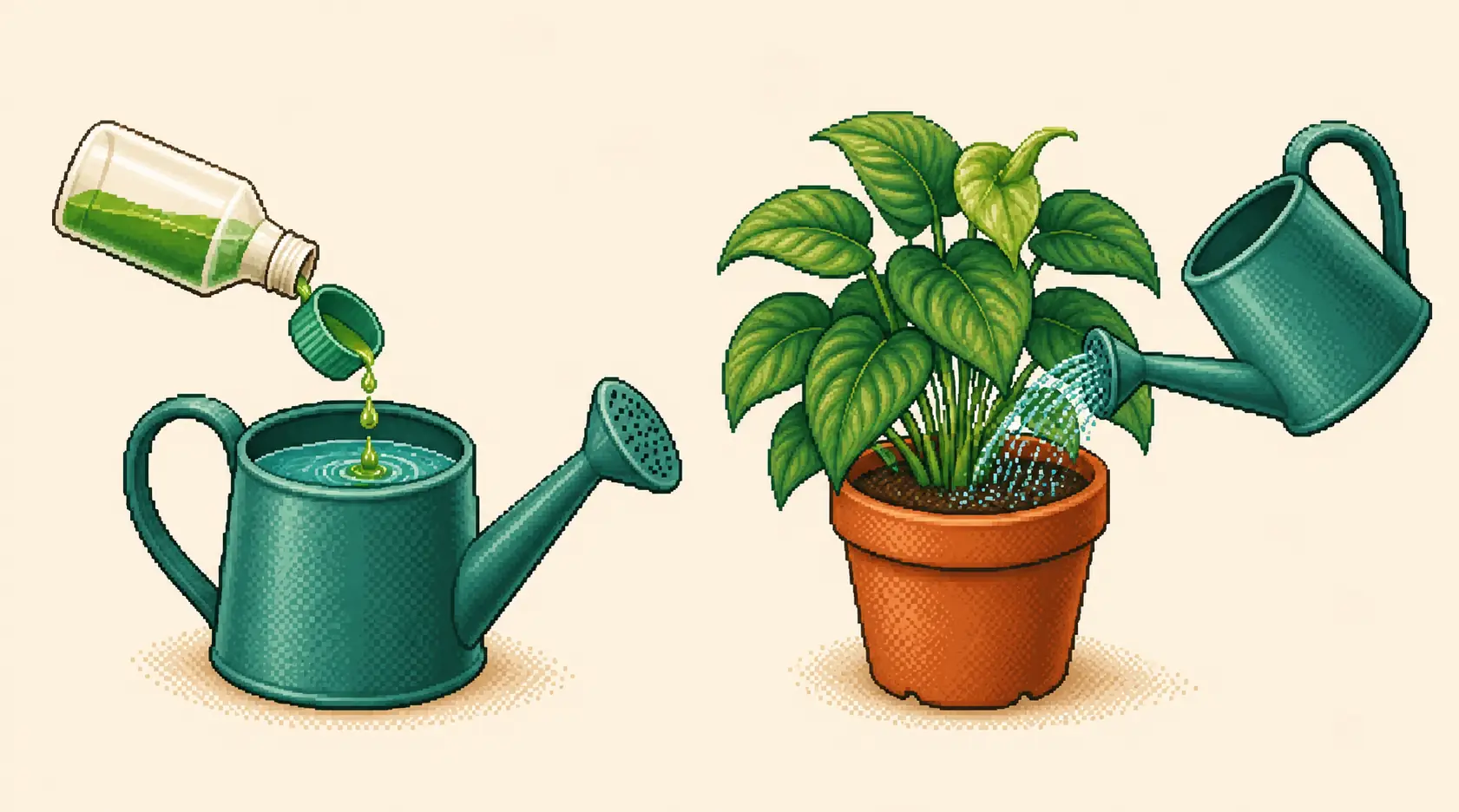
For Norfolk pine fertilizer, use a diluted liquid houseplant fertilizer every two weeks while the tree grows, usually March to September, as University of Illinois Extension and the New York Botanical Garden advise.
University of Illinois Extension and the New York Botanical Garden (NYBG) use a diluted liquid houseplant fertilizer, and Purdue a fertilizer formulated for indoor foliage plants.
No special product is needed. A standard liquid houseplant feed, mixed weaker than for most plants, does the job.
- 2
Norfolk pine fertilizer schedule
March to September: every two weeks, dilute (Illinois, NYBG). The RHS also feeds every two weeks in the growing season, and waters freely from March to September.
More about this
Lighter option: in its watch-out section, NYBG says one or two feedings a month in spring and summer are enough. NC State gives weekly or every-other-week dilute feeding from spring through fall.
Winter: no fertilizer. The RHS withholds it, and Illinois and Purdue say the tree grows little or rests in winter.
- 3
How to fertilize a Norfolk Island pine
Dilute the fertilizer, as Illinois, NYBG and NC State all do, and pour it onto the soil. Water until a little runs out of the drainage holes, then discard what is left in the saucer after about 15 minutes, as Purdue and Illinois advise.
Check the soil first. Purdue waters when the top inch or so feels dry.
- 4
Signs of too much fertilizer
NYBG warns that too many feedings make the plant structure weak. If you are unsure, use the lighter rate NYBG also gives: one or two feedings a month in spring and summer.
More about this
For houseplants in general, Clemson lists a white film on the soil or a white crust on the pot rim as signs of too much fertilizer. NYBG adds that branches a stressed tree drops do not grow back.
- 5
When the problem is not fertilizer
Purdue says a few brown needles on the lowest branches are normal aging. If many needles brown, look at too much or too little water, hot or cold drafts, or low humidity.
More about this
Purdue notes the tree thrives at about 50 percent humidity, while heated homes can drop to 15 percent.
Illinois says overwatering can cost whole branches and that needle drop often comes from dry air or dry soil. Low light makes the branches long and droopy, Illinois adds, and NC State says years in very low light lead to loss of lower branches.
- 6
Light helps the feed work
NYBG gives the tree bright, indirect light, and Purdue says it looks its best with a couple of hours of direct sun a day. Rotate it a quarter turn each week so it grows straight, as Purdue advises.
More about this
For houseplants in general, Clemson says plants in the low light of a home need less fertilizer, so feed lightly in a dim spot.
- 7
Soil and pets
The RHS grows it in a well-drained, peat-free, loam-based potting soil with extra grit. NC State asks for fertile, porous, sandy, peaty and slightly acidic soil.
More about this
The ASPCA lists the Norfolk Island pine, under its entry for Australian pine, as non-toxic to dogs, cats and horses. Store the fertilizer out of reach anyway.


Common questions
How often should I fertilize a Norfolk Island pine?
Every two weeks from about March to September with a diluted houseplant fertilizer, as Illinois and NYBG advise. NYBG says one or two feedings a month are also enough.
What is the best fertilizer for a Norfolk pine?
A diluted liquid houseplant fertilizer (Illinois, NYBG) or a balanced fertilizer (RHS). Purdue uses one made for indoor foliage plants.
Should I fertilize my Norfolk pine in winter?
No. The RHS withholds fertilizer in winter, and Illinois and Purdue say the tree rests then.
Why is my Norfolk pine losing branches?
Usually overwatering, dry air or dry soil, or years in low light, say Illinois and NC State. Lost branches do not grow back, NYBG notes.
Is Norfolk Island pine toxic to cats?
No. The ASPCA lists it, as Australian pine, as non-toxic to dogs, cats and horses.
All Norfolk Island pine guides
Keep reading
Sources7 references
- RHS: Araucaria heterophylla
- New York Botanical Garden LuEsther T. Mertz Library: Norfolk Island pine
- University of Illinois Extension: Norfolk Island pines (Ken Johnson, 22 Jan 2020)
- Purdue University Yard and Garden: Norfolk Island pine needs TLC (Rosie Lerner)
- NC State Extension Plant Toolbox: Araucaria heterophylla
- Clemson Cooperative Extension HGIC: Indoor plants, cleaning, fertilizing, containers and light requirements (HGIC 1450)
- ASPCA Animal Poison Control: Australian pine (Norfolk Island pine)
- How we check our plant advice
How we check our plant advice → · Last reviewed: