


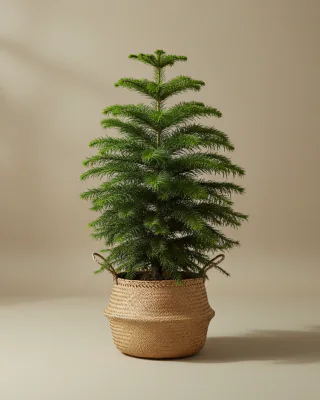
Norfolk Island pine drooping
Araucaria heterophylla
Quick answer
Check the mix and drainage before watering. Araucaria heterophylla may droop with dry soil, low humidity, low light, cold or fluctuating conditions, or wet-root stress.
 Not sure it’s this plant?Check yours with a photo, free
Pet-safe
Is the plant leaning or limp?
Record whether tiered branches or soft needles are hanging lower than usual, whether tips are browning, and whether lower branches are being lost. Keep these as separate visible signs.
Check surface mix condition and drainage, room humidity, window light, temperature and drafts, and whether the plant has spent years in low light or was recently moved.
Possible causes and next checks
Drooping can follow excessively dry soil, low relative humidity, insufficient light, cold or fluctuating conditions, and root stress from overly wet soil. Prolonged low light can precede leaf drop and lower-branch loss.
Water when the soil surface is dry and discard excess water from the saucer. Increase humidity in heated rooms, keep the plant in a bright, cool position, and protect it from drafts. Inspect drainage before watering a pot that remains wet.
What to watch next
After one matched environmental change, recheck new growth, branch firmness, soil condition, and tip browning. Continuing loss or a soft, persistently wet root zone requires closer inspection.
What drooping cannot tell you
Drooping and lower-branch loss may reflect a long light or humidity history. Normal tree form is not a disease, recovery is not guaranteed, and a lost branch does not regrow.
All Norfolk Island pine guides
Keep reading
Related plants
Last reviewed: