



Air-purifying plants
NASA’s famous test ran in sealed chambers. In a real room, an open window does far more. The plants are still worth growing.
Air-purifying plants is the name for houseplants such as snake plant, golden pothos, spider plant and peace lily that took up indoor pollutants in NASA’s 1989 study. They do absorb some chemicals, but those tests ran in small sealed chambers. A 2019 review of the research found that you would need 10 to 1,000 plants per square meter of floor to match the air exchange an ordinary building already gets.
So for cleaner air, open the windows and remove the source of the smell or fumes. Grow these plants because they are easy, they look good and, as the RHS notes, plants indoors are good for mood and wellbeing.
This page explains what the studies tested, what actually cleans indoor air and which easy plants are worth growing anyway.
What the NASA study actually tested
The plants on every air-purifying list come from a 1989 NASA report, Interior Landscape Plants for Indoor Air Pollution Abatement, by B. C. Wolverton, Anne Johnson and Keith Bounds. It looked at how leaves, roots, potting mix and the microorganisms in it could reduce indoor air pollutants such as benzene, trichloroethylene and formaldehyde.
The plants sat in small sealed chambers, and the report measured how much of each chemical was gone after 24-hour exposure periods. A sealed box has no fresh air coming in and no new fumes from furniture, paint or cooking, so it is very different from a home.
The report itself went further than a pot on a shelf. Its proposed air filter combined plants with an activated carbon filter and a fan that pulled large volumes of air through the carbon and roots. That design is not what you get from a few houseplants on a windowsill.
What happens in a real room
In 2019 Bryan Cummings and Michael Waring of Drexel University reviewed 196 experimental results from 12 chamber studies, published in the Journal of Exposure Science and Environmental Epidemiology. They converted the results into a clean air delivery rate, the same measure used for air purifiers.
A typical single plant cleaned about 0.023 cubic meters of air per hour. To match the air exchange a typical building already gets from outdoor air, they calculated you would need 10 to 1,000 plants per square meter of floor. For a 15 square meter (160 sq ft) bedroom, that is 150 to 15,000 pots.
Waring put it simply: plants are great, but they do not clean indoor air quickly enough. The RHS reaches the same conclusion in its advice on houseplants and health: a real improvement in air quality may need large numbers of plants under specific conditions, which is not practical in most homes.
What actually cleans indoor air
The US EPA names the two most effective steps: reduce or remove the sources of pollution, and ventilate with clean outdoor air. Filtration, such as a portable air purifier, is a useful extra but does not replace either.
In practice that means opening windows wide for a few minutes several times a day, running the range hood while you cook and the bathroom fan while you shower, and letting new furniture or fresh paint air out before you close up the room.
The RHS agrees that opening windows and ventilating indoor spaces generally does more than relying on plants alone. Keep plants out of a cold draft from an open window in winter, though. Cold air on wet roots makes leaves drop.
Why grow them anyway
The RHS says research points to wellbeing and productivity as the greatest benefits of indoor plants, including better mood and less stress. That benefit does not depend on how much benzene a leaf takes up.
The plants that made the NASA lists are also some of the easiest houseplants there are. They cope with indoor light and dry, warm rooms, and they forgive the odd missed watering. That is the honest reason they sell so well.
8 easy plants people call air-purifying

Snake plant: the toughest of the group. Its stiff leaves store water, so it goes weeks without watering and rots in wet soil. One or ten snake plants make no measurable difference to the air, but it is a good plant for a bedroom or a dim corner. Toxic to cats and dogs.
Golden pothos: a trailing vine that copes with lower light than most climbers and roots easily from a cutting in water. Toxic to cats and dogs.
Spider plant: the most forgiving of all. It handles irregular watering and moderate light and makes plantlets you can pot up. Safe for cats and dogs.
Peace lily: droops clearly when it is dry and stands up again after watering, which helps while you find its rhythm. Toxic to cats and dogs.
Corn plant (Dracaena fragrans): an upright plant that takes little floor space and copes well with indoor conditions. Toxic to cats and dogs.
Parlor palm: small enough for a shelf and happier away from the window than most palms. Safe for cats and dogs.
Boston fern: the one that needs the most attention. It wants evenly moist soil and dislikes dry heating air, but in bright, indirect light it fills out fast. Safe for cats and dogs.
Areca palm: a larger, feathery palm for a bright room. Safe for cats and dogs.
Get more from a group of plants
Plants release water through their leaves. A group of several large plants in a dry room raises humidity around them more noticeably than any filtering effect, while a single small pot changes nothing you would notice.
Choose by light first. Check how much daylight the spot gets and pick plants for it, rather than buying from a list. Put plants with similar watering needs together, so a snake plant does not end up next to a Boston fern.
Keep wet soil from becoming the problem
Many pots in a room that is rarely aired mean a lot of permanently damp potting mix. A white mold can grow on the surface, and fungus gnats breed in the wet top layer.
Match watering to the species and empty the saucer afterward. Many of these plants can wait until the top 2 to 3 cm (1 in) dries, but Boston fern needs water as the surface begins to dry. Do not let its root ball dry out.
Wipe large leaves with a damp cloth now and then. Dust blocks light, and you spot pests early while you do it.
Related plants
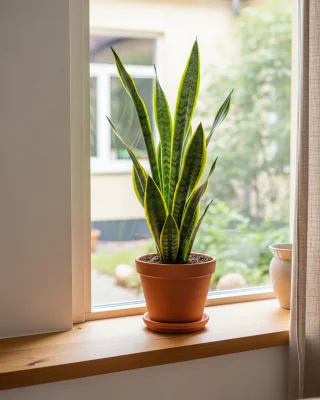 Snake plantSansevieria trifasciataToxic to pets
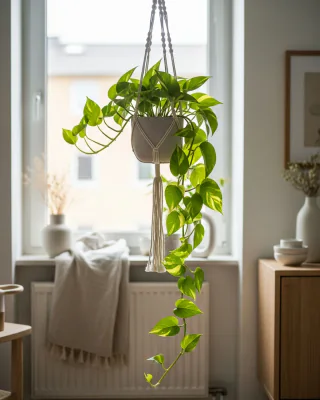 Golden pothosEpipremnum aureumToxic to pets
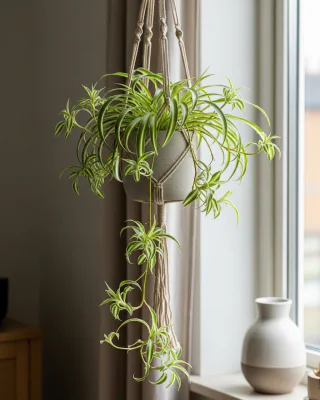 Spider plantChlorophytum comosumPet-safe
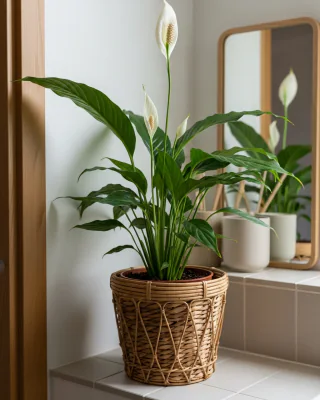 Peace lilySpathiphyllum wallisiiToxic to pets
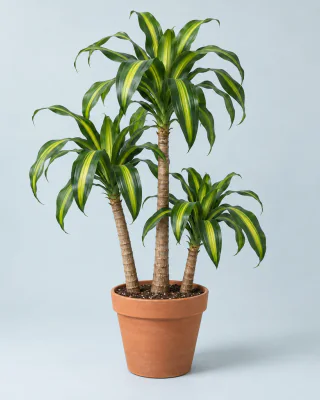 Corn plantDracaena fragransToxic to pets
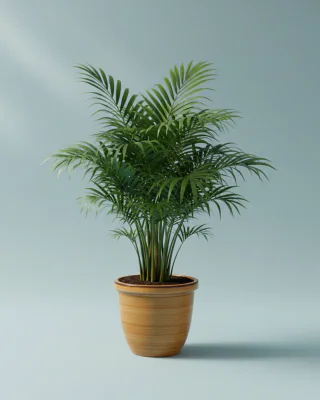 Parlor palmChamaedorea elegansPet-safe
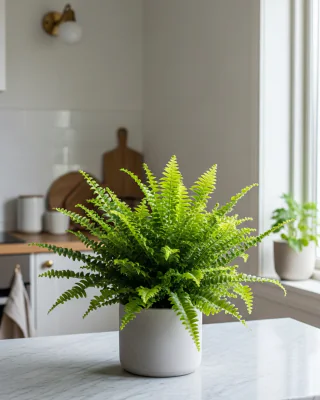 Boston fernNephrolepis exaltataPet-safe
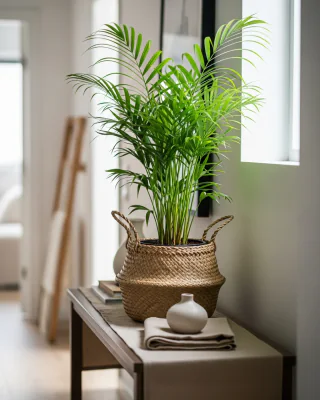 Areca palmDypsis lutescensPet-safe
Keep reading
Common questions
Do air-purifying plants really work?
Not in a normal room. Plants took up chemicals in small sealed chambers, but a 2019 review found you would need 10 to 1,000 plants per square meter of floor to match ordinary ventilation. Open windows and remove the source for cleaner air, and grow plants for how they make the room feel.
What is the best air-purifying plant?
No houseplant has been shown to clean the air of a real room in a way you would notice, so choose one that grows well in your light. Snake plant, golden pothos, spider plant, peace lily and parlor palm are among the easiest.
How many plants do you need to purify a room?
The 2019 Drexel review estimated 10 to 1,000 plants per square meter of floor to match the air exchange a typical building already has. That is 150 to 15,000 pots for a 15 square meter (160 sq ft) bedroom, so plants are not a practical way to clean the air.
Does a snake plant purify the air?
It takes up some gases like any plant, but in a real room a few snake plants make no measurable difference next to an open window. It is still one of the easiest plants to keep, and it is toxic to cats and dogs.
Are air-purifying plants safe for cats and dogs?
Some are. Spider plant, parlor palm, Boston fern and areca palm are safe for cats and dogs. Snake plant, golden pothos, peace lily and corn plant are toxic. Each plant’s care guide has the full pet-safety details.
Should I buy an air purifier instead of plants?
If air quality is the goal, the US EPA puts removing pollution sources and ventilating with outdoor air first, with an air purifier as a useful extra. Plants do not replace any of these.
Last reviewed: