


Oleander yellow leaves: possible causes
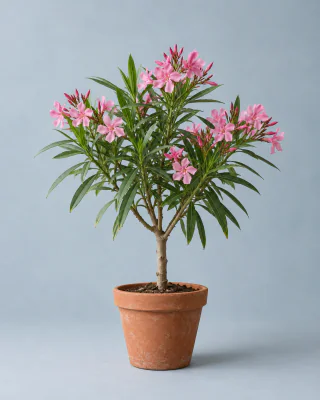
Nerium oleander

Quick answer
Read the pattern before changing care. Uniform yellowing or a central-vein pattern can follow drought stress. Scorch often starts at the tips or margins and spreads from one branch.
 Not sure it’s this plant?Check yours with a photo, free
Toxic to pets
Which leaves are yellow?
Yellowing can be uniform or follow the central vein under drought stress. Oleander leaf scorch instead often starts at the tips or margins, beginning on one branch and spreading.
Check whether yellowing affects all branches or one part of the canopy, whether leaves droop, and whether the pattern starts at the margins or tips. Inspect both leaf surfaces and new shoots for aphids, scale, caterpillars, honeydew or sooty mold.
Possible causes and next checks
Yellow leaves can follow drought or other water stress, oleander leaf scorch caused by a strain of Xylella fastidiosa, salt or boron injury, and sap-feeding pests such as oleander aphid or scale. Yellowing alone does not choose among them.
Correct obvious water stress without keeping the root zone saturated and inspect leaf surfaces and new shoots for pests. If the branch pattern and progression fit suspected leaf scorch, use a qualified plant diagnostic service.
What to watch next
After a measured watering correction, observe whether uniformly yellow, drooping leaves recover. Continued branch-by-branch decline warrants diagnostic help. Recovery is not a stand-alone disease test.
What yellow leaves cannot tell you
Yellow leaves are a shared symptom, not a diagnosis. Salt or boron injury can look like leaf scorch, and telling them apart may take a soil, leaf-tissue or lab test.
All oleander guides
Keep reading
Related plants


Last reviewed: