


Overwintering oleander
Nerium oleander
Quick answer
Leave oleander outside until nights head toward 0 °C (32 °F), then keep it somewhere bright and cool at 5 to 8 °C (41–46 °F). The darker the spot, the cooler it needs to be. Water only every two to three weeks, don’t feed it, and move it back outside from mid April.
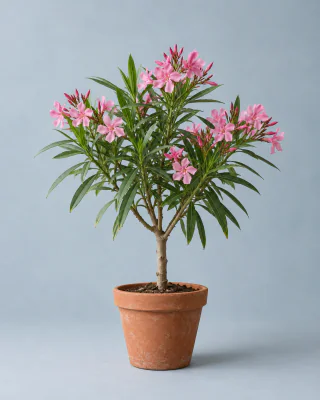
 Not sure it’s this plant?Check yours with a photo, free
Toxic to pets
Overwintering oleander
5 to 8 °C (41–46 °F)
- 01
When to bring oleander in
Leave it outdoors for as long as you can, because every week outside is better than a week in winter quarters. Frost can damage it, so bring it in when nights head toward 0 °C (32 °F), before the first frost. Cover it with fleece for the odd cold night before that.
Let the root ball dry a little before you move it, and take away the saucer so no water stands in the pot.
- 02
Bright or dark?
Bright is best. The ideal is a light room at 5 to 8 °C (41–46 °F), such as a bright stairwell, an unheated conservatory or a garage with a window.
A dark basement works if it is cool: the darker the room, the cooler it needs to be. A warm living room is the worst choice, because the plant pushes out weak growth and picks up pests.
- 03
Watering and feeding in winter
In a cool room the soil dries slowly. Water only when the top 4 cm (1.6 in) feel dry. At 5 to 8 °C (41–46 °F) that usually means every two to three weeks. Err on the dry side.
No feeding in winter.
- 04
Pests in winter quarters
Check it closely when you bring it in and every few weeks after, especially under the leaves and along the stems. Scale insects, mealybugs and aphids are the usual winter pests.
Pick off spent flowers and dead leaves as you move it in. That helps prevent gray mold.
- 05
Pruning before and after winter
Oleander doesn’t need yearly pruning. A thinning cut every few years is enough, after flowering or before moving it in if it has outgrown the space.
Every part of oleander is poisonous, and its sap can irritate skin and eyes. Wear gloves and eye protection when you cut it, wash your hands and tools afterwards, keep the prunings away from pets and never burn them.
- 06
When it can go back outside
From mid April. Give it a few days in light shade first so the leaves adjust to the sun, and pull it back in or cover it with fleece for any frosty night.
- 07
Common mistakes
Bringing it in too early: indoors the plant weakens, outside it stays strong.
Warm and dark: without light, in warmth, it grows long soft shoots and pests multiply fast.
Too much water: in a cool room it needs water only rarely, and nothing should stand in the saucer.
Common questions
Should oleander overwinter in the light or the dark?
Light is best, at 5 to 8 °C (41–46 °F). A dark room works only if it is especially cool, and then you water even less.
How cold can oleander get in winter?
It does best at 5 to 8 °C (41–46 °F) in a bright spot, and it should not get colder than 5 °C (41 °F). Frost can damage it, especially in a pot.
Can I overwinter oleander in a basement?
Yes, if it is cool and has some light. The darker the room, the cooler it should be and the less you water.
Can oleander stay outside over winter?
Not in a pot where winters bring frost. Bring it in before the first frost and keep it at 5 to 8 °C (41–46 °F).
When can oleander go back outside?
From mid April, after a few days in light shade. Bring it back in or cover it with fleece on frosty nights.
All oleander guides
Sources4 references
Last reviewed: