


How to propagate oleander
Nerium oleander

Quick answer
Use a two-node-set tip or a stem cutting from a middle or lower branch. Oleander cuttings root in a solid medium such as coarse sand or perlite.
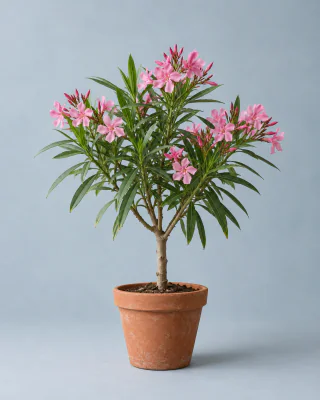
 Not sure it’s this plant?Check yours with a photo, free
Toxic to pets
What plant material to use
Use either an 8–10 inch tip cutting or a 5–8 inch stem cutting from a middle or lower branch, with at least two sets of leaf nodes. Remove all leaves except the top whorl and trim those leaves to about 1 inch.
How to propagate this plant
Wear gloves and eye protection before cutting or dividing. Every part of the plant is poisonous if swallowed. Keep cut pieces away from children and pets, and wash your hands after handling.
Nerium oleander can be propagated by seed, semi-hardwood cuttings or air layering in spring. At home, root cuttings in coarse sand or perlite rather than water.
Take cuttings in late spring while the plant is growing. Apply rooting hormone, place the cutting in well-watered coarse sand or perlite, and keep it warm in bright light out of direct sun. Keep the medium damp but never wet.
Take a two-node-set tip or a middle or lower-branch stem cutting. Keep only the top whorl and trim those leaves, apply rooting hormone, and insert the base into coarse sand or perlite. Keep it damp, warm and in indirect sun while it roots.
Signs of roots or failure
Roots should start in a couple of weeks. Leave the cutting in its medium until it has a good set of leaves and then a strong root system. Slower rooting is not by itself proof of failure.
Aftercare and hygiene
Once a strong root system has developed, soak the container in lukewarm water, gently tease out the cuttings, and pot them in potting soil amended with sand or perlite for drainage. Acclimate plants to outdoor weather gradually over one week.
Wear gloves and protective equipment when handling oleander. All parts are toxic if eaten, and trimmings must not be burned. Dispose of them as green waste instead.
All oleander guides
Related plants
Sources: RHS.
Last reviewed: