


Why oleander leaves get brown tips
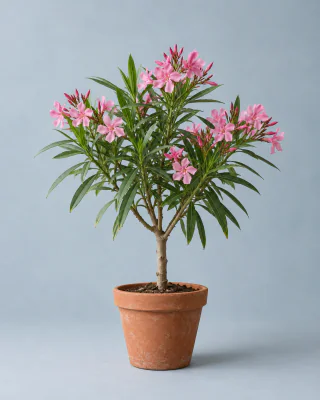
Nerium oleander
Quick answer
For outdoor Nerium oleander, brown tips or margins call for a moisture, salt, cold and pest check. Do not treat the color as one cause.
 Not sure it’s this plant?Check yours with a photo, free
Toxic to pets
What kind of brown mark is it?
Record browning or dead tissue at leaf tips or margins, whether yellowing came first, and whether the pattern affects one branch or much of the canopy.
Compare uniform yellowing or drooping across branches with browning that moves inward from tips and margins. Check whether decline stays on one branch, whether watering restores turgor, and whether caterpillars or other pests are present.
Possible causes and next checks
Brown tips can follow drought or heat stress, salt or boron injury, excessive wetness or root trouble, cold damage, caterpillar feeding, and oleander leaf scorch from the oleander strain of Xylella fastidiosa.
Check root-zone moisture and drainage before changing irrigation, review salt or fertilizer exposure, inspect new shoots and leaf undersides for caterpillars or sucking pests, and seek local plant-health support when one-branch marginal scorch continues to spread.
What to watch on new leaves
Recheck new leaves, the direction of marginal browning, branch-by-branch progression, soil moisture and pest activity after conditions are stable. If dieback continues, ask a local plant-health service.
What brown tips cannot tell you
A pot moved indoors in a cold climate has different light, temperature and root-zone conditions from garden oleander in warm regions. Brown tips are a sign to check, not a cause.
All oleander guides
Keep reading
Related plants

Last reviewed: