



How to repot pothos
Epipremnum aureum
Quick answer
Repot pothos in spring, when roots grow out of the drainage hole or fill the pot, into a pot only slightly larger with a drainage hole and loose, well-drained soil.
- Pet safetyToxic to cats and dogs




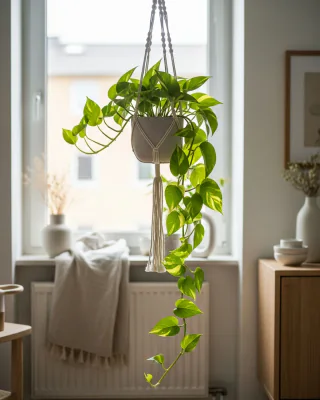
How to repot pothos
- 1
When to repot pothos
The RHS says a pothos can stay in the same pot for several years. When the roots get crowded, repot it in spring.
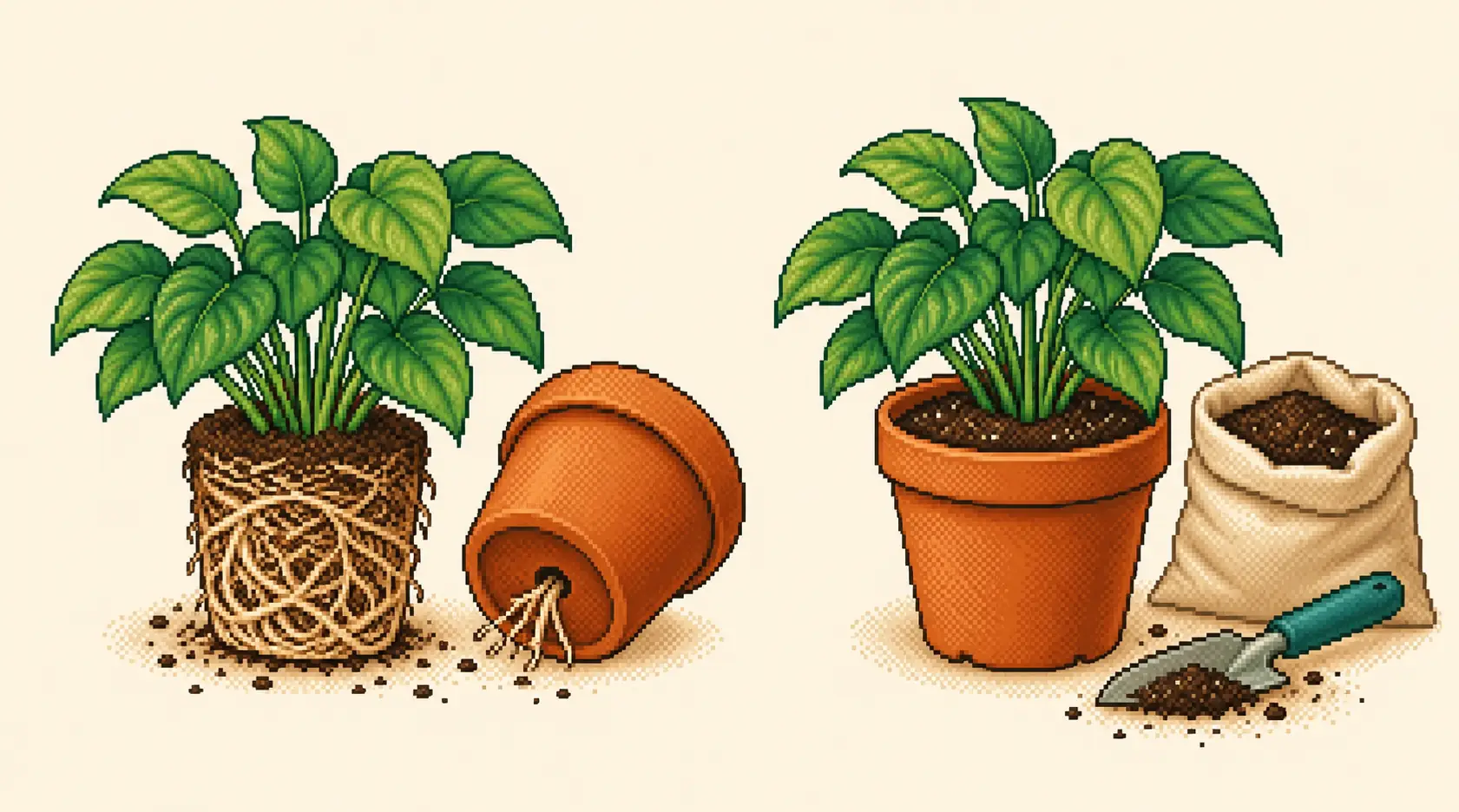
More about this
Clemson suggests a pot 1 to 2 inches (2.5 to 5 cm) wider, and Penn State warns that too much water afterward stresses the freshly repotted plant.
The RHS suggests moving it into a pot one size up every two or three years to keep the roots healthy and the plant growing strongly.
Penn State repots pothos every spring into a slightly larger pot. Clemson says every year or two, depending on how fast the plant grows. So a fast-growing pothos needs a new pot more often than one that barely grows.
- 2
Signs your pothos needs a bigger pot
The RHS describes the same thing: when roots come out of the bottom of the pot, the plant has outgrown it.
More about this
Clemson names two clear signs: roots growing out of the drainage holes, or a plant so crowded that the pot is full of roots.
Clemson says houseplants also need a bigger pot when they need water very often or wilt soon after watering. If your pot has no drainage hole at all, University of Illinois Extension says it is time for a new one too.
- 3
Choosing the right pot
The RHS recommends a pot only slightly larger, with room for the root ball. A much bigger pot keeps the soil wet too long, which can lead to root rot.
More about this
For houseplants, Clemson suggests a pot 1 to 2 inches (2.5 to 5 cm) wider than the old one.
The pot needs a drainage hole. Skip the layer of gravel or pot shards at the bottom: University of Illinois Extension and Clemson say it holds water back rather than helping it drain. Clemson lays just one shard over the hole so soil does not wash out.
- 4
Best soil for repotting pothos
The RHS says pothos likes loose, well-drained soil that still holds some moisture and is slightly acidic. Its mix is three parts peat-free ericaceous (acidic) potting mix, one part horticultural grit and one part medium orchid bark.
More about this
A peat-free houseplant potting mix also works, the RHS says.
Penn State recommends a good potting mix with no garden soil that drains well, and Clemson an airy, well-drained mix. Clemson says poorly draining soil, along with overwatering, is the most common cause of root rot.
- 5
How to repot pothos step by step
Loosen the roots with your fingers. If the root ball is very tight, Clemson suggests scoring it a few times with a knife.
More about this
Turn the pot upside down and tap the rim against a firm edge to loosen the root ball, as Clemson describes, then ease the plant out. University of Illinois Extension breaks up roots that circle the pot so no dense mat stays on the outside.
Set the pothos in the new pot at the same height it sat in the old one and fill in soil around the sides. Press it down lightly. Clemson leaves the top of the root ball about 1 inch (2.5 cm) below the rim so there is room to water. Do not pile soil above the old level of the root ball.
Water once thoroughly, until water runs out the bottom, as Clemson advises. Then put the plant back in its spot.
- 6
Trimming roots and vines when repotting
When repotting, Penn State trims some roots and cuts the vines back by up to a third of their length. Even a large pothos that stays in the same pot benefits from repotting with some fresh potting mix, Penn State says.
You can root the cut vines right away. NC State says cuttings in water often form roots within two weeks.
- 7
Watering after repotting
Penn State warns that too much water after repotting adds stress to the plant. Water again only when the soil is almost dry.
More about this
The RHS checks with a finger and uses room-temperature rainwater or filtered water where possible. Clemson lets the soil dry out completely between waterings.
NC State says overwatering shows up as root rot and leaf edges turning black.
- 8
Wear gloves and keep pets away
The RHS advises wearing gloves when handling pothos because it is toxic and can irritate skin. The ASPCA lists golden pothos as toxic to cats and dogs.
More about this
It contains insoluble calcium oxalate crystals, and signs include oral irritation, intense burning and irritation of the mouth, tongue and lips, excessive drooling, vomiting and difficulty swallowing.
Clear away cut roots, vines and old soil right away, and keep the plant out of reach of children and pets afterward, as Clemson advises.


Common questions
When should I repot my pothos?
In spring, when roots grow out of the drainage hole or fill the pot. Penn State repots every year, Clemson every year or two, the RHS every two or three years.
What size pot should I use when repotting pothos?
Only slightly larger. Clemson suggests 1 to 2 inches (2.5 to 5 cm) wider for houseplants. The RHS says a much bigger pot stays wet too long.
What soil is best for repotting pothos?
Loose, well-drained soil. The RHS mixes three parts peat-free ericaceous potting mix with one part grit and one part orchid bark, and says a peat-free houseplant mix works too.
Can I cut back pothos vines when repotting?
Yes. Penn State cuts the vines back by up to a third when repotting and trims some roots too. The cut pieces root in water.
How do I water pothos after repotting?
Once thoroughly, until water runs out the bottom. After that, only when the soil is almost dry, because Penn State says too much water stresses the plant.
All golden pothos guides
Keep reading
Sources7 references
- RHS: How to grow epipremnum
- Penn State Extension: Pothos as a houseplant
- Clemson Cooperative Extension HGIC: How to grow pothos indoors
- Clemson Cooperative Extension HGIC: Indoor plants, transplanting and repotting
- University of Illinois Extension: Tips for repotting houseplants (Christopher Enroth, 19 Mar 2018)
- NC State Extension Plant Toolbox: Epipremnum aureum
- ASPCA Animal Poison Control: Golden pothos
- How we check our plant advice
How we check our plant advice → · Last reviewed: