



Corn plant pruning
Dracaena fragrans
Quick answer
Cut the cane at the height you want. The RHS says dracaenas respond well to pruning and readily produce new shoots on the stem just below the cut.
- Pet safetyToxic to cats and dogs


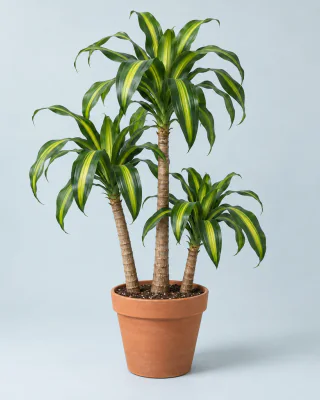
 Not sure it’s this plant?Get the free Botanicaly app and find out with a photo
Corn plant pruning
- 01
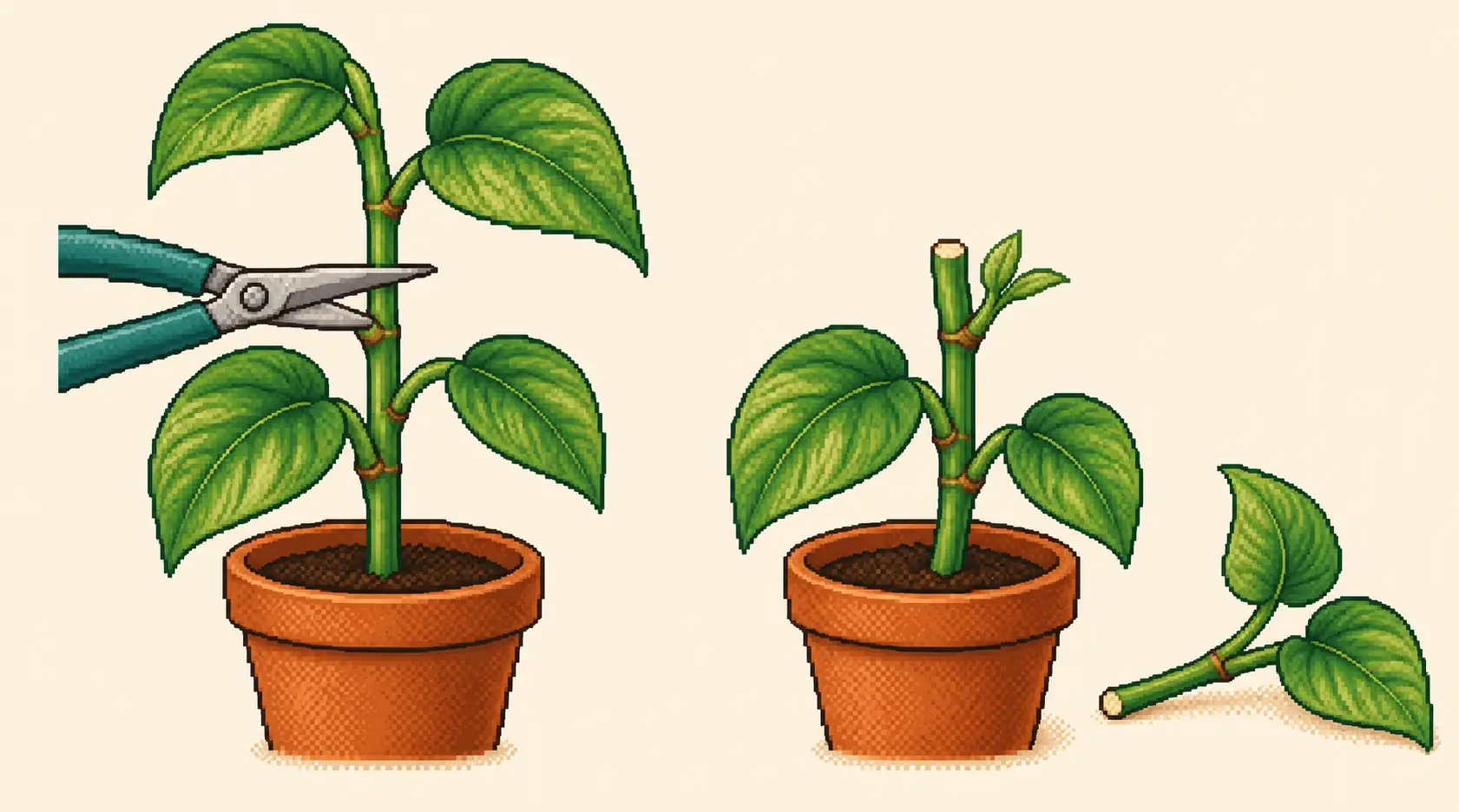
Cutting back a cane that is too tall
Utah State University Extension, writing about dracaenas in general, gives the easiest way. Cut the tallest stem back to a height that looks good with the remaining stems.
More about this
Weak stems can be shortened to 15 cm (6 in) in spring, and the top you remove can be rooted as a new plant.
With a little patience you will see new shoots growing at the upper nodes at the cut. Use sharp, clean tools.
- 02
Where the new shoots appear
It can grow as a free-form bush or as a standard, with branches and leaves on top of a single stem.
More about this
The RHS says dracaenas readily produce new shoots on the stems just below where the cut is made, so you can keep the plant to a manageable height.
University of Maryland Extension adds that corn plants do not branch much. Pruning lowers the plant for a while, new growth brings the height back, and over the years you may need to cut again.
- 03
Hard pruning
The piece you cut off can then be used to grow a new plant.
More about this
The RHS profile of Dracaena fragrans says no pruning is required, although weak stems may be shortened to 15 cm (6 in) in spring.
- 04
When to prune
The RHS gives spring for shortening weak stems and summer for rooting cuttings with bottom heat.
- 05
Rooting the cut top
Each piece needs at least two sets of leaves plus one to two pairs of nodes for roots. Keep track of which end is the top so the cutting does not go in upside down.
More about this
USU Extension says you can root the leafy top you removed, and cut the rest of that stem into one or two more lengths to root as well.
A glass of water is the easiest way to root a cutting. Once it has enough sturdy roots, pot it in a container large enough for them, with a potting mix that drains freely. You can also put the cutting straight into moist potting soil. Rooting hormone is not essential, but it can help with larger, older stems.
The RHS roots semi-ripe and hardwood cuttings and leafless stem sections in summer, with bottom heat from a propagator or a heated mat.
- 06
A plant that has stretched
For best growth keep the plant consistently warm, at 18–30 °C (64–86 °F).
More about this
Indoor plants often grow leggy when they do not get enough light, says USU Extension, and cutting the plant back and moving it somewhere brighter often fixes it. The RHS recommends bright but indirect light, such as an east- or west-facing window, and no direct summer sun, which can scorch the leaves.


Common questions
How do I cut back a corn plant that is too tall?
Cut the tallest cane to a height that looks good with the other canes. The RHS says new shoots grow just below the cut.
Can I prune a corn plant hard?
The RHS says weak stems may be shortened to 15 cm (6 in) in spring, and the piece you remove can grow into a new plant.
Can I root the top I cut off?
Yes. USU Extension says dracaena cuttings usually root easily, and a glass of water is the easiest method.
When should I prune a corn plant?
The RHS gives spring for shortening weak stems and summer for rooting cuttings with bottom heat.
Will my corn plant branch after cutting?
The RHS says new shoots form just below the cut. University of Maryland Extension adds that corn plants branch little, so new growth brings the height back over time.
All corn plant guides
Keep reading
Sources4 references
Last reviewed: