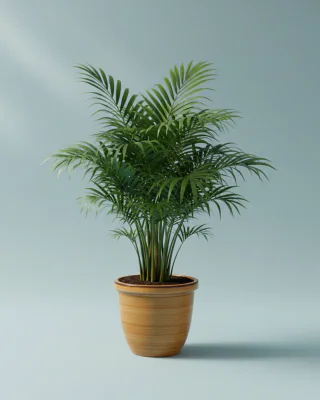
Tips brown mainly on the side facing a radiator or heater vent. Parlor palm does well at 40–60% humidity, so ordinary room air is rarely the cause on its own.
The fix
Move it away from the heat source. It doesn’t need misting or a humidity tray.
Other possible causes
Not a match? Compare the signs below to find the one you have.
Inconsistent or under-watering
How to tell
The soil dries out hard between waterings, so the tips (the last to get water) crisp first.
The fix
Water more evenly: check the soil regularly and don’t let it go completely bone dry, then soak thoroughly.
Hard-water minerals and accumulated salts
How to tell
Tips brown slowly over months despite even watering, and a white crust builds up on the soil surface or the pot rim. Hard water or fertilizer salts can leave this crust. It does not identify fluoride injury.
The fix
Switch to rainwater or distilled water, and flush the pot occasionally to wash out built-up salts.
Too much direct sun
How to tell
Dry brown patches or scorched edges show up where strong sun hits the leaf. Parlor palm tolerates low light but grows faster in medium light.
The fix
Move it back from the glass, or filter the strongest sun with a sheer curtain.
Just palm nature (mostly cosmetic)
How to tell
Palms brown at the frond tips almost universally indoors. Low household humidity and tap-water minerals affect them more than most houseplants, even with good care.
The fix
Trim only the brown part with clean scissors and don’t chase perfection. Focus on humidity and use rainwater or distilled water to slow it, not stop it entirely.
Thrips
How to tell
Silvery patches with tiny black dots point to thrips.
The fix
Rinse the plant, cut off the worst leaves and treat in rounds, as the thrips guide explains.