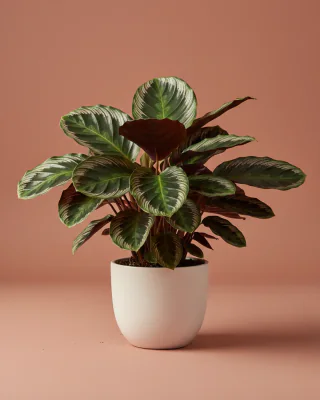
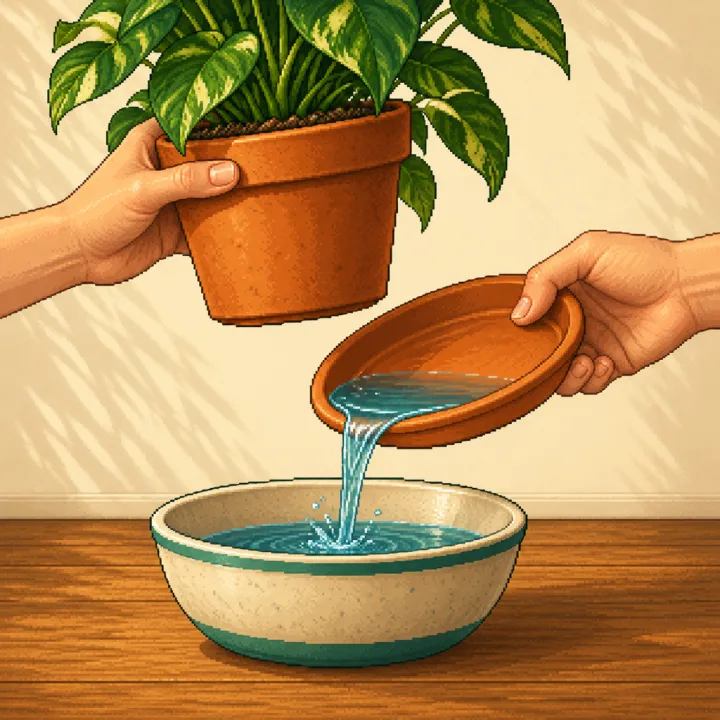
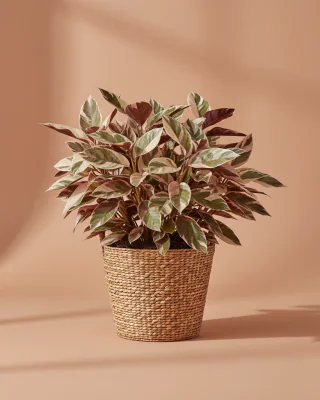
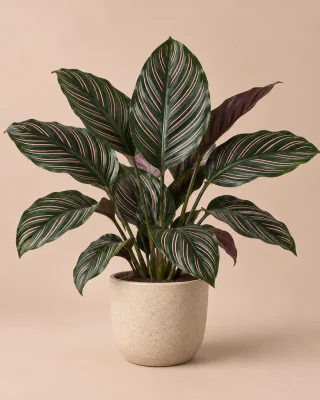
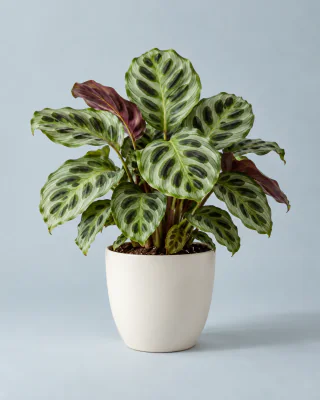
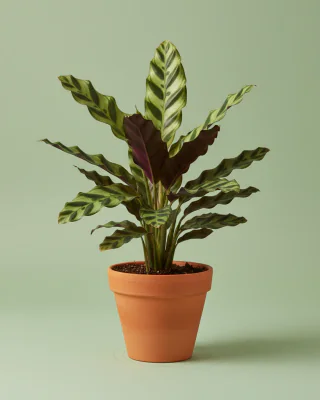
First, check the soil. Push a finger 2 to 3 cm (0.8–1.2 in) into it and lift the pot. Dry and light means thirst. Wet and heavy means too much water or poor drainage.
Most likely cause
Overwatering & root rot
How to tell
The soil is still wet days after watering, the lower and oldest leaves yellow first, and the crown may feel soft.
The fix
1
Stop watering.
2
Make sure the pot can actually drain, and wait until the top 3 cm (1.2 in) of soil feel dry to the touch.
3
Because this plant’s roots are delicate, unpot it at the first sign of a soft or sour-smelling crown rather than waiting.
More about this
This plant’s dense, fine roots rot faster than a tougher foliage plant’s. Small dark flies around moist potting medium may be fungus gnats. They suggest conditions suitable for breeding, without proving that the surface never dries.
Other possible causes
Not a match? Compare the signs below to find the one you have.
Tap-water minerals (a real trigger on this plant)
Rose-painted calathea is more sensitive than most houseplants to the fluoride and salts in tap water.
How to tell
The sign is yellow or brown edges and tips that spread slowly inward, not an even yellowing of whole leaves.
All-over yellowing points to watering, light or feeding instead, so check those first.
The fix
1
Water with rainwater or distilled water, and flush the soil every few months to clear built-up minerals.
More about this
Damaged edges won’t turn green again, but new leaves should come in clean.
Too little light
The yellowing comes with dull, fading leaf patterning and pale new growth leaning toward the nearest window.
Together, those changes show that the spot is too dim.
The fix
1
Move it to a brighter spot.
More about this
The patterning sharpens back up within a few new leaves, but keep it out of harsh midday sun, which scorches.
Thirst (underwatering)
The soil is bone dry, and the yellowing arrives alongside crispy leaf edges with dry soil rather than soft, mushy growth.
The fix
1
If the soil is dry, water thoroughly (every 6 to 8 days in summer is the usual pace for a rose-painted calathea), then settle into feeling the soil before every watering rather than watering on a fixed day.
Hungry (nutrient shortfall, but easy to overcorrect)
Older leaves fade evenly and growth has slowed after many months unfed, but this genus is also easily salt-burned by fertilizer, so don’t overcompensate.
The fix
1
Feed at a quarter to half the label strength through the growing season, flush the mix with plain water every couple of months, and refresh the top layer or repot if it’s been over a year.
Simple old age
One of the older, largest leaves slowly yellows from the outside in over a couple of weeks, while the new furled leaves emerging from the center look completely healthy.
The fix
1
Nothing is wrong: snip the spent leaf off at its base and carry on.
2
Plants retire their oldest leaves.
More about this
This is normal retirement on a rose-painted calathea, not a symptom.