


How to repot a snake plant
Sansevieria trifasciata

Quick answer
Repot when roots and leaves fill the container or make it buckle, not on an annual schedule. Choose a slightly larger pot with drainage holes.
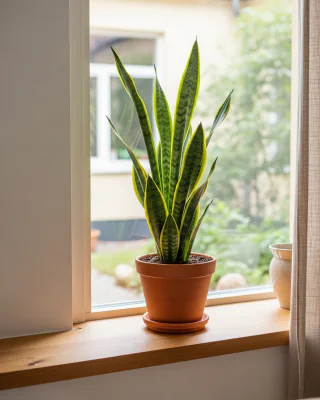
 Not sure it’s this plant?Check yours with a photo, free
Toxic to pets
How to repot a snake plant
- 01
When to repot
Repot only when roots and leaves have filled the existing container or are causing it to buckle. The plant is generally content in its original container for the first few years.
Spring is the generally preferred time for repotting as growth resumes, but use the root-fill trigger and plant condition rather than making it an annual task.
- 02
Choosing the next pot
Choose a pot only slightly larger than the previous one and with plenty of drainage holes. A much larger pot keeps spare potting mix damp longer and raises root-rot risk.
- 03
How to repot
Use free-draining peat-free cactus mix, or mix two parts peat-free loam-based potting mix with one part horticultural grit or fine gravel. Set the plant without burying the leaf base.
- 04
After repotting
Water the fresh potting mix through the drainage holes and empty collected water, then return to the dry-mix check because excess moisture commonly causes poor health and root rot in Sansevieria.
All snake plant guides
Keep reading
Sources3 references
- Royal Botanic Gardens, Kew: Plants of the World OnlineAccepted name · homotypic synonym Sansevieria trifasciata · classification · Taxonomic synonymy · link to Dracaena trifasciata
- North Carolina State University Extension Gardener Plant ToolboxLow-light tolerance · partial sun · dry-down · winter watering · low humidity · cool temperature · pests and root rot
- Royal Horticultural Society15–24°C (59–75 °F) · low humidity · sun to light shade · free-draining compost · dry-down · pet warning · Full sun to light shade · free-draining peat-free compost · above-10°C (50 °F) warning
Last reviewed: