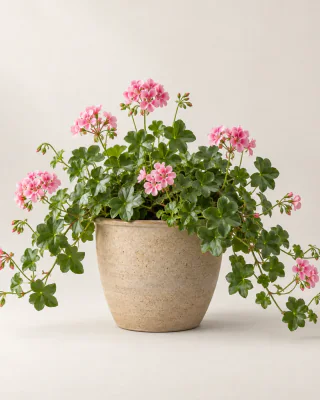
Thirst (dry potting mix). Water thoroughly (for an Ivy geranium that’s usually every 5 to 7 days in summer), and the leaves should recover the same day.
What’s causing it
Overwatering & root rot
How to tell
Soggy roots can also cause drooping because damaged roots cannot take up water. The soil is wet, the base feels soft, and adding more water makes the damage worse.
The fix
Do the opposite of watering: let it dry out, check drainage, and inspect the roots for brown mush. This is why you always feel the soil before reacting to a droop.
Temperature or draft shock
How to tell
It’s sitting near a cold window, a heater, or an air-con vent, and droops at certain times of day.
The fix
Move it away from the draft or heat source to a spot with steadier temperatures.
Recently moved or repotted
How to tell
It started drooping right after you repotted, bought, or relocated it.
The fix
This is transplant shock. Keep its care steady, don’t fertilize, and give it a week or two to settle. Resist the urge to fuss.
Too much heat or sun
How to tell
It wilts in the heat of the afternoon but recovers by evening.
The fix
Shift it out of direct midday sun. A temporary wilt in heat is the plant conserving water.
A sudden change while budding
How to tell
Along with drooping foliage, unopened buds or flowers fall, usually a reaction to a sudden change in light, temperature, or watering right as Ivy geranium was budding.
The fix
Keep its spot and watering completely stable through the bloom cycle. Once it settles, the next flush of buds should hold.
Prevention
Feel the soil before changing care. If it is dry, water thoroughly. If it is wet, let it drain and dry. Keep the plant away from cold drafts and hot vents.