


How to propagate polka dot plant
Hypoestes phyllostachya

Quick answer
Choose the route that matches your material: divide a large spring clump, sow seed, or take a softwood tip about 5 cm (2 in) long just below a leaf pair.
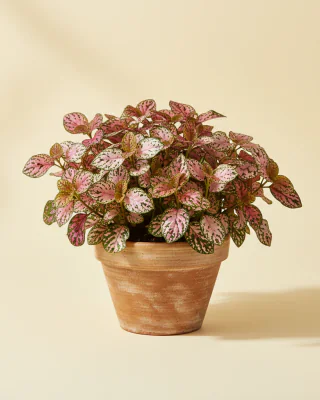
 Not sure it’s this plant?Check yours with a photo, free
Pet-safe
What plant material to use
Usable material includes a large clump whose root ball can be separated into pieces with at least three stems each, spring seed, or a softwood stem tip about 5 cm (2 in) long cut just below a pair of leaves.
How to propagate this plant
Sow seed, take softwood cuttings in late spring or semi-ripe cuttings in summer, divide a clump in spring, or take stem-tip cuttings. Cuttings can also root in water.
Root cuttings in damp peat-free potting mix or on a bright windowsill for water rooting. Keep them humid in a propagator or sealed clear bag, with bright indirect rather than strong direct light. Hypoestes is a warm, humid indoor plant.
For division, separate the spring root ball by hand into pieces with three or more stems and pot them individually. For seed, press it onto lightly damp potting mix without covering it, then prick out seedlings. For a softwood cutting, cut about 5 cm (2 in) just below a leaf pair, insert it into lightly damp peat-free potting mix, and keep it humid until rooted. Pot water-rooted cuttings once they have plenty of roots.
Signs of roots or failure
A cutting is ready to pot when it is well rooted, or has plenty of roots in water. Pot divided pieces and seedlings individually as they grow on. Seed-grown color can vary.
Aftercare and hygiene
Pot rooted cuttings and divided pieces individually, and prick out seedlings as they develop. Keep young plants evenly damp and humid indoors with bright, indirect light rather than moving them into strong sun.
All polka dot plant guides
Related plants
Last reviewed: