



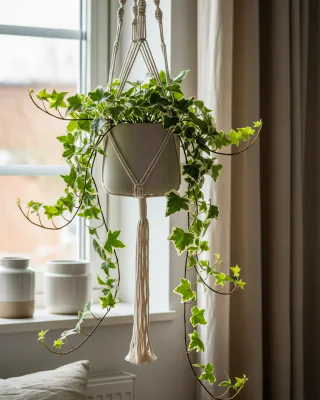
English ivy fertilizer
Hedera helix
Quick answer
Stop feeding when growth stops, in winter and in summer heat.
- Pet safetyToxic to cats and dogs


 Not sure it’s this plant?Get the free Botanicaly app and find out with a photo
English ivy fertilizer
- 01
Best fertilizer for English ivy
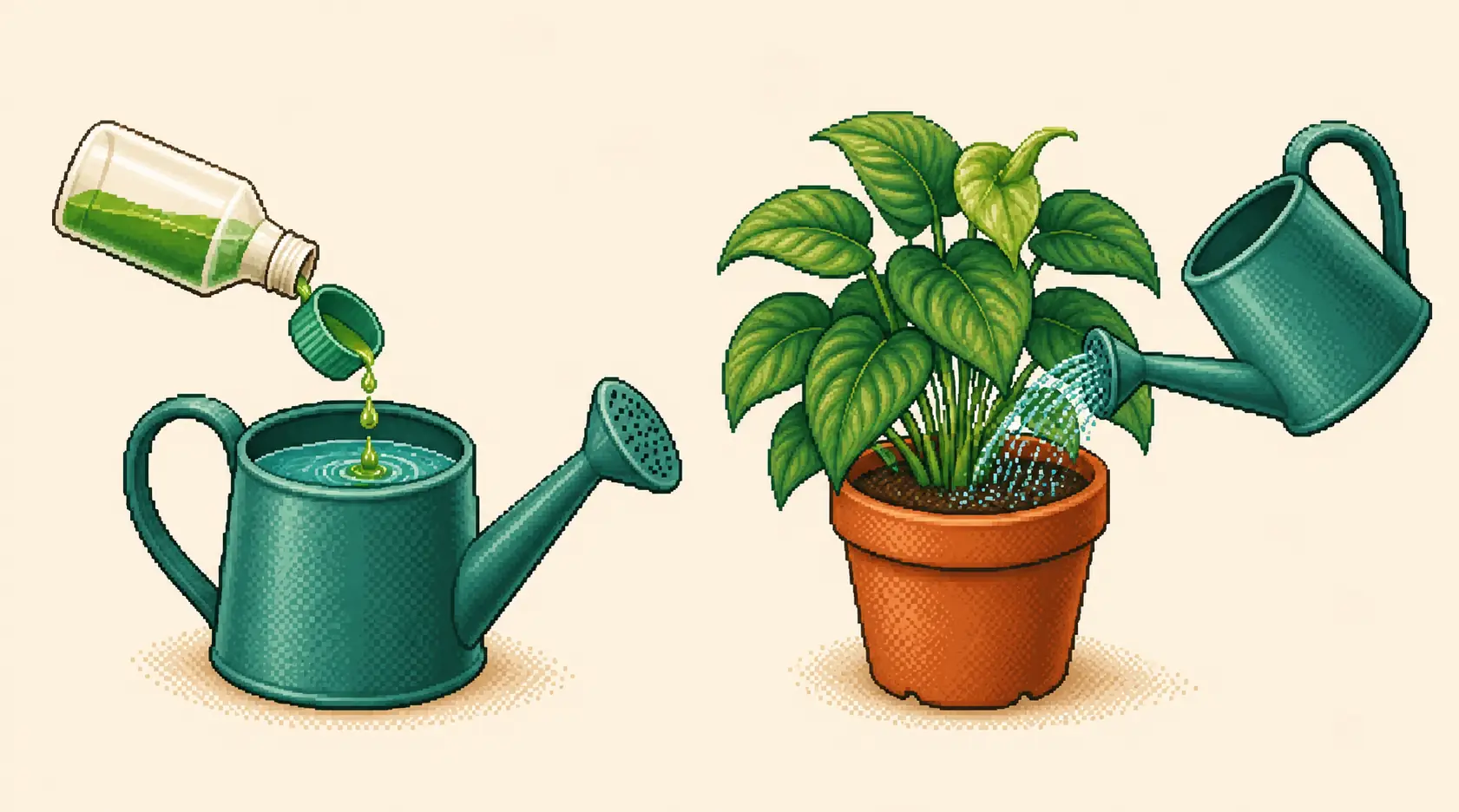
Clemson Extension recommends a foliage houseplant fertilizer, used according to the label. Its general indoor-plant guide names a balanced foliage formula such as 20-20-20 and says water-soluble fertilizers are often preferred, because a dilute solution lowers the risk of burning the roots.
More about this
The best English ivy fertilizer is a foliage houseplant fertilizer used at the label rate about once a month while the plant is actively growing, as Clemson Extension advises. The RHS adds that ivy is not a hungry plant, and leaves turning yellow between the veins are the sign it needs a feed.
The RHS uses a general-purpose liquid fertilizer and follows the dilution on the label. Iowa State Extension says houseplant fertilizers go at the label rate, but a general all-purpose garden fertilizer should be mixed at half or a quarter of the label strength for houseplants.
- 02
How often to fertilize English ivy
Clemson fertilizes ivy monthly while it is actively growing.
More about this
Iowa State says spring and summer are the best times to feed houseplants and that the interval depends on the product, from every 2 weeks to every 3 to 4 months, so check your label.
The RHS is more relaxed: ivy does not generally need feeding unless it shows signs of nutrient deficiency. A plant that is putting out healthy green leaves is telling you it has enough.
- 03
English ivy fertilizer checklist
Product: a foliage or balanced houseplant fertilizer such as 20-20-20 (Clemson).
More about this
Dose: the label rate for a houseplant product, or half to a quarter of the label rate for an all-purpose garden fertilizer (Iowa State).
Timing: about once a month in spring and summer while the ivy grows (Clemson), nothing in winter (Iowa State). After watering, pour away any water left in the saucer, as the RHS advises.
- 04
When not to feed
Clemson says to stop fertilizing when growth stops, both in summer heat and when it is cool. Iowa State adds that many houseplants rest during short winter days and need no fertilizer then.
More about this
Ivy likes it cool. Clemson gives 50 to 70 °F (10 to 21 °C) during the day and 5 to 10 °F cooler at night, so a hot room can stall growth in summer too.
- 05
Signs your ivy needs feeding
The RHS names yellowing between the veins as the sign that ivy may need a feed.
More about this
Other causes look similar. The RHS says variegated ivy turns greener in too little light, and Clemson lists too much or too little water as the main problems indoors, so check light and soil before you add fertilizer.
- 06
Signs of too much fertilizer
Salt buildup damages roots, which shows as slower growth, brown leaf tips, dropping lower leaves and wilting.
More about this
Clemson Extension says a white film on the soil or a white crust on the pot rim or drainage hole can mean the plant gets too much fertilizer or water.
To prevent it, water thoroughly so the excess drains out of the holes into a tray, then empty the tray. Clemson calls this the most effective way to keep salts from building up.
- 07
Is English ivy toxic to pets?
Yes. The ASPCA lists English ivy as toxic to dogs, cats and horses.
More about this
Signs include vomiting, abdominal pain, drooling and diarrhea, and the foliage is more toxic than the berries.
NC State adds that the sap can cause skin irritation with redness, itching and blisters. Clemson suggests gloves when you trim ivy if your skin is sensitive.


Common questions
What is the best fertilizer for English ivy?
A foliage houseplant fertilizer or a balanced water-soluble formula such as 20-20-20, used as the label says, according to Clemson Extension.
How often should I fertilize English ivy?
About once a month while it is actively growing, as Clemson advises. The RHS says ivy often needs no feeding at all unless it shows signs of deficiency.
Should I fertilize English ivy in winter?
No. Iowa State says houseplants resting in short winter days need no fertilizer, and Clemson stops feeding whenever growth stops.
Can I use all-purpose fertilizer on ivy?
Yes, but mix it weaker. Iowa State says to use half or a quarter of the label strength for houseplants.
Is English ivy toxic to cats and dogs?
Yes. The ASPCA lists it as toxic to dogs, cats and horses, with vomiting, abdominal pain, drooling and diarrhea.
All English ivy guides
Keep reading
Sources6 references
- Clemson Cooperative Extension HGIC: Growing English ivy indoors (HGIC 1506)
- RHS: How to grow ivy indoors
- Clemson Cooperative Extension HGIC: Indoor plants, cleaning, fertilizing, containers and light requirements (HGIC 1450)
- Iowa State University Extension and Outreach: How often should I fertilize houseplants?
- NC State Extension Plant Toolbox: Hedera helix
- ASPCA Animal Poison Control: English ivy
- How we check our plant advice
Last reviewed: