



English ivy varieties
Hedera helix
Quick answer
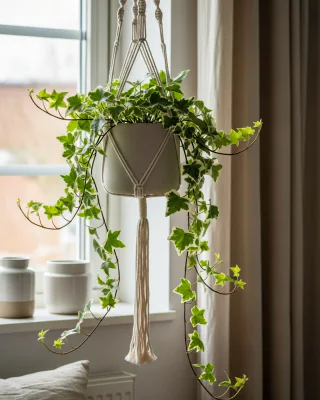
Choose Hedera helix by habit and leaf pattern: trailing or climbing forms, compact pot forms, and adult bushy forms serve different spaces.
 Not sure it’s this plant?Check yours with a photo, free
Toxic to pets
English ivy varieties
- 01
Plant names and labels
This page covers Hedera helix, common or English ivy. Keep it separate from other ivy species such as H. colchica and H. algeriensis.
Within H. helix, useful choices include trailing or climbing forms, compact or miniature pot forms, and adult-only bushy non-climbers such as ‘Arborescens’. Juvenile and adult growth also differ in leaf shape and habit.
- 02
How the varieties differ
Examples include ‘Buttercup’ with broad yellow leaves, ‘Ceridwen’ with compact three-lobed green-and-yellow leaves, ‘Midas Touch’ with golden splashes on a small climber, and ‘Duckfoot’ with small duck-foot-shaped leaves. Attach each trait to its cultivar label.
- 03
Care differences
For indoor pots, choose small-leaved or slow-growing cultivars and use indirect or low light. Give brighter indirect light when a variegated form loses its pattern. Climbing forms need support or a trailing position, while compact forms do not need the same training.
- 04
Limits of plant labels
These cultivars are examples from a much larger range. Outdoor growth rate, hardiness and mature form may not match a small indoor pot, so keep the nursery label and indoor setting visible.
All English ivy guides
Sources3 references
- Royal Botanic Gardens, Kew: Plants of the World OnlineAccepted name · classification · native range
- Royal Horticultural SocietyWhy grow ivy indoors · planting · ongoing care · watering · feeding · problems · Plant profile · growing conditions · moisture · position
- North Carolina State University Extension Gardener Plant ToolboxHouseplant versus landscape context · insects, diseases, and other plant problems
Last reviewed: