



Areca palm pruning
Dypsis lutescens
Quick answer
Half-dead or yellowing lower fronds are usually a sign of potassium or other nutrient shortage, and cutting them off speeds the palm’s decline. Clemson Extension adds that palms cannot be pruned back to make them shorter.
- Pet safetyPet-safe (non-toxic)




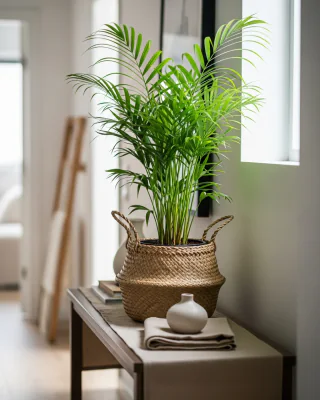
Areca palm pruning
- 1
Which areca palm fronds to cut
Broschat writes that removing completely dead leaves, and flower and fruit stalks, is never a problem. Half-dead or discolored lower leaves are a different story: they are a symptom of potassium or other nutrient shortage and should stay on the palm.
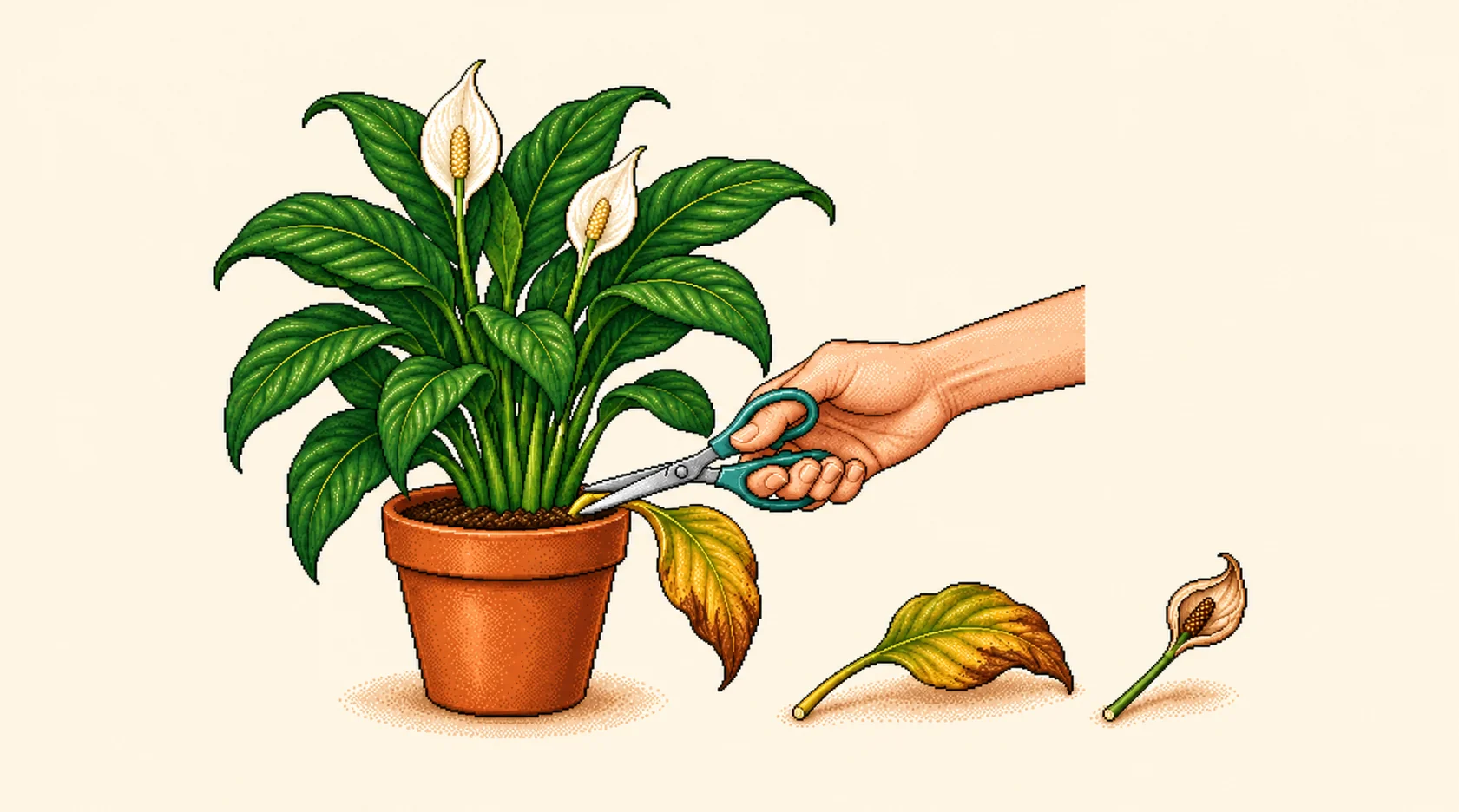
More about this
Areca palm pruning means removing only fronds that are completely dead and brown, as UF/IFAS palm researcher Timothy Broschat advises, and never the green ones.
The areca needs little pruning at all. UF/IFAS lists its pruning requirement as little, and the RHS says no pruning is required.
- 2
Areca palm pruning checklist
Cut: fronds that are completely brown and dead, and old flower or fruit stalks (Broschat). Leave: green fronds, and yellow, spotted or half-dead fronds (Broschat).
More about this
Never: fronds with their tips above horizontal, the 9 and 3 o’clock line, which the ANSI pruning standard that Broschat cites rules out.
Tip: a frond that has died usually drops down and hangs against the stem, Broschat says, while a potassium-starved one stays in its normal place in the canopy.
- 3
Why you never cut green fronds
Potassium moves inside the palm. Broschat explains that when older discolored leaves are removed, the palm pulls potassium from the next leaves up, which are still green.
More about this
Repeated pruning of these leaves reduces the number of healthy green leaves and, in badly deficient palms, speeds decline toward death.
UF/IFAS adds that palms naturally move nutrients into younger leaves from fronds that are browning, so cutting fronds can deprive the palm of nutrients it needs.
- 4
Yellow fronds: feed instead of cutting
UF/IFAS says older areca leaves often turn yellow from potassium shortage, speckled with bronze or yellow. Broschat says it is better to treat the shortage with fertilizer than to cut the leaves off, only to have the symptoms return.
More about this
For an indoor areca, Clemson recommends a slow-release palm fertilizer such as 8-2-12 or 12-4-12 with micronutrients, two to three times a year in spring and summer.
- 5
How to remove a dead frond
Cut dead leaves close to the stem, but never cut into the stem itself, Broschat says, because wounds let a deadly trunk rot in. On palms that keep their dead leaves, you may have to cut or pull them off by hand.
More about this
Never pull off a leaf that does not come away easily. Broschat warns that pulling hard tears a strip of stem tissue off with it and leaves the same kind of wound.
- 6
Brown leaf tips: find the cause
Clemson names three causes of brown tips and leaf browning on indoor palms: too much fertilizer, which browns the tips of lower leaves, dry air or lack of water, and cold, which leaves reddish-brown dead areas after a few days.
More about this
Fix the cause first. Clemson suggests a humidifier or weekly misting for dry air and keeping palms away from drafts at doors, windows and air conditioning.
- 7
Too tall? Palms cannot be cut down
An overgrown plant has to be discarded or, if it is a hardy type, moved outdoors.
More about this
Clemson Extension says palms grow from a single high central growing point, so they cannot be pruned back to reduce their height.
Clemson says arecas grow 6 to 10 inches a year and reach 6 to 7 feet indoors, so give them room. NC State lists division as one way to propagate the areca.
- 8
Is areca palm safe for pets?
The ASPCA lists the areca palm as non-toxic to dogs, cats and horses, so dead fronds are no danger to pets.
More about this
NC State notes that the heart of palm, the growing tip, contains cyanide compounds and should not be eaten. Leave the growing tip alone when you prune.


Common questions
Should I cut off brown areca palm fronds?
Yes, once they are completely brown and dead. Broschat says removing fully dead leaves is never a problem.
Should I cut yellow leaves off my areca palm?
No. Broschat says yellow or half-dead fronds still feed the palm with potassium, and removing them speeds its decline. Fertilize instead.
Can I cut an areca palm to make it shorter?
No. Clemson Extension says palms grow from one high central point and cannot be pruned back to reduce height.
How do I remove dead fronds from an areca palm?
Cut them close to the stem without cutting into it, and never pull off a frond that does not come away easily, as Broschat advises.
Is areca palm toxic to cats?
No. The ASPCA lists the areca palm as non-toxic to dogs, cats and horses.
All areca palm guides
Keep reading
Sources7 references
- UF/IFAS Extension: Pruning palms (ENH1182, Timothy K. Broschat)
- UF/IFAS Extension: Care and maintenance of landscape palms in South Florida (ENH866, Worden, Broschat and Yurgalevitch)
- UF/IFAS Extension: Dypsis lutescens, yellow butterfly palm (ENH324)
- Clemson Cooperative Extension HGIC: Indoor palms
- RHS: Dypsis lutescens
- NC State Extension Plant Toolbox: Dypsis lutescens
- ASPCA Animal Poison Control: Areca palm
- How we check our plant advice
How we check our plant advice → · Last reviewed: