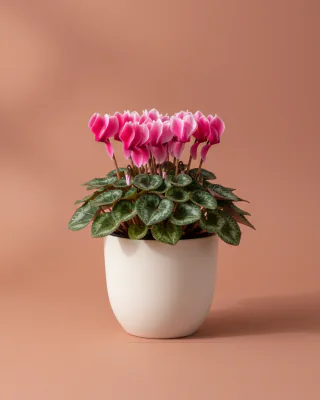
From October to March a cyclamen is normally growing and flowering, so yellow leaves now usually point to its spot or its watering, not to its summer rest. The common causes are heat from a radiator or a warm room, soil kept too wet or too dry, and too little light. Move it somewhere cool and bright, away from heat, and water only when the surface of the soil feels dry.
Yellow leaves after flowering can fit summer dormancy when growth has stopped and the tuber is firm. Wet soil or a soft tuber points elsewhere, so check those signs before watering.
What’s causing it
Compare the timing with the plant’s growth. After flowering, normal dormancy can yellow leaves. Wet soil, a soft tuber, or dry soil during active growth call for different checks.
Summer dormancy after flowering
How to tell
Leaves yellow after flowering, growth has stopped, and the tuber feels firm. This pattern can fit normal summer dormancy.
The fix
Keep Cyclamen bright and cool and water very sparingly while it rests. Increase watering gradually when new growth starts.
Overwatering & early root rot
How to tell
The soil is still wet days after watering, the lower and oldest leaves yellow first, and the stem base may feel soft. Small dark flies around moist potting medium may be fungus gnats. They suggest conditions suitable for breeding, without proving that the surface never dries.
The fix
Stop watering. Make sure the pot can actually drain, and wait until the top 2 cm (0.8 in) of soil feel dry. If the base is mushy or smells sour, unpot it and trim any brown, soft roots before repotting in fresh mix.
The soil is bone dry, and the yellowing arrives alongside wilting leaves rather than soft, mushy growth.
The fix
If the soil is dry and the plant is actively growing, water thoroughly and let the excess drain. If it is resting or the soil is wet, do not add water just because the leaves are yellow.
Too little light
How to tell
The yellowing comes with pale, stretched new growth leaning toward the nearest window. That combination shows that the spot is too dim for a Cyclamen.
The fix
Move it to a brighter spot, but keep it out of harsh midday sun, which scorches.
Hungry (nutrient shortfall)
How to tell
Older leaves fade to an even pale yellow and growth has clearly slowed, usually after many months in the same tired mix.
The fix
Feed with a balanced, diluted liquid fertilizer through the growing season, and refresh the top layer or repot if it’s been over a year.
Simple old age
How to tell
A single bottom leaf slowly yellows while the rest of the plant looks healthy and is pushing new growth.
The fix
Nothing is wrong. Snip the spent leaf off and carry on. Plants retire their oldest leaves.
Check these three things
Heat. By a radiator, over a heat vent or in a warm room? Hot, dry air yellows the leaves and stops buds developing. Move it somewhere cooler, ideally about 15 to 18 °C (59–64 °F) by day and about 10 °C (50 °F) at night.
The soil. Still wet days after watering, or a soft tuber: too much water. Let it dry, then water from below. Bone dry with soft, limp leaves: water it thoroughly.
Light. Far from the window? Move it to bright light, out of hot midday sun.
Is it normal?
In winter, a single old leaf yellowing now and then is normal. If all the leaves slowly turn yellow in late spring, after flowering, its summer rest is starting: water less and let it rest.
Prevention
Yellow leaves alone cannot distinguish dormancy, thirst, and root rot. Check the timing, soil moisture, active growth, and whether the tuber is firm.