



How to propagate croton
Codiaeum variegatum
Croton propagates best from stem cuttings in spring or summer. Cuttings usually root in 4–6 weeks.

 Not sure it’s this plant?Check yours with a photo, free
Toxic to pets
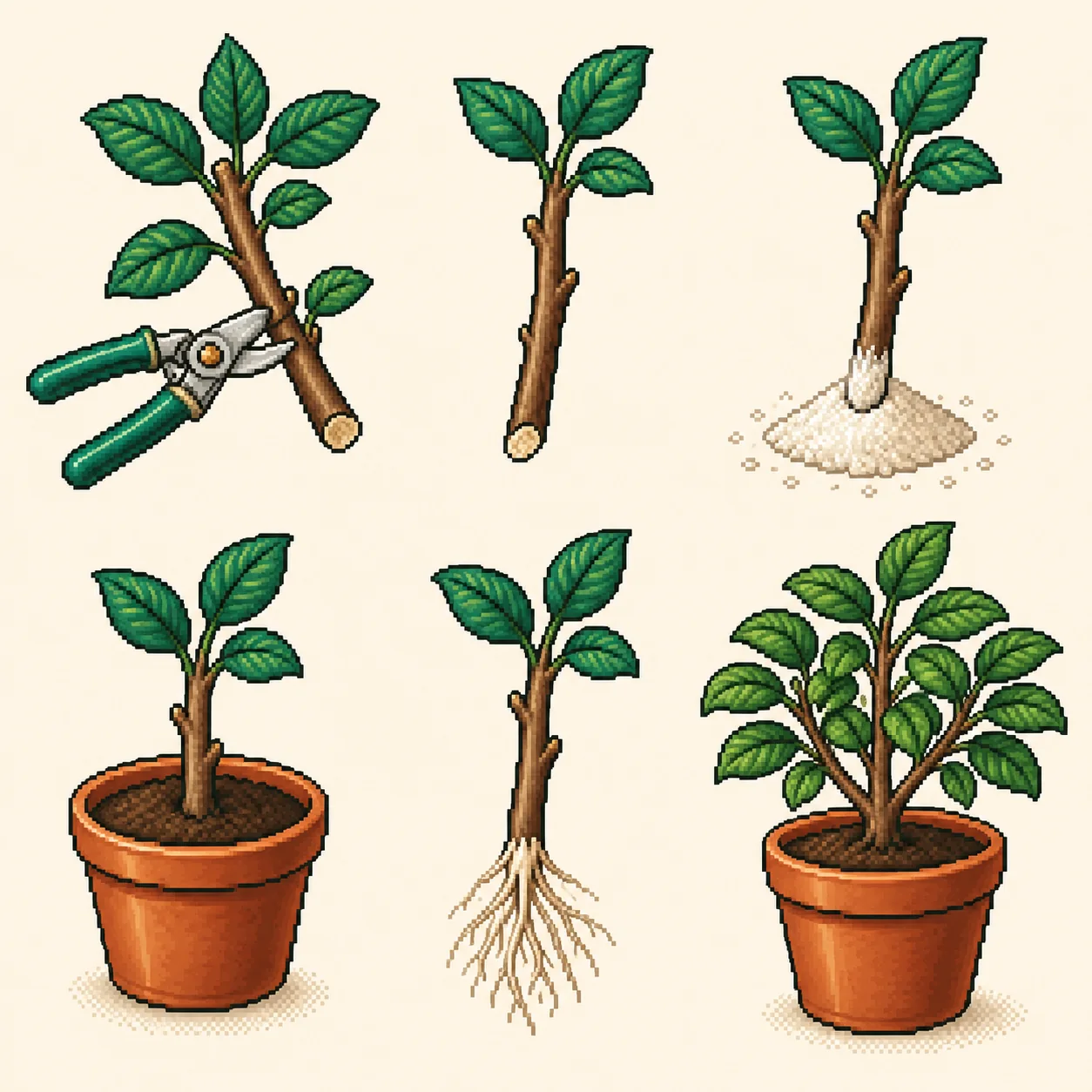
How to propagate by stem cuttings
Stem cuttings are a reliable way to propagate croton. Each cutting contains a node (the small bump or joint where a leaf attaches), and that node is where new roots will grow.
Wear gloves before cutting or dividing. Sap and foliage can irritate skin, especially after repeated contact. Avoid touching your face, and wash your hands after handling.
- 01
Choose a healthy stem with at least one node and one or two leaves. In spring or early summer the plant is growing actively, so cuttings root fastest.
- 02
Cut just below a node using clean, sharp scissors or a knife. A cutting of 10–15 cm (4–6 in) with one or two leaves is ideal.
- 03
Remove any leaves from the bottom 5 cm (2 in) so they don’t rot in water or soil.
- 04
Choose one
Water method Place the cut end in a glass of room-temperature water, keeping the leaves out of the water. Change the water every three days. Move to soil once roots are 2–3 cm (0.8–1.2 in) long.
Soil method Dip the cut end in rooting powder (optional), then push it 3–4 cm (1.2–1.6 in) into damp potting mix. Cover loosely with a clear bag to keep humidity high.
- 05
Keep the cutting in bright, indirect light and warmth (above 18 °C / 64 °F). Avoid direct sun, which wilts the cutting before roots form.
- 06
Usually roots in 4–6 weeks. New leaves alone do not prove that roots have formed. Check for visible roots or gentle resistance in the mix without pulling the cutting out. Once rooted, gradually increase ventilation and remove any cover over about two weeks before moving to normal care.
All croton guides
Keep reading
Related plants
Common questions
What is the best way to propagate croton?
The most reliable method for croton (Codiaeum variegatum) is stem cuttings. It requires some care but is well within reach of most houseplant owners.
When should I propagate croton?
The best time is spring to summer, when the plant is actively growing and roots form most quickly.
How long does it take croton to root?
Expect roots to appear within roughly 4–6 weeks, given warm temperatures and good indirect light.
Propagation guidance is based on genus-level horticultural knowledge. Individual specimens can vary.
Sources: UF/IFAS, RHS, NC State Extension.
6 steps · 4–6 weeks · Last reviewed: