Most likely cause Dry air (low humidity) How to tell
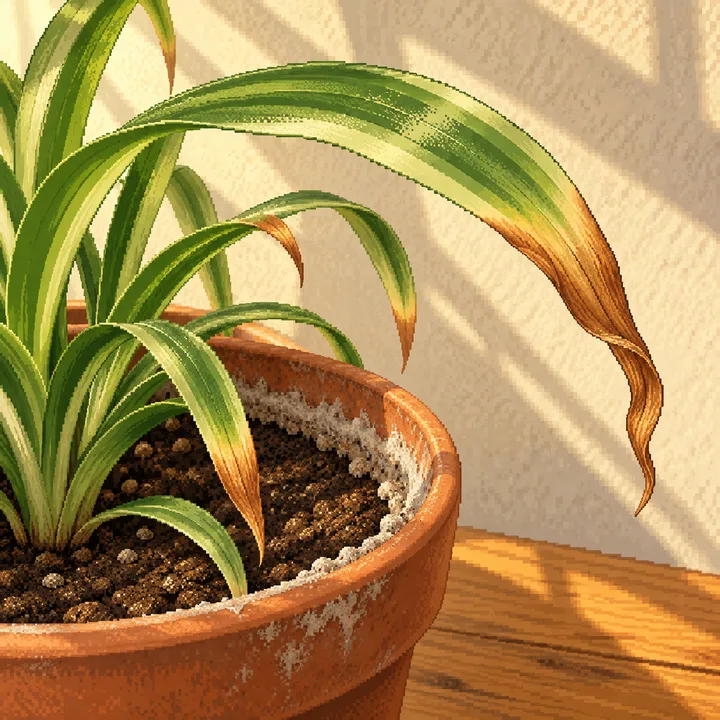
Just the very tips and edges go brown and papery while the rest of the leaf is fine. The fix
1 Raise humidity: group plants together, sit the pot on a tray of damp pebbles, or run a humidifier.
2 Misting helps only briefly.
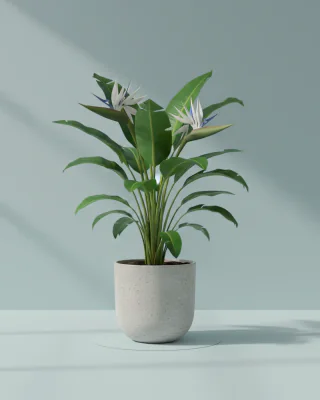
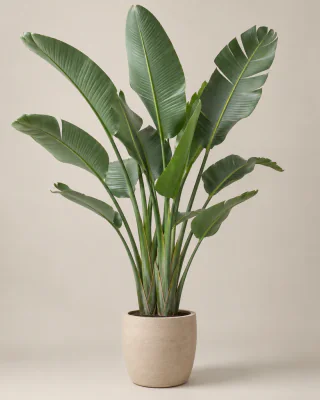
More about this This is most common in winter with the heating on, and white bird of paradise (alba) prefers 50–70% humidity.
Other possible causes Not a match? Compare the signs below to find the one you have.
Inconsistent or under-watering The soil dries out hard between waterings, so the tips (the last to get water) crisp first.
The fix
1 Water more evenly: check the soil regularly and don’t let it go completely bone dry, then soak thoroughly.
Hard-water minerals and accumulated saltsTips brown slowly over months despite even watering, and a white crust builds up on the soil surface or the pot rim.
How to tell
Hard water or fertilizer salts can leave this crust. The fix
1 Switch to rainwater or distilled water, and flush the pot occasionally to wash out built-up salts.
More about this It does not identify fluoride injury.
Fertilizer burn Tips brown within a week or two of feeding, sometimes with a white crust on the soil surface or the pot rim.
The fix
1 Flush thoroughly with plain water and feed less often, always diluted.
More about this It follows feeding too often or too strong.
Too much direct sun Dry brown patches or scorched edges show up where strong sun hits the leaf.
How to tell
White bird of paradise (alba) wants bright light and some direct sun. The fix
1 Filter the harshest midday sun with a sheer curtain for a few weeks, then reintroduce the sunny spot gradually so the leaves can harden off.
The Botanicaly app
A next step for your white bird of paradise (alba). Take a photo in the free app: your first health check looks at your plant and tells you what to do next.
Get the app → Scan with your phone to get the app.
All white bird of paradise (alba) guides
Last reviewed: 26 October 2026