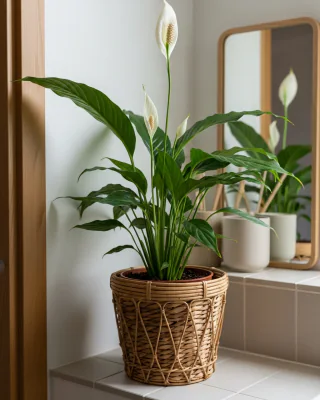



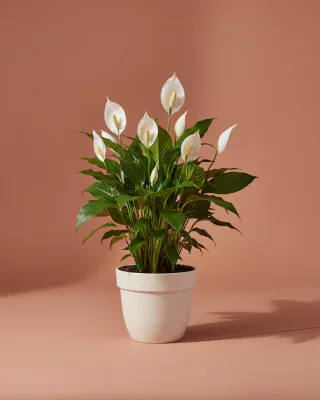
Giant peace lily care guide
Spathiphyllum 'Sensation'
Quick answer
Water your giant peace lily when the top 3 cm (1.2 in) of soil feel dry. In summer that’s typically every 6 to 8 days.
- WateringEvery 6 to 8 days · summer
Every 11 to 17 days · winter - LightBright, indirect light
- Climate18–29 °C (64–84 °F)
- Pet safetyToxic to cats and dogs




How to water giant peace lily
3 cm (1.2 in)
- Summer · Jun–AugEvery 6 to 8 days
- Winter · Dec–FebEvery 11 to 17 days
Use room-temperature water and let any excess drain. Never leave the pot sitting in standing water.
Adjust the timing for the light at the plant, the pot’s size and material, and the humidity indoors. Terracotta dries faster than glazed ceramic.
Work out your own rhythm with the watering calculator.
Light and placement for giant peace lily
Bright, indirect light
Giant peace lily thrives in bright, indirect light. Direct midday sun can scorch the leaves. Place it 1–2 meters back from an east or west window, or behind a sheer curtain on a south window.

Feeding giant peace lily
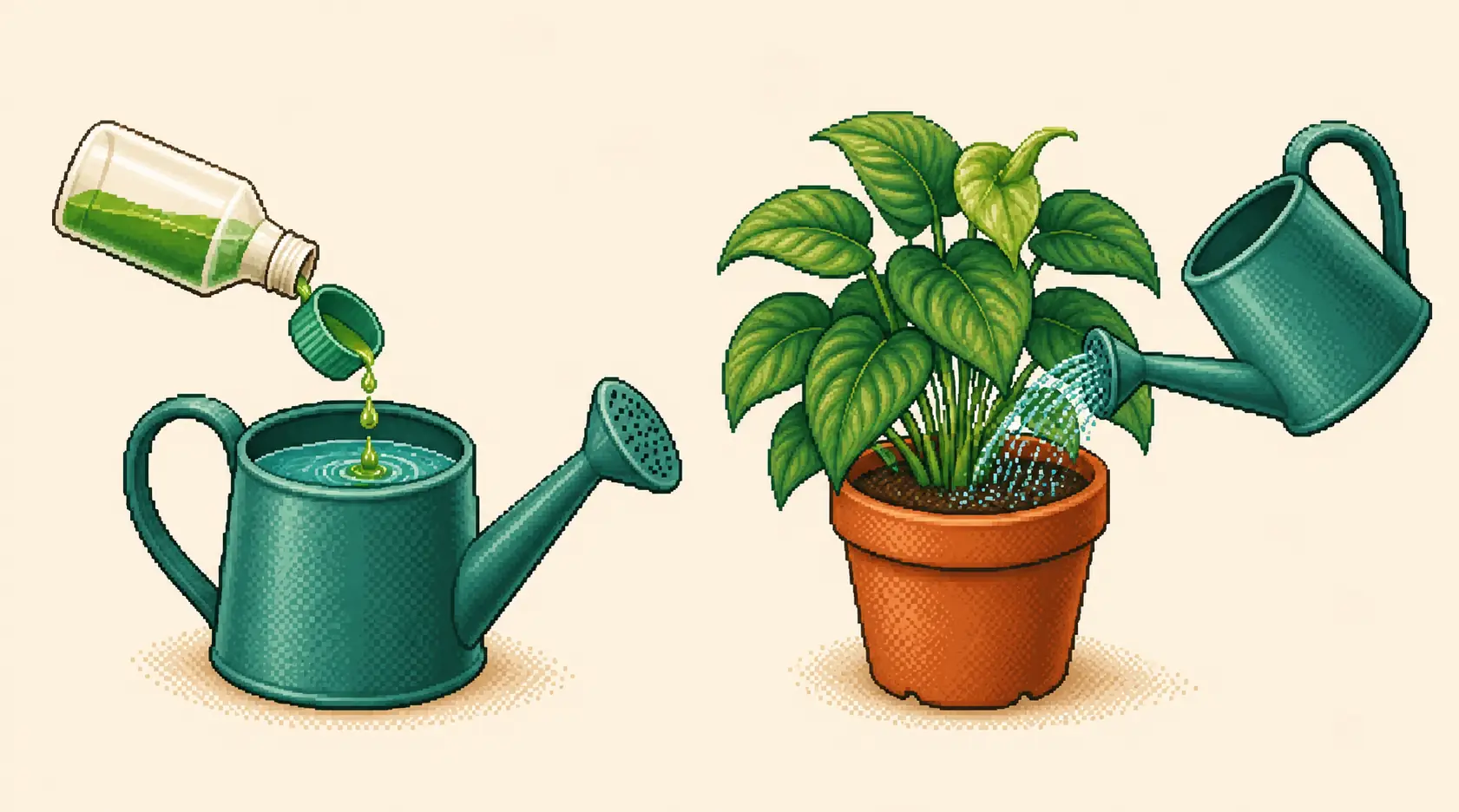
Feed your giant peace lily every 30 days while it’s actively growing. Use a balanced liquid houseplant fertilizer at half the strength on the label, and only on soil that’s already damp. Feeding dry roots can scorch them.
When growth pauses, skip the fertilizer and let it rest.
Temperature & humidity
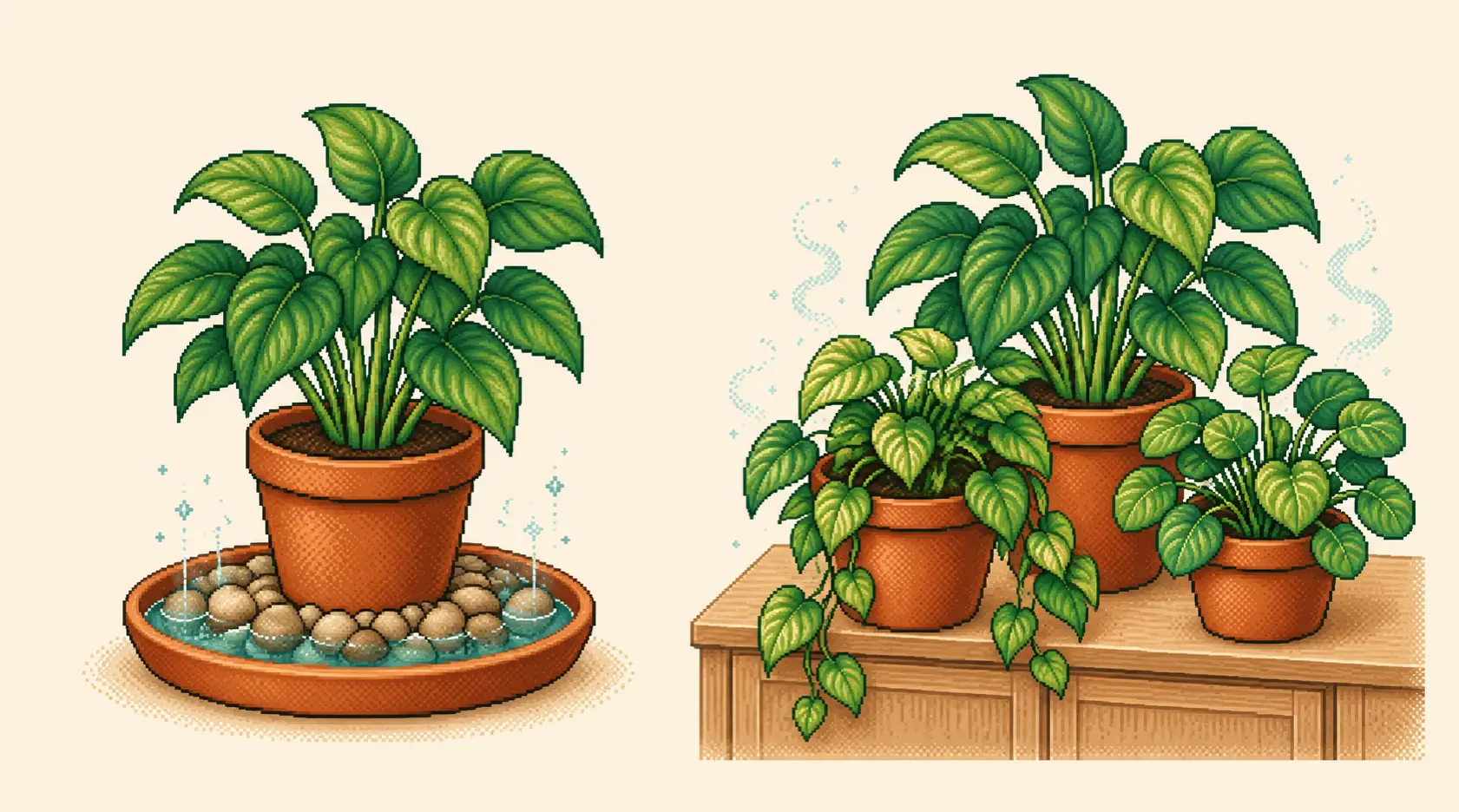
Climate18–29 °C (64–84 °F)
Humidity50–70%
During leafy growth, aim for 18–29 °C (64–84 °F). For routine indoor care, keep it above about 12 °C (54 °F) and avoid cold drafts. This is a care guideline, not an exact damage threshold. Cooler overwintering depends on the species and its rest conditions.
It does best at 50–70% humidity. It doesn’t need misting.

Giant peace lily in winter
Watering: every 11 to 17 days. Temperature year-round: 18–29 °C (64–84 °F).
When growth pauses, skip the fertilizer and let it rest.

Common giant peace lily problems
Yellowing, drooping, and dry edges often point to watering or drainage. Compare the signs before changing the routine.
Find what’s wrong
Is giant peace lily toxic to cats and dogs?
Yes. Keep it out of reach.
Pet-safety information in the JungleBook uses ASPCA reference data where available. It is reference information, not veterinary advice.
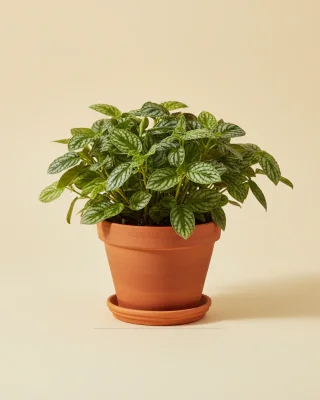
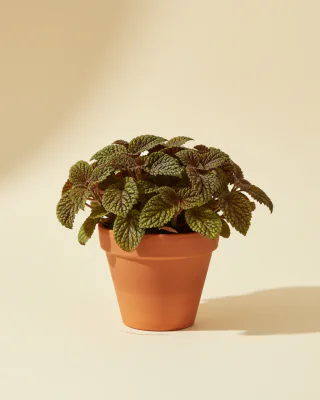
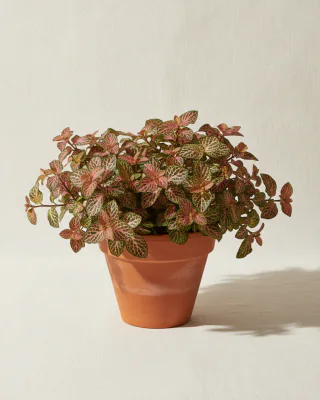
Pet-safe alternatives with similar light
Common questions
How often should I water a giant peace lily?
Water your giant peace lily (Spathiphyllum 'Sensation') when the top 3 cm (1.2 in) of soil feel dry. In summer, that’s typically every 6 to 8 days. In winter, slow down to every 11 to 17 days.
How much light does a giant peace lily need?
Giant peace lily thrives in bright, indirect light. Direct midday sun can scorch the leaves. Place it 1–2 meters back from an east or west window, or behind a sheer curtain on a south window.
Is giant peace lily safe for cats and dogs?
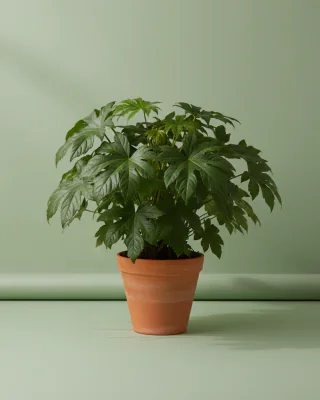
Toxic to cats and dogs if chewed. Keep giant peace lily out of reach of pets, or pick a non-toxic alternative like Japanese aralia, aluminum plant, friendship plant, or nerve plant.
Why is my giant peace lily turning yellow or drooping?
Yellowing, drooping and brown tips can have several causes. Check the potting mix before adding water and follow this plant’s watering and rest instructions. If the mix is still wet, do not add more water. Check drainage and roots, then light, humidity, water quality and pests. Faded color or webbing alone does not show that the roots need water.
Sources
- This guide follows established plant-care guidance and official ASPCA pet-safety references. How we verify our plant data →
- How we check our plant advice
How we check our plant advice → · Last reviewed: