First, check the soil. Push a finger 2 to 3 cm (0.8–1.2 in) into it and lift the pot. Dry and light means thirst. Wet and heavy means too much water or poor drainage.
Most likely cause
Overwatering & root rot
How to tell
Soggy roots can also cause drooping because damaged roots cannot take up water.
The soil is wet, the base feels soft, and adding more water makes the damage worse.
Small dark flies around moist potting medium may be fungus gnats.
The fix
1
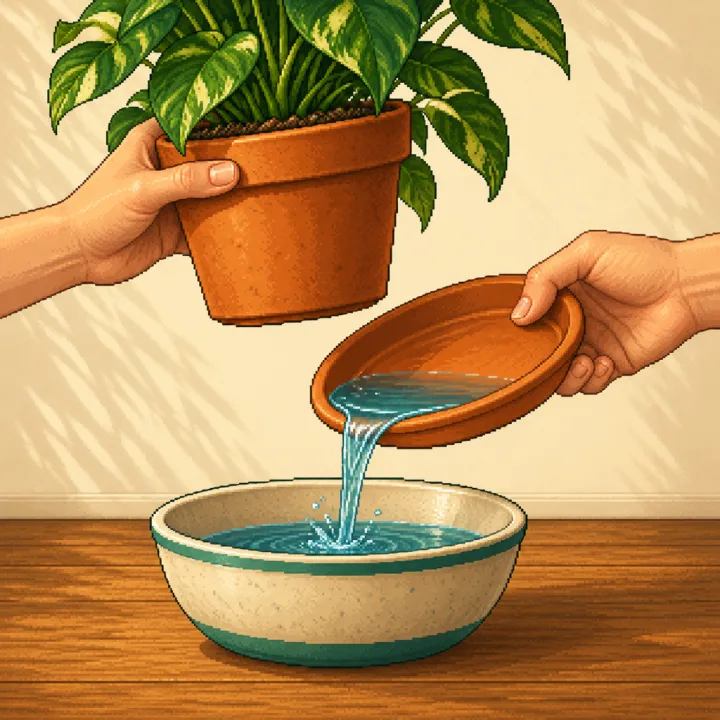
Water according to moisture, only when the top 3 cm (1.2 in) of soil feel dry.
2
Check drainage and do not water just because a calendar says it is time.
3
Remove rotten roots and replace soggy mix.
More about this
They suggest conditions suitable for breeding, without proving that the surface never dries.
For rescue cuttings, wear gloves against irritant sap and use healthy stem tissue with a node. Allow the cut to callus, then root in airy, lightly moist medium. A lone leaf without a node cannot make a new vine.
Other possible causes
Not a match? Compare the signs below to find the one you have.
Thirst (dry potting mix)
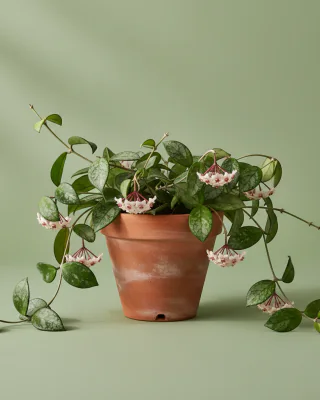
The soil is bone dry and the whole plant has gone limp, often with wrinkled round leaves beforehand.
The fix
1
If the soil is dry, water thoroughly (for a Hoya obovata that’s usually every 6 to 10 days in summer).
More about this
It takes a few days to firm up again.
Cold, wet roots
Cold exposure can damage the plant even with dry roots.
How to tell
Wet mix in a cold spot also increases the risk of rot.
The fix
1
Move it away from cold glass and drafts to a spot with suitable, steady temperatures.
2
Water according to moisture, only when the top 3 cm (1.2 in) of soil feel dry.
3
Check drainage and do not water just because a calendar says it is time.
Recently moved or repotted
Drooping began after a purchase, move or repot.
How to tell
A move can change light and temperature without disturbing the roots.
The fix
1
Check moisture and roots before changing anything.
2
Keep its spot and care steady and don’t fertilize while it settles.
3
If roots were damaged, follow this plant’s repotting guidance.
More about this
Water according to moisture, only when the top 3 cm (1.2 in) of soil feel dry. Check drainage and do not water just because a calendar says it is time.
Too much heat or sun
It wilts in the heat of the afternoon but recovers by evening.
The fix
1
Shift it out of direct midday sun.
2
A temporary wilt in heat is the plant conserving water.
A sudden change while budding
Along with drooping foliage, unopened buds or flowers fall, usually a reaction to a sudden change in light, temperature, or watering just as the Hoya obovata was budding.
The fix
1
Keep its spot and watering completely stable through the bloom cycle.
2
Once it settles, the next flush of buds should hold.