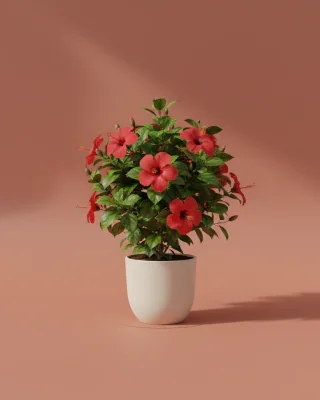
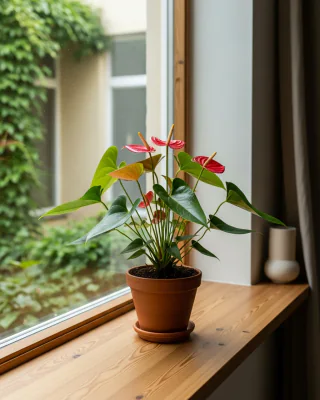
In autumn, yellow hibiscus leaves usually mean the plant has just come indoors or into darker days: it gets far less light and the soil stays wet longer. Some leaf drop after the move is normal. Give it your brightest window, keep it off cold glass at night, and water only when the top of the soil is dry.
This guide is aboutHibiscus Hibiscus rosa-sinensisPet safety unknownHibiscus care guide →
Overwatering & early root rot. Stop watering. Make sure the pot can actually drain, and wait until the top 3 cm (1.2 in) of soil feel dry. If the base is mushy or smells sour, unpot it and trim any brown, soft roots before repotting in fresh mix.
Other possible causes
Not a match? Compare the signs below to find the one you have.
Thirst (underwatering)
How to tell
The soil is bone dry, and the yellowing arrives alongside wilting leaves rather than soft, mushy growth.
The fix
If the soil is dry, water thoroughly (every 2 to 4 days in summer is the usual pace for a Hibiscus), then settle into feeling the soil before every watering rather than watering on a fixed day.
Too little light
How to tell
The yellowing comes with pale, stretched new growth leaning toward the nearest window. That combination shows that the spot is too dim for a Hibiscus.
The fix
Move it to a sunny window. If it has been somewhere dim for a while, move it over a week or two so it can adjust to the stronger light.
Hungry (nutrient shortfall)
How to tell
Older leaves fade to an even pale yellow and growth has clearly slowed, usually after many months in the same tired mix.
The fix
Feed with a balanced, diluted liquid fertilizer through the growing season, and refresh the top layer or repot if it’s been over a year.
Simple old age
How to tell
A single bottom leaf slowly yellows while the rest of the plant looks healthy and is pushing new growth.
The fix
Nothing is wrong. Snip the spent leaf off and carry on. Plants retire their oldest leaves.
Check these three things
The soil, a finger deep. Wet days after watering: overwatering. Bone dry with limp leaves: thirst.
Where it stands. Just moved inside, in a dim room, or against a cold window? Light and cold are the winter causes.
Which leaves. A few older leaves yellowing and dropping in the weeks after a move: the plant adjusting. Yellowing on new leaves too: look at watering and feeding.
Is it normal?
Yes, within limits. A hibiscus brought indoors for winter drops a share of its older leaves while it adjusts to less light. New leaves that come in green mean it has settled. Keep it bright, water less, and do not feed until spring.
Prevention
Feel the soil before every watering instead of watering on a schedule, give it bright light with some direct sun, and feed lightly in spring and summer.