



How to propagate Hibiscus
Hibiscus rosa-sinensis
A practical guide to making more Hibiscus at home: the right method, the right time of year, and what to expect.
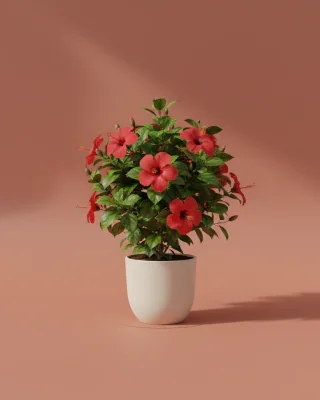
 Not sure it’s this plant?Check yours with a photo, free
Pet safety unknown
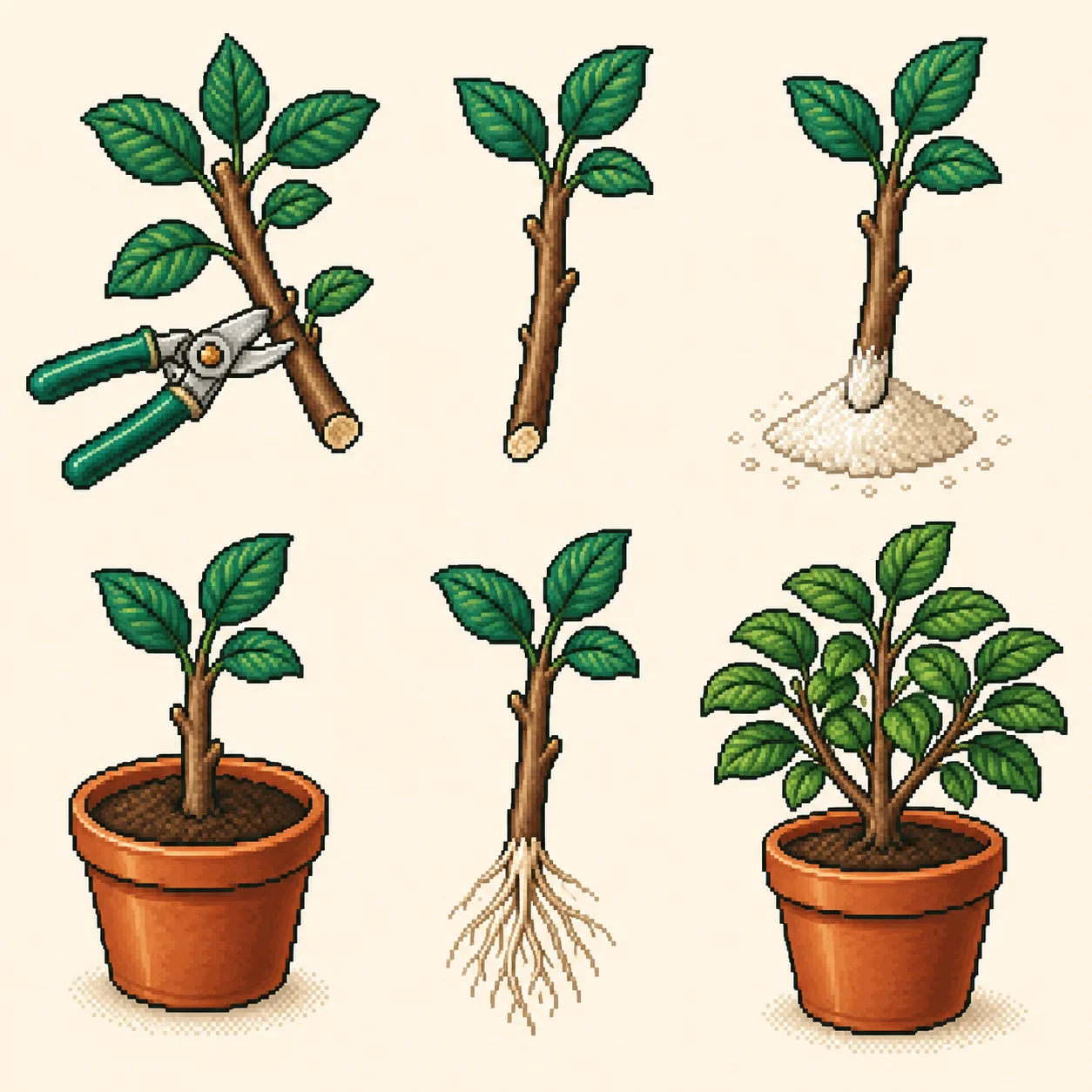
How to propagate by stem cuttings
Hibiscus is grown from stem cuttings, but varieties differ in how readily they root. In University of Hawaii trials, many complex hybrids rooted slowly or not at all, while cuttings of a common single red rooted far better with rooting hormone than without it.
- 01
Take cuttings in summer from this year’s growth. Choose a shoot whose base has firmed up while the tip is still soft.
- 02
Cut a 10–15 cm (4–6 in) length just below a leaf joint with clean, sharp pruners.
- 03
Remove the lower leaves and the soft tip so three or four leaves remain. Cut large leaves in half to reduce water loss.
- 04
Dip the cut end in rooting hormone. In the Hawaii trials, this was the step that made the biggest difference.
- 05
Insert the cutting into a small pot of half potting mix and half sharp sand or perlite. Water it and let it drain.
- 06
Cover the pot with a clear bag or propagator lid and keep it in bright light, out of direct sun. Keep the rooting mix warm, around 21 °C (70 °F). A heated propagator helps in a cool room.
- 07
Roots take about 4 weeks to 3 months. Leave the cutting in place until it resists a gentle tug. Then open the cover a little more each day for two to three weeks, and pot it on into potting mix once it stands without the cover.
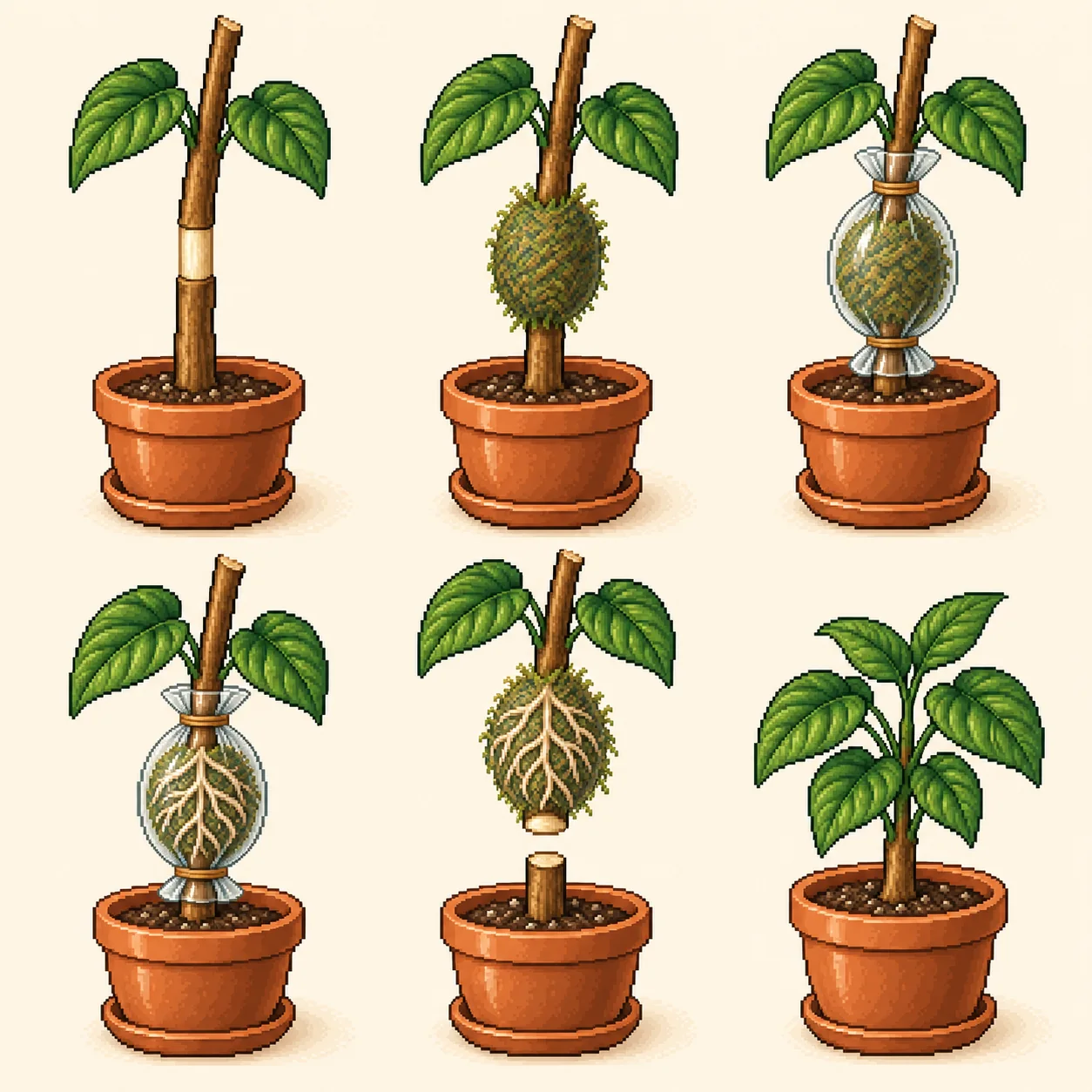
Air layering
Air layering suits a hibiscus variety that will not root from cuttings. The branch stays on the plant and keeps feeding from it until roots form in the moss.
- 01
Air layer in summer. Choose a firm branch at least 1 cm (½ in) thick.
- 02
Remove a ring of bark 1–2 cm (0.4–0.8 in) wide all the way around the branch.
- 03
Wrap the wound in a ball of damp sphagnum moss about 8–10 cm (3–4 in) across.
- 04
Cover the moss tightly with clear plastic film and tie both ends to the branch so the moss does not dry out.
- 05
Roots usually show through the plastic after 6–8 weeks.
- 06
Cut the branch below the moss ball, remove the plastic and pot the rooted section in potting mix.
All Hibiscus guides
Keep reading
Related plants
Common questions
What is the best way to propagate hibiscus?
Take semi-ripe stem cuttings in summer, dip them in rooting hormone and keep them warm under a cover. For a variety that will not root from cuttings, air layer a branch while it is still on the plant.
Why won’t my hibiscus cutting root?
Hybrid varieties differ widely, and many root slowly or not at all. Use rooting hormone, keep the rooting mix around 21 °C (70 °F) and allow up to 3 months. Nurseries graft the hardest varieties onto easy-rooting plants.
Can I grow hibiscus from seed?
Yes, but seed is mainly used to breed new varieties, so seedlings will not match the parent. Seedlings take 10–14 months to flower.
Sources: the RHS Hibiscus rosa-sinensis profile supports semi-ripe cuttings in summer and seed. The RHS semi-ripe cuttings guide supports the cutting length, leaf trimming, sandy rooting mix and heated propagator. The University of Hawaii CTAHR ornamental hibiscus bulletin supports the uneven rooting of hybrids, the effect of rooting hormone, rooting within 2–3 months, air layering, grafting and seed for breeding. UF/IFAS Landscape Plant Propagation Information (archived copy) supports a 21 °C (70 °F) rooting mix, 4–6 weeks to root, air layering in 6–8 weeks and 10–14 months from seed to flower. NC State Extension lists stem cuttings as the method.
7 steps · 4 weeks to 3 months · Last reviewed: