



How to prune a fiddle-leaf fig
Ficus lyrata
Quick answer
Before pruning, wear gloves, avoid sap on skin and eyes, wash your hands, and keep cut material away from pets. Choose the over-tall leader or leggy side branch, then cut just above a node to invite a new branch. Do not start by cutting healthy leaves.
 Not sure it’s this plant?Check yours with a photo, free
Toxic to pets
How to prune a fiddle-leaf fig
- 01
Choose what to remove
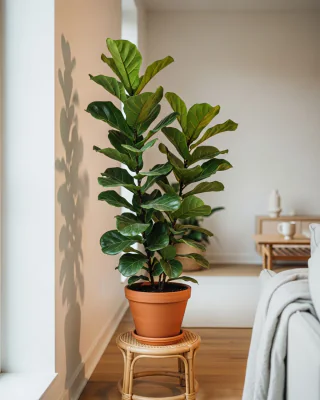
Before pruning, wear gloves, avoid sap on skin and eyes, wash your hands, and keep cut material away from pets. For an indoor fiddle-leaf fig, the practical target is an over-tall leader or leggy side branch. Make the decision on the stem and its node, not by randomly cutting individual large leaves.
Pruning can reduce indoor height, shorten drooping or overlong branches, and change a single-stem tree into a lower-branching shrub-like form. Corrective pruning also has a structural role in a young landscape tree.
- 02
Prune at the right time
Spring is the more responsive time for an indoor size cut because houseplants produce less new growth in autumn and winter. A hazardous or space-blocking branch may require a different decision.
- 03
Make one clean cut
Use a clean cut just above a node on the selected stem so the node can be the site of a new branch. Shorten only the branch needed for the intended height or balance instead of applying a blanket percentage.
- 04
When pruning will not help
A hard indoor cut permanently changes the plant’s silhouette and may leave it shrub-like. A mature outdoor Ficus lyrata tree, weak branch union, or stressed container plant is outside a casual one-size-fits-all haircut.
All fiddle-leaf fig guides
Keep reading
Sources4 references
- Royal Botanic Gardens, Kew: Plants of the World OnlineAccepted name · classification · native range · common name
- North Carolina State University Extension Gardener Plant ToolboxDescription · indoor cultural conditions · insects, diseases, and other plant problems
- University of California Agriculture and Natural ResourcesHouseplant care · water when top two inches dry · feeding · humidity · toxicity
- Royal Horticultural SocietyPlant profile · position · soil · moisture · under-glass · pests and diseases
Last reviewed: