



How to propagate fiddle-leaf fig
Ficus lyrata
A practical guide to making more fiddle-leaf fig at home: the right method, the right time of year, and what to expect.
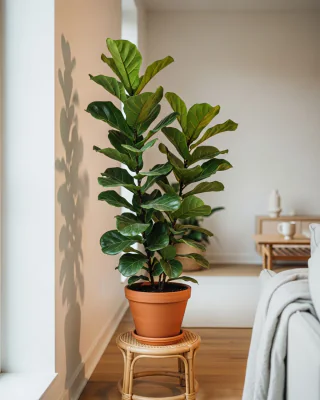
 Not sure it’s this plant?Check yours with a photo, free
Toxic to pets
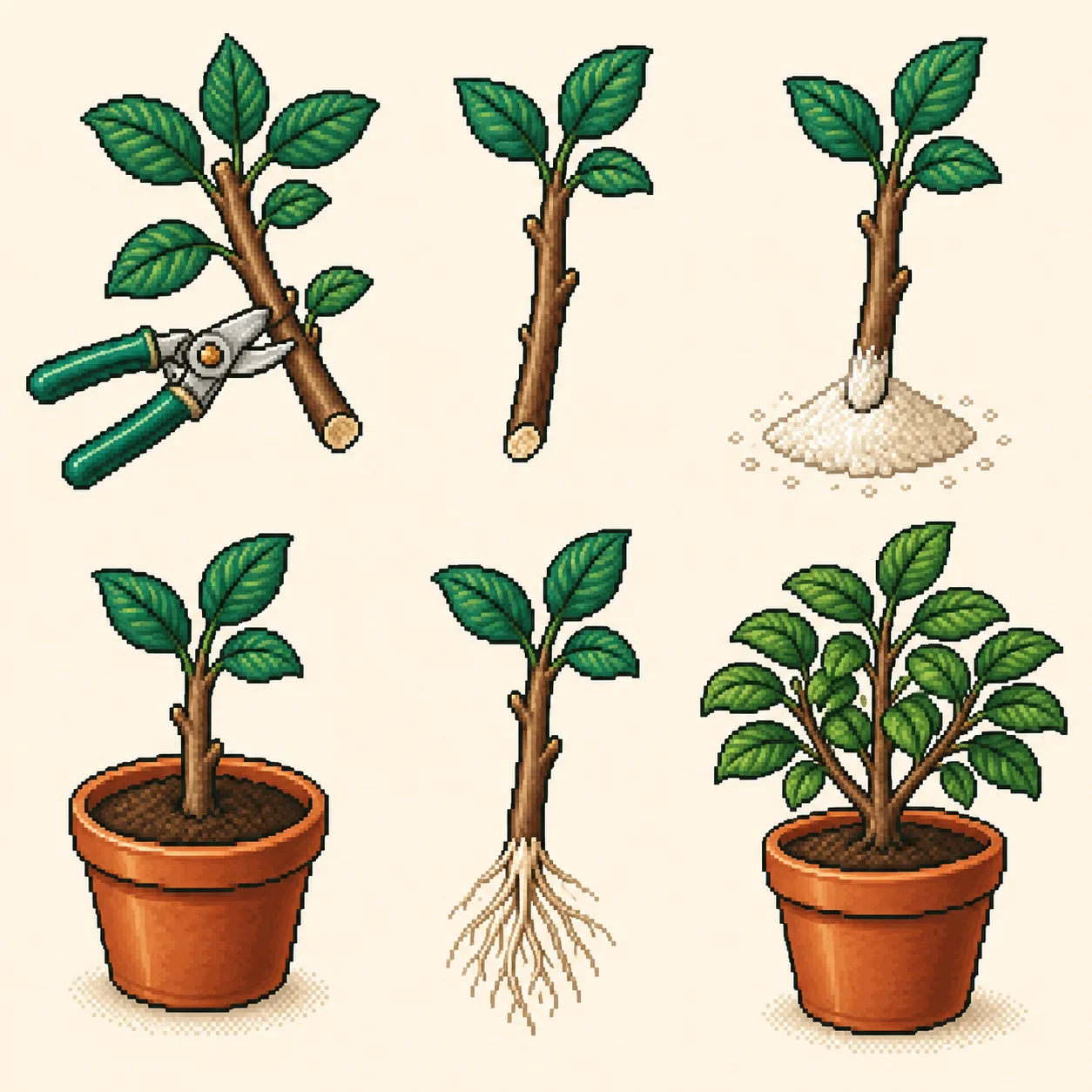
How to propagate by stem cuttings
Fiddle-leaf fig roots from semi-ripe or leaf-bud cuttings. Each piece needs a leaf joint with its bud, because the new shoot grows from that bud.
Wear gloves before cutting or dividing. Sap or foliage can irritate skin. Avoid contact with eyes and mouth, and wash your hands after handling. Keep cut pieces out of reach of children and pets.
- 01
Work in spring or summer and put on gloves. The milky sap irritates skin.
- 02
Cut a shoot tip 10–15 cm (4–6 in) long with two or three leaves, just below a leaf joint. For leaf-bud cuttings, cut a shoot into pieces that each keep one leaf, its bud and a short length of stem.
- 03
Remove any leaf that would sit in the mix. The leaves are large, so cut the remaining ones back by half to reduce water loss.
- 04
Insert each cutting into a small pot of half potting mix and half sharp sand, with the bud just above the surface. Water it and let it drain.
- 05
Cover the pot with a clear bag or propagator lid and keep it warm and bright, out of direct sun. A heated propagator helps.
- 06
Rooting time varies with warmth. Pot the cutting on into potting mix once it resists a gentle tug and grows a new leaf.
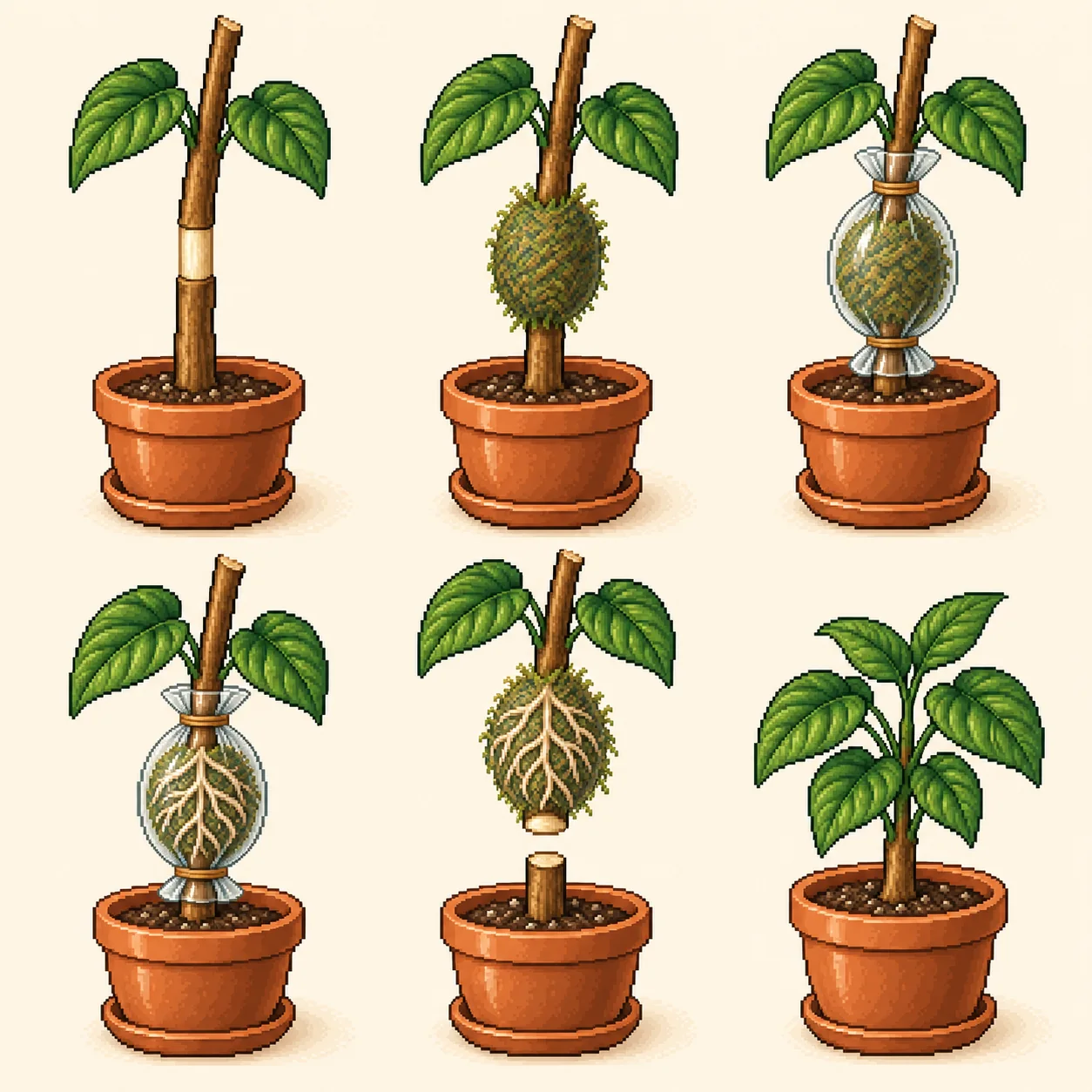
Air layering
Nurseries air layer fiddle-leaf fig stock plants. It suits a plant that has grown tall with a bare lower stem, because the leafy top becomes the new plant.
- 01
Air layer in spring. Pick a point on the stem 30–45 cm (12–18 in) below the tip and remove the leaves just there.
- 02
Wearing gloves, cut a ring of bark about 2.5 cm (1 in) wide around the stem and scrape the exposed wood clean.
- 03
Dust the wound with rooting hormone and pack one or two handfuls of damp sphagnum moss around it.
- 04
Wrap the moss in clear plastic and tie it firmly above and below.
- 05
Keep the parent plant watered while the layer forms. Dry spells can leave small reddish spots on the undersides of fiddle-leaf fig leaves.
- 06
Roots can take several weeks to several months. Once a good cluster shows through the plastic, cut the stem just below the lower tie, remove the plastic and pot the new plant in potting mix.
All fiddle-leaf fig guides
Keep reading
Related plants

Common questions
What is the best way to propagate a fiddle-leaf fig?
Take a cutting with at least one leaf joint and its bud in spring or summer, and root it in a warm, covered pot. For a tall plant with a bare stem, air layering gives a larger new plant.
Can a single fiddle-leaf fig leaf grow into a new plant?
Only if it keeps the bud where it joined the stem. A leaf cut off without that bud has no growing point for a new shoot, so take a leaf-bud cutting with a short piece of stem.
Is fiddle-leaf fig sap harmful?
The milky sap can irritate skin. Wear gloves when you prune the plant or take cuttings.
Sources: the RHS Ficus lyrata profile supports leaf-bud and semi-hardwood cuttings and lists the plant as a skin allergen. The RHS ornamental figs guide supports cuttings in spring or summer, a heated propagator and gloves for the sap. The RHS semi-ripe cuttings guide supports the cutting length, halving large leaves and the sandy mix. NC State Extension supports stem cuttings and gloves when propagating. Iowa State Extension supports the air-layering position, bark ring, moss, wrap and timing. The UF/IFAS Ficus production guide (archived copy) supports air layering of fiddle-leaf fig stock plants and leaf spotting under moisture stress.
Sources: RHS.
6 steps · Varies with warmth. Pot on after new growth · Last reviewed: