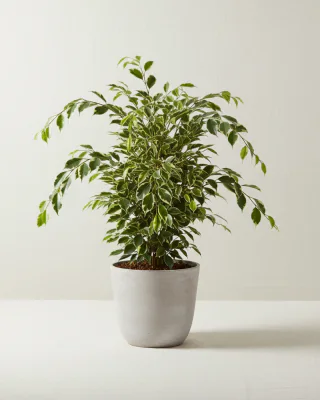
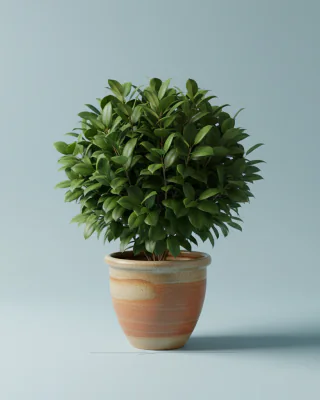
Abrupt relocation or a change in light, temperature or watering can trigger leaf drop. A modest routine turn for balanced growth differs from moving the plant to a new spot.
The fix
Keep light, temperature and watering steady while the plant recovers. Avoid abrupt relocation. Once settled, a small routine turn can support balanced growth. Check moisture before changing watering.
Other possible causes
Not a match? Compare the signs below to find the one you have.
Cold drafts or temperature swings
How to tell
It sits in a draft, near a cold window, or next to a heater, and leaves fall after a cold snap or a sudden temperature swing.
The fix
Move it somewhere with stable, draft-free temperatures.
Too little light
How to tell
It quietly sheds its lower and inner leaves over weeks while new growth stays small and pale. Weeping fig wants bright light and some direct sun.
The fix
Give it a brighter position, out of harsh midday sun.
Overwatering
How to tell
Leaves yellow and then drop, and the soil stays wet for days after watering.
The fix
Ease off watering, check drainage, and inspect for rot in the roots if it feels soft.
Underwatering
How to tell
Leaves drop after the soil has been bone dry for a while. Watch for crispy curling leaves first.
The fix
If the soil is bone dry, water thoroughly, then check it more regularly so it doesn’t dry out that far again.