


Japanese aralia propagation
Fatsia japonica

Quick answer
Use a healthy semi-ripe stem, or sow seed from ripe dark berries. The steps differ for cuttings and seed.
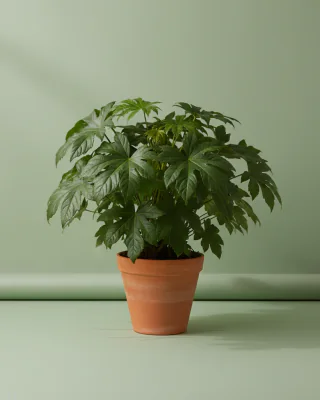
 Not sure it’s this plant?Check yours with a photo, free
Pet-safe
What plant material to use
Use healthy semi-ripe current-season stems for cuttings, or ripe dark berries for seed. Take cuttings about 20 cm (8 in) long. Seed comes from the berries that ripen after flowering.
How to propagate this plant
Semi-ripe stem cuttings are the quickest and easiest way to propagate Fatsia. Seed is an alternative that uses ripe berries and a warm propagator.
Root about 20 cm (8 in) cuttings in peat-free potting mix at about 15–20°C (59–68 °F). Sow seed lightly in peat-free potting mix around 20°C (68 °F), out of direct sun, and keep it damp but not soggy.
Select a healthy current-season shoot with a firm base and softer tip, prepare the cutting, and place it in potting mix. For seed, soften ripe berries in water, crush out the seeds, sow them lightly, and use a heated propagator out of direct sun.
Signs of roots or failure
Seed germinates in roughly two to eight weeks. Pot seedlings on when they are about 7 cm (3 in) tall. Cuttings give no clear visible sign of when their roots are ready.
Soggy potting mix, direct sun during propagation, unhealthy material, or a cutting that stays without roots means you should recheck the mix, light, and cutting material.
Aftercare and hygiene
Water young Fatsia plants regularly while they settle in, keep them warm and protected, and acclimate them outdoors only after frost danger has passed. Transplant seedlings when they are large enough to handle.
Use clean, sharp cutting tools and healthy material free of pests and disease.
All Japanese aralia guides
Related plants
Last reviewed: