



Crown of thorns fertilizer
Euphorbia milii
Quick answer
Keep the plant dry in winter and do not feed it then. The RHS also waters it sparingly, grows it in full light and uses a gritty, loam-based mix.
- Pet safetyToxic to cats and dogs




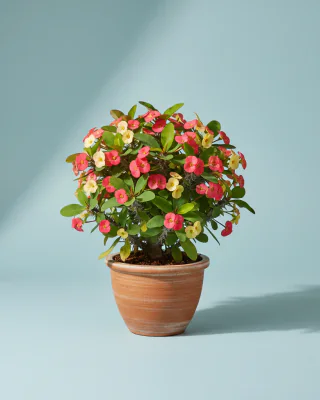
Crown of thorns fertilizer
- 1
Best fertilizer for crown of thorns
The RHS recommends a low-nitrogen liquid fertilizer for Euphorbia milii.
More about this
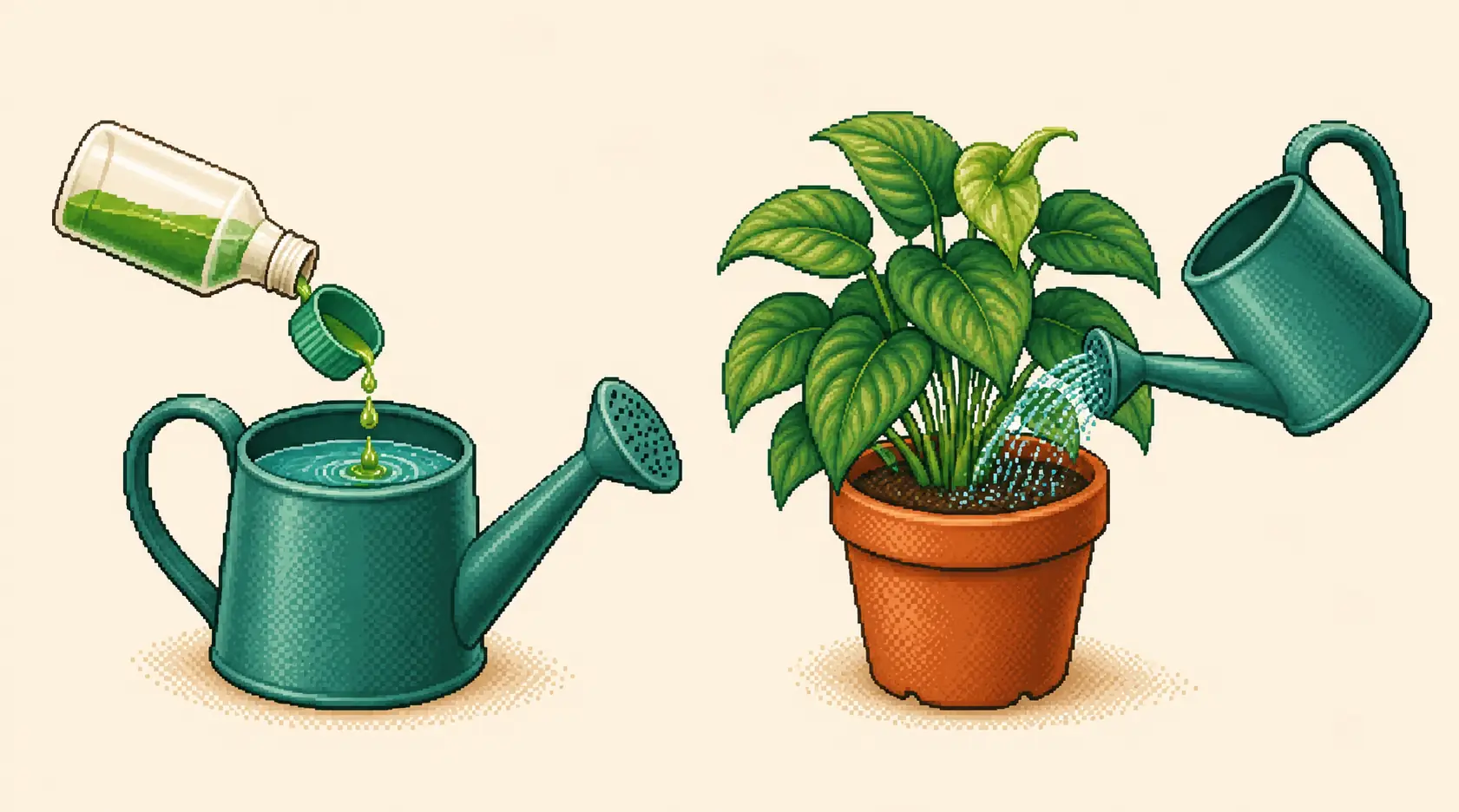
The best crown of thorns fertilizer is a low-nitrogen liquid fertilizer given once a month while the plant is in growth, as the RHS advises.
Clemson Extension’s indoor-plant guide suggests a higher-phosphorus formula such as 15-30-15 for flowering houseplants, which is low in nitrogen compared with the other two numbers.
Water-soluble fertilizers are often preferred because a dilute solution lowers the risk of fertilizer burn, Clemson says. Iowa State Extension adds that a general all-purpose garden fertilizer should be mixed at half or a quarter of the label strength for houseplants.
- 2
How often to fertilize crown of thorns
Once a month while it is in growth, the RHS says. Iowa State names spring and summer as the best times to feed houseplants.
More about this
As a houseplant, crown of thorns blooms from late winter well into fall, according to NC State, so it keeps growing for much of the year in a bright spot. Feed in the months it is putting out new leaves.
- 3
Crown of thorns feeding checklist
Product: a low-nitrogen liquid fertilizer (RHS), for example a flowering formula such as 15-30-15 (Clemson).
More about this
Dose: the label rate for a houseplant product, or half to a quarter of the label rate for an all-purpose garden fertilizer (Iowa State).
Timing: once a month while the plant grows (RHS), and no feeding in winter, when the RHS keeps it dry.
- 4
Winter: no fertilizer, little water
The RHS waters crown of thorns sparingly in growth and keeps it dry in winter. Iowa State says houseplants that rest in the short days of winter need no fertilizer.
More about this
NC State says the plant does not like wet, cold soil or temperatures below 35 °F (2 °C), and the RHS gives a minimum of 50 to 59 °F (10 to 15 °C) for growing it. A cool, wet pot and fertilizer salts are a bad mix.
- 5
More flowers: light first
Indoors, NC State places it where light is high.
More about this
NC State gives crown of thorns full sun, 6 or more hours of direct light a day, and UF/IFAS says to plant it in full sun for best results.
NC State also says it needs moderate moisture in hot summers to bloom better. Fertilizer helps a plant in good light; it will not make a plant in a dim corner flower.
- 6
Signs of too much fertilizer
Salt damage to the roots shows as slower growth, brown leaf tips, dropping lower leaves and wilting.
More about this
Clemson Extension says a white film on the soil or a white crust on the pot rim or drainage hole can mean too much fertilizer or water.
Leaf drop alone is not always about feeding: NC State says crown of thorns drops leaves in cycles, usually before its winter rest. To keep salts down, water thoroughly so the excess drains out, then empty the saucer, as Clemson advises.
- 7
Soil and pot
UF/IFAS calls it a good flowering container plant.
More about this
The RHS grows it in three parts peat-free, loam-based potting mix to one part grit, and NC State also prefers a soil-based potting mix with good drainage.
Pour off water that collects under the pot. NC State lists stem and root rots among its problems.
- 8
Wear gloves: the sap is toxic
Eating the plant can cause blistering of the lips and mouth.
More about this
The milky sap in every part of the plant can cause mild to severe skin irritation, and in the eyes it can damage the cornea, temporarily or permanently, NC State warns.
The RHS lists it as an irritant to skin and eyes and harmful if eaten, and advises gloves when handling it. NC State says to keep it away from small children and pets. The stems also carry sharp spines up to 1/2 inch (1.3 cm) long.


Common questions
What is the best fertilizer for crown of thorns?
A low-nitrogen liquid fertilizer, as the RHS recommends. A flowering formula such as 15-30-15, which Clemson suggests for flowering houseplants, fits that description.
How often should I fertilize crown of thorns?
Once a month while the plant is in growth, according to the RHS. Stop in winter, when the RHS keeps it dry.
Should I fertilize crown of thorns in winter?
No. Iowa State says resting houseplants need no fertilizer in the short days of winter, and the RHS keeps crown of thorns dry then.
How do I get my crown of thorns to bloom more?
Give it full sun, 6 or more hours of direct light a day, and moderate moisture in hot summers, as NC State advises. Then feed it monthly with a low-nitrogen fertilizer while it grows.
Is crown of thorns toxic?
Yes. NC State lists it as toxic if eaten, and its milky sap can irritate skin and damage the eyes. Wear gloves and keep it away from small children and pets.
All crown of thorns guides
Keep reading
Sources5 references
- RHS: Euphorbia milii var. milii
- NC State Extension Plant Toolbox: Euphorbia milii
- UF/IFAS Gardening Solutions: Crown of thorns
- Clemson Cooperative Extension HGIC: Indoor plants, cleaning, fertilizing, containers and light requirements (HGIC 1450)
- Iowa State University Extension and Outreach: How often should I fertilize houseplants?
- How we check our plant advice
How we check our plant advice → · Last reviewed: