



How to propagate Echeveria
Echeveria spp.
Echeveria propagates best from leaf cuttings in spring or summer. Cuttings usually root in 3–5 weeks.
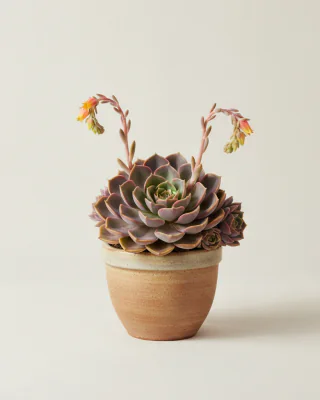
 Not sure it’s this plant?Check yours with a photo, free
Pet-safe
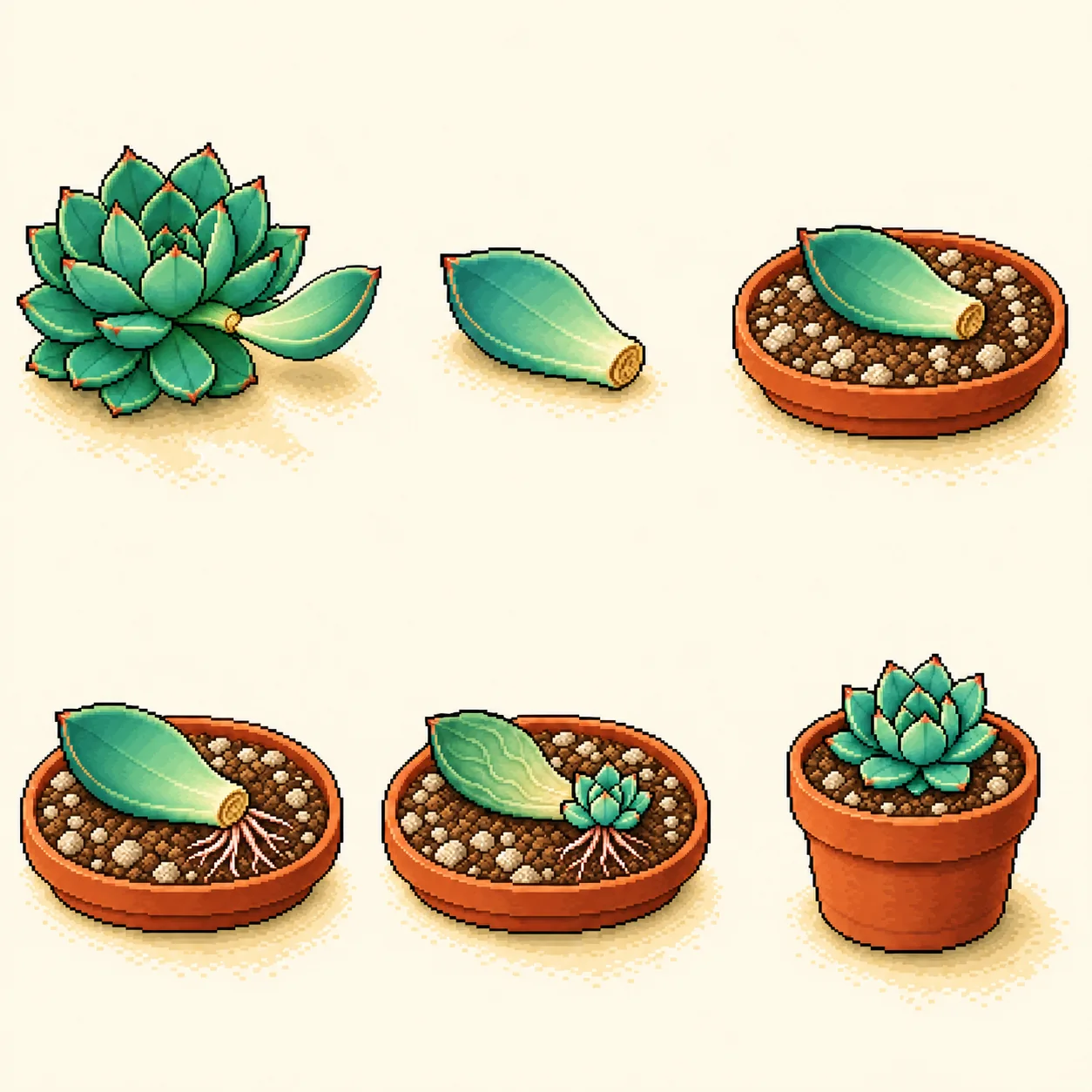
How to propagate by leaf cuttings
Echeveria can be grown from single leaves. A leaf left to dry and set on gritty mix forms roots and then a small new plant at its base.
- 01
Choose a plump, healthy leaf. Spring and summer give the fastest results.
- 02
Twist the leaf gently off the stem so its base comes away whole.
- 03
Leave the leaves in a dry, shaded spot for 2–5 days until the cut ends have dried and sealed.
- 04
Lay small leaves flat on a tray of gritty cactus or succulent mix.
- 05
Leave them uncovered and do not water yet. Once roots show, water lightly whenever the mix has dried out.
- 06
Keep them in bright, indirect light, out of direct sun.
- 07
Usually roots in 3–5 weeks. A new plant grows from the base while the old leaf slowly shrivels: pot it up once it has a few leaves of its own.
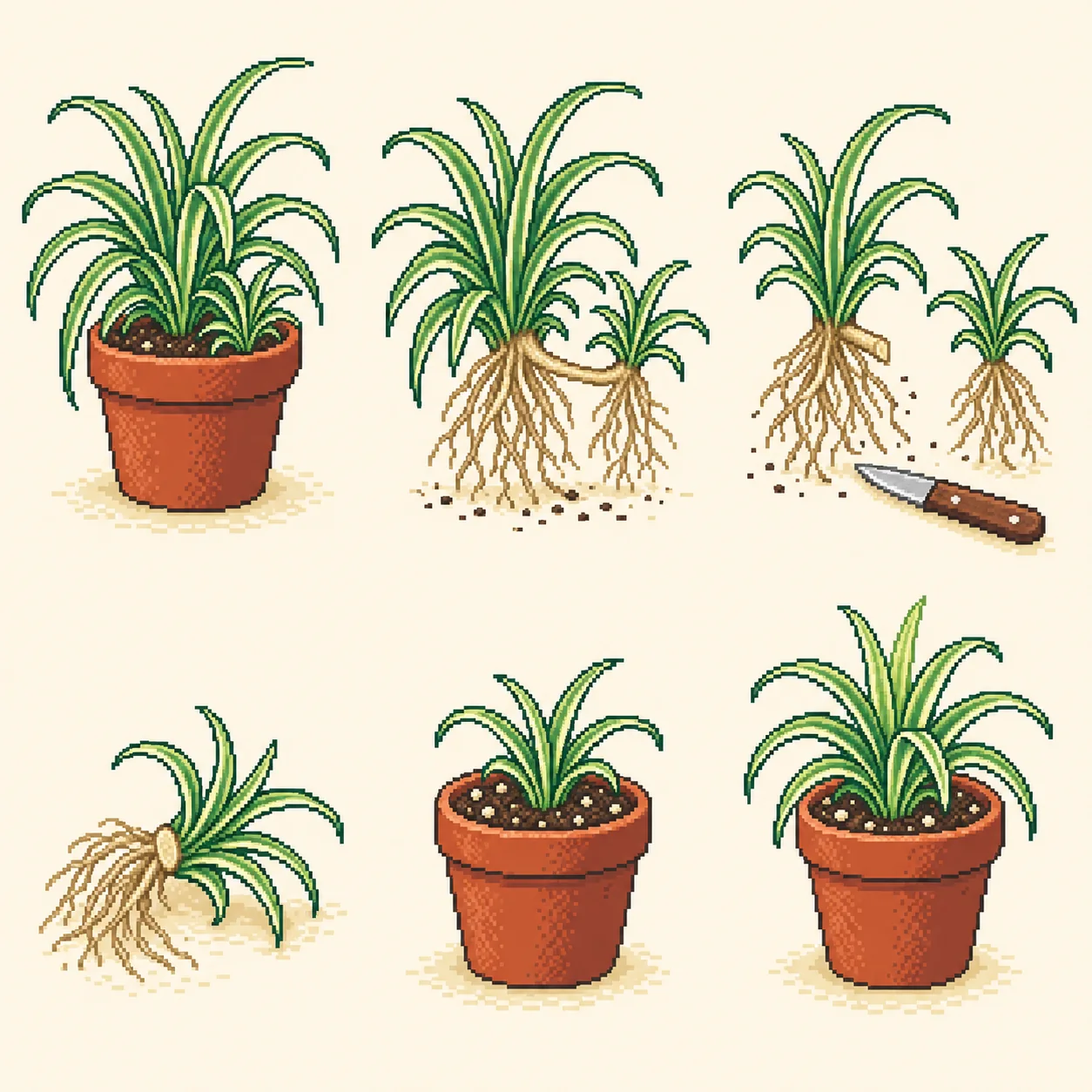
Offsets / pups
Echeveria produces offsets: smaller plants that sprout from the base of the mother plant. A large offset often has roots of its own, but not always, so check before you pot it up.
- 01
Wait until an offset is at least one-third the size of the mother plant. Removing offsets too early increases the chance of failure.
- 02
Water the parent plant the day before to ease root removal.
- 03
Slide the plant out of its pot and gently brush away soil to find where the offset connects to the mother root.
- 04
Pull or cut the offset away cleanly, keeping as many of its own roots intact as possible. For cacti, use clean gloves and tongs.
- 05
If the offset was cut, let the wound dry and callus before planting. Cactus offsets often need about two days, and larger wounds may take longer. Judge the dry, sealed surface rather than the clock.
- 06
Pot the offset into fresh, well-draining mix appropriate to the species. Water lightly and place in indirect light.
- 07
A rooted offset usually shows new growth within 2–4 weeks as it settles in. An offset without roots has to root first: keep the mix barely damp and give it several weeks before you expect new growth.
All Echeveria guides
Keep reading
Related plants
Common questions
What is the best way to propagate Echeveria?
The most reliable method for Echeveria (Echeveria spp.) is leaf cuttings. It’s an easy process that beginners can handle well.
When should I propagate Echeveria?
The best time is spring to summer, when the plant is actively growing and roots form most quickly.
How long does it take Echeveria to root?
Expect roots to appear within roughly 3–5 weeks, given warm temperatures and good indirect light.
Propagation guidance is based on genus-level horticultural knowledge. Individual specimens can vary.
7 steps · 3–5 weeks · Last reviewed: