



Echeveria varieties: compare rosettes, leaves and care
Echeveria spp.
Quick answer
Compare the rosette, leaf shape, color and texture before choosing an Echeveria. Keep the genus, species and named cultivar separate. An unlabeled rosette is not identified by appearance alone.
 Not sure it’s this plant?Check yours with a photo, free
Pet-safe
Echeveria varieties: compare rosettes, leaves and care
- 01
Plant names and labels
Echeveria is a genus of succulent rosette plants with many species and hybrids. Keep the genus, species and named cultivar separate on a retail label. An unlabeled rosette is not identified by this page.
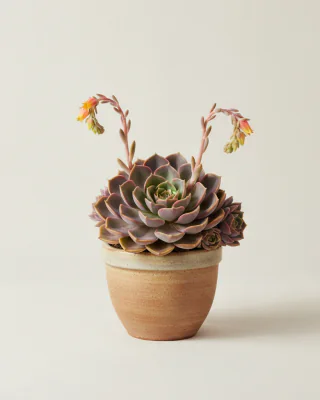
For browsing, compare compact or clustering rosettes, blue-gray or powdery rosettes, and unusual leaf shapes such as the curved leaves of ‘Topsy Turvy’. These are examples, not formal horticultural groups.
- 02
How the varieties differ
Examples differ in leaf color, margin color, rosette shape and texture: ‘Blue Metal’ is mottled, Echeveria elegans is silvery and spoon-leaved, E. runyonii ‘Topsy Turvy’ has curved rectangular leaves, and ‘Perle von Nurnberg’ has gray leaves with purplish-pink tones.
- 03
Care differences
Check light and outdoor tolerance for the individual selection. Echeveria is a bright-light or full-sun succulent, but an indoor plant needs gradual acclimation before stronger outdoor sun. Pair mixed containers with plants that have similar water needs.
- 04
Limits of plant labels
The examples show traits that can affect a buying choice, but they cannot identify every hybrid from a photo or provide a complete current trade-cultivar catalog. Do not treat uncertain retail names or unnamed plants as confirmed.
All Echeveria guides
Sources3 references
- Royal Botanic Gardens, Kew: Plants of the World OnlineTaxonomy · accepted genus · native range · accepted species count
- Royal Horticultural SocietyPreferences · Dislikes · houseplant and summer-outdoor context · Plant profile · taxonomy and growing conditions
- Iowa State University Extension and OutreachOver Watering · Under Watering · Root Rot · Insufficient Light · Sun Damage · Mealybug
Last reviewed: