



How to propagate sago palm
Cycas revoluta
Sago palm can produce basal pups, but a pup may have few or no roots. Separate it carefully and judge recovery by new growth.
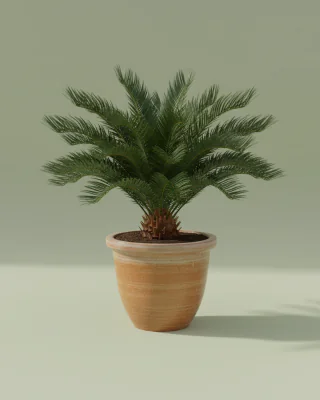
 Not sure it’s this plant?Check yours with a photo, free
Toxic to pets
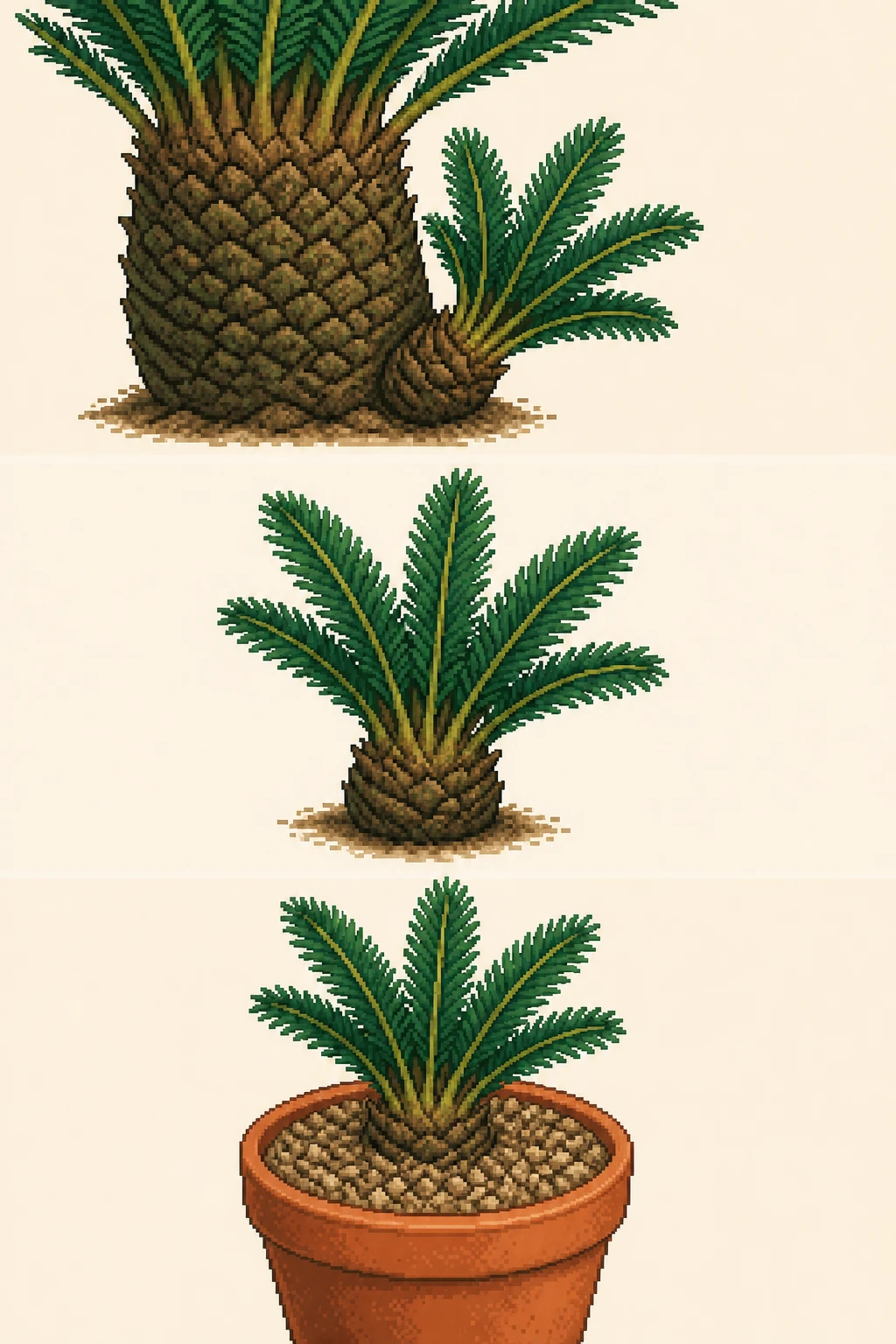
How to propagate by offsets / pups
Sago palm produces basal offsets, but a pup does not always have a complete root system. Separation needs a clean cut, careful positioning, and patience while new roots and leaves form.
- 01
Work in spring or summer and choose a healthy basal pup around 2 inches in diameter when possible.
- 02
Expose the attachment point gently and check for any fibrous roots before cutting.
- 03
Wear gloves and use a clean sharp knife or trowel. Keep all roots that are present and avoid damaging the parent.
- 04
Remove most leaves from the pup, then pot it in the same well-drained medium used for the mature plant.
- 05
Set about half of the trunk in the medium and leave the upper half exposed. Do not bury the crown.
- 06
Water deeply once the pup is potted, then water sparingly while it forms roots. Avoid a constantly wet mix.
- 07
Keep the pup in these conditions until a new leaf flush shows that it has established.
All sago palm guides
Related plants

Common questions
What is the best way to propagate a sago palm?
Use a basal offset when the plant produces one. A pup may have few or no roots, so keep any roots present, position about half the trunk in the medium, and wait for a new flush.
When should I separate a sago palm pup?
Spring or summer is the proposed working window. Wisconsin Extension describes pups around 2 inches in diameter as suitable for separation, but the attachment and condition of the individual pup still matter.
How long does a sago palm pup take to root?
Wisconsin Extension describes root formation over a few months. Watch for a new leaf flush as the practical sign that the pup has established.
Sources: Wisconsin Extension’s cycad guide supports separating suitable pups, positioning about half the trunk in the medium, root formation over a few months, and a later new flush. RHS and NC State Extension provide species context for Cycas revoluta.
7 steps · A few months for roots. Judge recovery by a new flush · Last reviewed: