Most likely cause

Dry air (low humidity)
How to tell
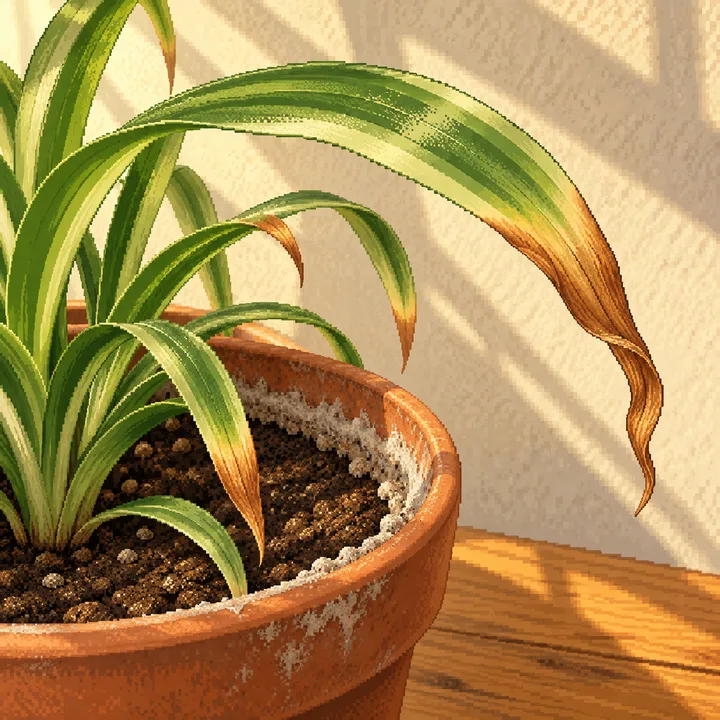
- Just the very tips and edges go brown and papery while the rest of the leaf is fine.
The fix
- 1
Raise humidity: group plants together, sit the pot on a tray of damp pebbles, or run a humidifier.
- 2
Misting helps only briefly.
More about this
This is most common in winter with the heating on, and cat palm prefers 50–70% humidity.
Other possible causes
Not a match? Compare the signs below to find the one you have.

Inconsistent or under-watering
The soil dries out hard between waterings, so the tips (the last to get water) crisp first.
The fix
- 1
Water more evenly: check the soil regularly and don’t let it go completely bone dry, then soak thoroughly.

Hard-water minerals and accumulated salts
Tips brown slowly over months despite even watering, and a white crust builds up on the soil surface or the pot rim.
How to tell
- Hard water or fertilizer salts can leave this crust.
The fix
- 1
Switch to rainwater or distilled water, and flush the pot occasionally to wash out built-up salts.
More about this
It does not identify fluoride injury.

Too much direct sun
Dry brown patches or scorched edges show up where strong sun hits the leaf.
How to tell
- Cat palm wants bright, indirect light.
The fix
- 1
Move it back from the glass, or filter the strongest sun with a sheer curtain.
Just palm nature (mostly cosmetic)
Palms brown at the frond tips almost universally indoors.
How to tell
- Low household humidity and tap-water minerals affect them more than most houseplants, even with good care.
The fix
- 1
Trim only the brown part with clean scissors and don’t chase perfection.
- 2
Focus on humidity and use rainwater or distilled water to slow it, not stop it entirely.
Last reviewed: