



How to propagate dumb cane
Dieffenbachia seguine
A practical guide to making more dumb cane at home: the right method, the right time of year, and what to expect.
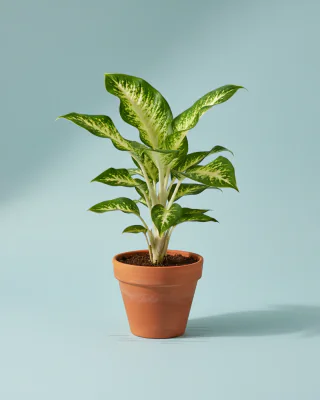
 Not sure it’s this plant?Check yours with a photo, free
Toxic to pets
How to propagate by stem cuttings
A dumb cane that has lost its lower leaves is ready to propagate. The leafy top roots as a tip cutting, each piece of bare cane with a bud can grow a new plant, and the stump left in the pot regrows.
Wear gloves before cutting or dividing. Sap or foliage can irritate skin. Avoid contact with eyes and mouth, and wash your hands after handling. Keep cut pieces out of reach of children and pets.
- 01
Work in spring or early summer. Wear gloves and keep the sap away from your eyes and mouth, because it irritates skin and eyes.
- 02
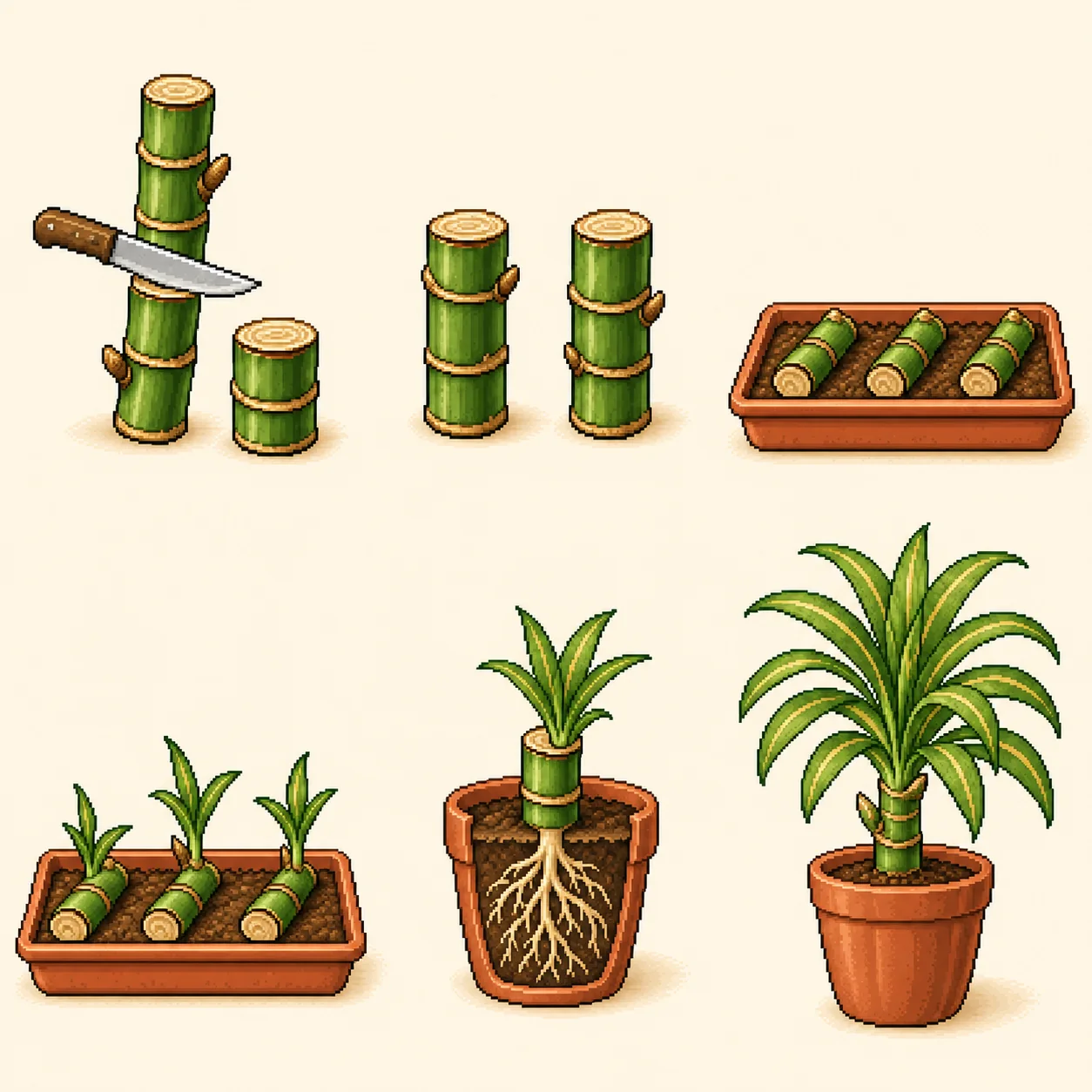
Cut the stem back to about 15 cm (6 in) above the mix. The plant regrows below the cut.
- 03
Trim the leafy top to a tip cutting 8–15 cm (3–6 in) long and remove its lowest leaves.
- 04
Cut the bare cane into 5 cm (2 in) pieces, each with at least one bud, and let them dry for a day.
- 05
Set the tip cutting upright in its own pot. Lay each cane piece flat with the bud facing up, pressed halfway into a damp mix of potting mix and perlite.
- 06
Keep the pots warm, ideally with the mix around 24 °C (75 °F), in bright light out of direct sun. Cover them loosely to hold humidity.
- 07
Roots usually form in 3–8 weeks, and top cuttings root faster than pieces from the base of the cane. Pot each one on once it has roots and a new shoot.
Air layering
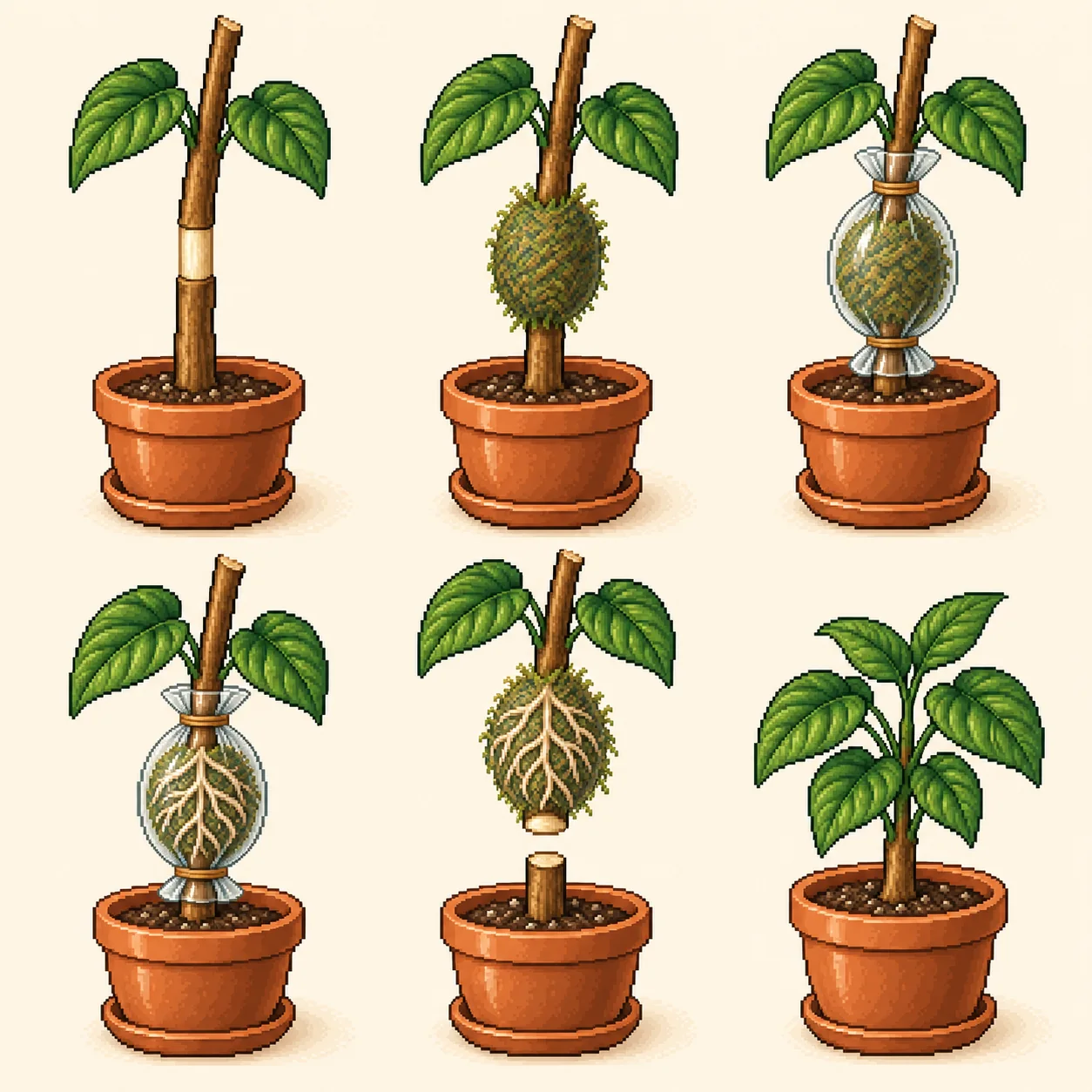
Air layering suits a tall dumb cane whose leafy top you want to keep as one large plant. Roots form on the stem before you cut it off.
- 01
Choose a point on the bare stem below the leaves. Wearing gloves, make an upward slanting cut about a third of the way into the stem and wedge it open with a toothpick.
- 02
Dust the cut with rooting hormone and pack damp sphagnum moss around it.
- 03
Wrap the moss in clear plastic and tie it firmly above and below.
- 04
Once roots show through the plastic, cut the stem just below them, remove the plastic and pot the new plant in potting mix.
- 05
Leave the lower stem in its pot. It regrows below the cut.
All dumb cane guides
Keep reading
Related plants

Common questions
What is the best way to propagate dumb cane?
Cut a leggy plant back to about 15 cm (6 in), root the top as a tip cutting and cut the bare cane into 5 cm (2 in) pieces that each have a bud. Keep them warm, and the stump regrows too.
How long do dumb cane cuttings take to root?
Usually 3–8 weeks with the rooting mix kept warm, around 24 °C (75 °F). Top cuttings root faster than cane pieces from the base of the stem.
Is dumb cane sap dangerous?
The sap irritates skin and eyes, and chewing the plant burns the mouth and throat. Wear gloves, wash your hands afterward and keep cuttings away from children and pets.
Sources: the RHS Dieffenbachia seguine profile supports tip cuttings, stem sections with a bud laid flat at 25 °C (77 °F), air layering and gloves. Clemson Extension supports cane, tip and air-layer propagation in spring or early summer and cutting leggy stems back to about 15 cm (6 in). UConn Extension supports 5 cm (2 in) cane pieces with a bud, drying them for a day, and faster rooting from the top of the plant. UF/IFAS supports a rooting mix of at least 24 °C (75 °F) and roots in 3–8 weeks. Penn State Extension supports laying cane sections half into the mix. Iowa State Extension supports the slanting air-layer cut. NC State Extension supports the sap and toxicity warnings.
Sources: RHS.
7 steps · 3–8 weeks in a warm mix · Last reviewed: