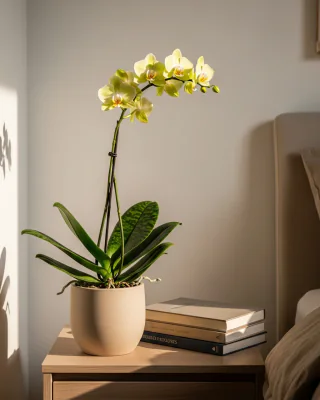


Dendrobium orchid care guide
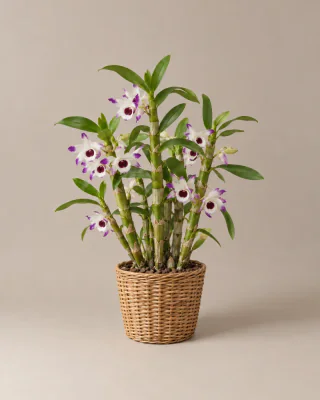
Dendrobium nobile
How to keep Dendrobium orchid healthy at home: how much to water it, the light it needs, and how to catch common problems early.
 Not sure it’s this plant?Check yours with a photo, free
At a glance
- Light
- Bright light, some sun
- Typical interval
- Every 6 to 8 days · summer
Almost dry · winter - Climate
- 10–25 °C (50–77 °F)
- Humidity
- 50–70%
- Pet safety
- Not confirmed pet-safe
When and how to water
- Summer · Jun–AugEvery 6 to 8 days
- Winter · Dec–FebAlmost dry
Water your Dendrobium orchid when the bark mix looks and feels dry, and any aerial roots look silvery rather than green, typically every 6 to 8 days while it grows. In winter it rests: keep it almost dry and water only sparingly until new growth starts in spring, because wet roots can rot during the rest. Let any excess drain and never leave the pot sitting in water.
Light and placement
Bright light, some sun
Dendrobium orchid needs bright light and a little gentle direct sun, such as morning sun. Strong midday sun can scorch the leaves. Place it close to an east- or west-facing window.
Feeding
Feed with an orchid fertilizer about every two weeks while new canes grow in spring and summer, following the label. In late summer switch to a high-potassium orchid feed. Stop feeding in autumn, when it starts its cool, drier winter rest, and start again when new growth appears in spring.
Temperature & humidity
Climate10–25 °C (50–77 °F)
Humidity50–70%
For Dendrobium nobile, RHS gives 18-25 °C (64–77 °F) days and nights above 10 °C (50 °F) during late spring and summer growth. In winter, keep it dry in a bright, cool place with cooler nights than days to encourage flowering.
It does best at 50–70% humidity. It doesn’t need misting.
Not confirmed pet-safe
Sources4 references
- Royal Botanic Gardens, Kew: Plants of the World OnlineTaxonomy · habit · light · medium · water · fertilizer · dormancy · plant safety
- Royal Horticultural SocietyLight · orchid compost · temperature · moisture · fertilizer · humidity · pests · disease · bark medium · seasonal watering · winter rest
- North Carolina State University Extension Gardener Plant ToolboxOrchid mix · dry-down · small pot · dormancy · fertilizer · genus care
- ASPCA Animal Poison ControlDendrobium gracilicaule pet-safety record · related species, not Dendrobium nobile
Last reviewed: