



Soil for a Chinese evergreen
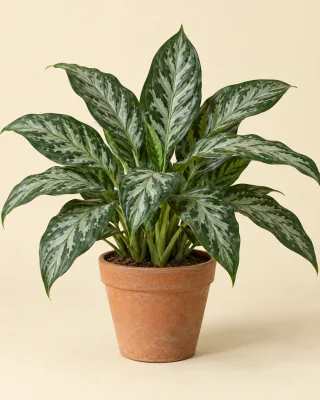
Aglaonema commutatum
Quick answer
Use a loose, moisture-retentive but well-drained potting mix for Aglaonema commutatum. Choose a container with drainage holes and avoid a root zone that stays waterlogged.
 Not sure it’s this plant?Check yours with a photo, free
Toxic to pets
Soil for a Chinese evergreen
- 01
Best soil mix
Use a loose houseplant mix that holds some moisture while still draining freely. Indoor Aglaonema belongs in a draining medium rather than dense or permanently wet soil.
Use a container with drainage holes and avoid a mix that stays waterlogged. Excess moisture and poor drainage can lead to root decline or rot in Aglaonema.
- 02
Match the mix to the pot and setting
This page is for Aglaonema commutatum forms kept as indoor container plants, including Ribbon Aglaonema. Cultivar foliage and light can change how quickly the mix dries.
- 03
Soil pH
You do not need to aim for a pH number with this indoor mix. Do not add acidifying or liming products based on a number copied from another houseplant.
- 04
When soil alone is not the problem
Use mix texture and drainage as the boundaries, not a fixed ratio, pH test range, pot depth or cultivar-by-cultivar root-zone preference. Keep the species or cultivar label visible when a plant is sold only as Chinese evergreen.
All Chinese evergreen guides
Keep reading
Sources3 references
- Royal Botanic Gardens, Kew: Plants of the World OnlineAccepted species record · accepted infraspecifics
- Clemson University Home & Garden Information CenterQuick guide · how to grow indoors · Chinese evergreen problems and toxicity · Aglaonema species and cultivars
- University of Florida IFAS Extension: Gardening SolutionsPlanting and Care
Last reviewed: