


Desert rose varieties and care differences
Adenium obesum

Quick answer
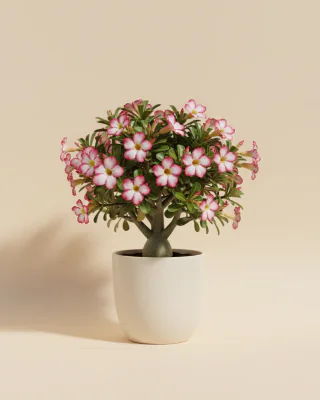
Choose a desert rose by flower color and form first, then compare foliage, size and flowering. Single, double and triple flowers occur among selections and hybrids.
 Not sure it’s this plant?Check yours with a photo, free
Toxic to pets
Desert rose varieties and care differences
- 01
Plant names and labels
This guide covers Adenium obesum. Cultivated desert roses can also be hybrids with other Adenium species, so keep the plant label: it is the only way to tell a pure A. obesum from a hybrid.
Compare flower color and form, including single, double or triple flowers, along with foliage, plant size and flowering performance. These are choice groups, not a complete cultivar list, and hybrid labels can be unreliable.
- 02
How the varieties differ
Selections differ in red, white, pink or yellow flowers, single, double or triple forms, green or variegated foliage, plant size and the amount or season of flowering. There is no complete list of named cultivars.
- 03
Care differences
A. obesum and its hybrids share the same baseline: high light or full sun, a sharply draining cactus or succulent mix, dry-down between waterings and protection below about 55°F. Flower color or a cultivar name does not call for a different watering or feeding schedule.
- 04
Limits of plant labels
An unlabeled Adenium can be difficult to place because hybridization and inconsistent cultivar naming blur the species boundary. Use these comparisons as a choice guide, not as a complete registry or guaranteed cultivar identification.
All desert rose guides
Sources4 references
- Royal Botanic Gardens, Kew: Plants of the World OnlineAccepted name · classification · native range
- University of Florida IFAS ExtensionIndoor/Home/Office Cultivation Information
- Oregon State University Landscape PlantsPlant description · houseplant use · temperature · container medium
- University of Florida IFAS Extension blogCauses discussed for yellowing or dropping leaves
Last reviewed: