Vriesea care guide
Vriesea splendens

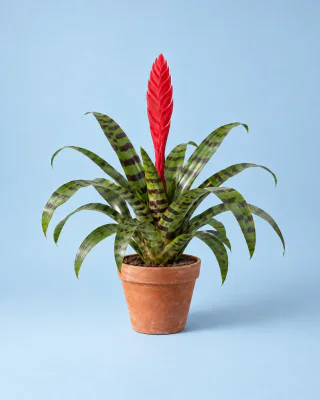
A Vriesea splendens, or flaming sword, wants its central cup kept filled with tepid water, compost that dries partly between waterings, and bright, indirect light out of strong sun. The rosette flowers once and then dies, but its pups carry on.
 Not sure it’s this plant?Check yours with a photo, free
At a glance
- Light
- Bright, indirect to part shade
- Water
- Cup filled, top half of mix dry
- Climate
- 16–27 °C (61–81 °F), keep above 15 °C (59 °F)
- Humidity
- 50–75 %, mist in the growing season
- Pet safety
- Not confirmed pet-safe
Why the flaming sword dies after flowering
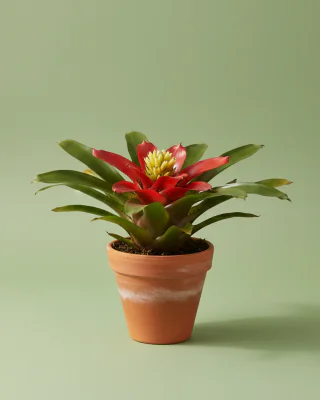
The flaming sword is a bromeliad from northern South America and the Caribbean. In the wild it often grows on trees as an epiphyte. Its arching leaves, up to about 60 cm (24 in) long, are banded in dark green or reddish brown and form a funnel that holds water. When it is mature, a flat spike of scarlet bracts with yellow tubular flowers grows from the center, about 45 cm (18 in) tall, and the bracts stay colorful for months. Some botanical sources now call it Lutheria splendens.
Like most rosette bromeliads it flowers only once. After flowering the mother rosette slowly dies, which is normal. Before that it makes pups at the base or center of the rosette. Separate them once they are about a third the size of the parent, and they flower in about 3 to 5 years.
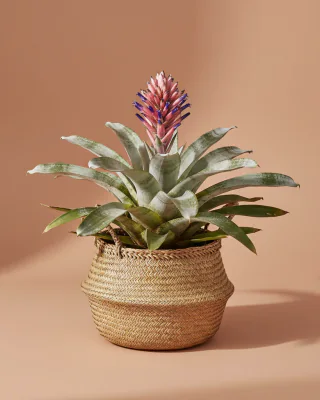
Success comes down to the cup and the roots. Keep the cup filled and refresh it, and keep the small root system in a free-draining mix that is never soggy. Its relatives the Aechmea fasciata (urn plant) and Guzmania (scarlet star) need the same treatment.
How to water the cup and the compost
Keep the central cup filled with tepid water that has stood for a few hours, ideally rainwater or distilled water. Empty and refill it every month or two, or flush it with fresh water now and then, so it does not go stale or build up minerals. Avoid softened water.
Water the compost when the top half of the mix has dried out, let it drain and never leave the pot standing in water. In winter keep the compost only just moist. Soggy compost leads to rot, while compost that dries out completely can cause leaf spots.
Light and placement
Give it bright, indirect light or part shade, such as a north- or east-facing window. Keep it out of strong direct sun, which bleaches and scorches the leaves.
Feeding
Feed lightly. From spring to summer, give a weak liquid or foliar feed about every 4 to 5 weeks, at a quarter to half strength, into the cup or on the leaves. A feed low in nitrogen and high in potash helps the flowers. Do not use solid feed in the cup, and do not overfeed, which leaves a salt build-up on the leaves.
Temperature & humidity
Climate16–27 °C (61–81 °F), keep above 15 °C (59 °F)
Humidity50–75 %, mist in the growing season
It grows best at about 16 to 27 °C (61–81 °F). RHS advises keeping it above 15 °C (59 °F) all year, and it should never go below 10 °C (50 °F). Keep it away from radiators and cold drafts. About 21 °C (70 °F) in summer encourages flowering, and once the bracts form a slightly cooler spot makes them last longer.
It likes high humidity, around 50 to 75 %. Mist the leaves with soft water daily while it grows, stand the pot on a tray of damp gravel with the water below the pot’s base, or group it with other plants. A bright bathroom suits it.
Not confirmed pet-safe
Common questions
How do you water a Vriesea?
Keep the central cup filled with tepid water, ideally rainwater, and water the compost when the top half has dried. Empty and refill the cup every month or two. In winter keep the compost only just moist.
Why is my flaming sword dying after flowering?
That is normal. A Vriesea flowers once and then the mother rosette slowly dies. Before it does, it makes pups that grow into new plants.
When can I separate Vriesea pups?
When they are about a third the size of the mother plant, ideally in spring. Cut them off cleanly, pot them in a free-draining bromeliad or orchid mix and keep them warm, bright and humid, out of direct sun, while they root.
How long until a Vriesea pup flowers?
About 3 to 5 years. Good light, warmth around 21 °C (70 °F) in summer and humid air help.
How do I make a Vriesea flower?
A mature plant can be encouraged with ripe fruit. Put it in a clear plastic bag with ripe apples or bananas for a few days up to two weeks, out of direct sun. The ethylene gas can trigger flowering, which may follow some weeks later.
Why does my Vriesea have brown leaf tips?
Usually too much water and soggy compost. Very dry air, minerals in the cup or strong sun can also brown the leaves. Use a free-draining mix, refresh the cup and raise the humidity.
Does a flaming sword need sun?
No direct sun. It wants bright, indirect light or part shade, such as a north- or east-facing window.
Is a flaming sword safe for cats and dogs?
We cannot confirm that. ASPCA has no record for Vriesea, so there is no reliable verdict either way. Keep it out of reach of pets and call your vet if your pet eats some.
Sources
- This guide follows established plant-care guidance and official ASPCA pet-safety references. How we verify our plant data →
- Sources: the RHS bromeliad growing guide supports refreshing the well every month or two with rainwater or distilled water, the 21 °C (70 °F) summer warmth and cooler spot for the bracts, the humidity tray, no solid feed in the well, flowering once, the pups at a third of the parent’s size, the ripe-fruit trick for up to two weeks and brown tips from overwatering. The RHS Vriesea splendens profile supports the north- or east-facing spot, keeping it above 15 °C (59 °F), daily misting, keeping it just moist in winter, the quarter-strength feed every 4 to 5 weeks, the 60 cm (24 in) leaves and removing offsets in spring. The Missouri Botanical Garden Plant Finder supports the tepid standing water in the cup, protection from bright light and from temperatures below 10 °C (50 °F), the low-nitrogen high-potash feed, salt build-up, the bromeliad or orchid mix and the mother plant dying after flowering. NC State Extension supports the bright indirect light, letting the top half of the mix dry, the 16 to 27 °C (61–81 °F) range, high humidity, the 45 cm (18 in) flower spike, the name Lutheria splendens and pups flowering in 3 to 5 years. Clemson Extension supports flushing the cup and the apple-in-a-bag method with flowering some weeks later. University of Wisconsin Extension supports the 50 to 75 % humidity, avoiding softened water, mineral build-up in the cup and separating pups at a third of the parent’s size. The ASPCA plant database has no record for Vriesea, so pet safety is not confirmed.
Last reviewed: