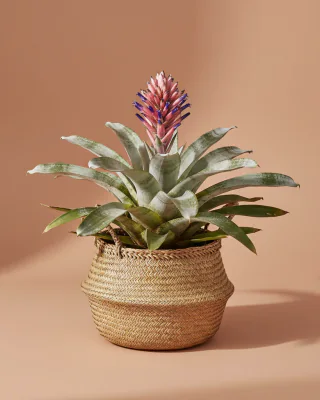
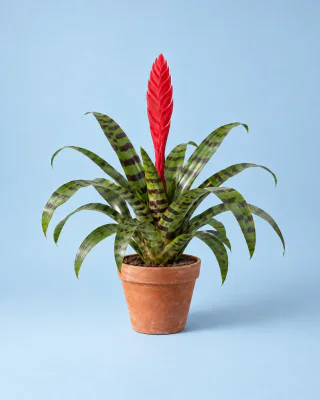
Scarlet star bromeliad care guide
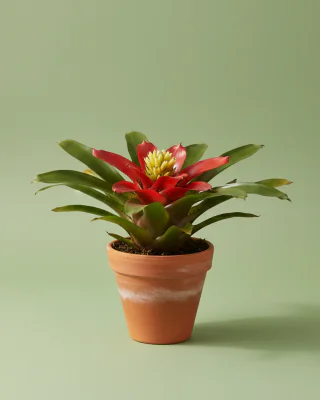
Guzmania lingulata
Keep the central leaf well topped up with rainwater or distilled water. Empty and refill it every 1-2 months. Water the compost too. Keep it damp but not soggy in summer, then let it dry between waterings in winter.
 Not sure it’s this plant?Check yours with a photo, free
At a glance
- Light
- Bright, indirect light
- Watering
- Water in the cup, compost just damp
- Climate
- 18–27 °C (64–81 °F)
- Humidity
- 50–70%
- Pet safety
- Pet-safe (non-toxic)
When and how to water
Keep the central leaf well topped up with rainwater or distilled water. Empty and refill it every 1-2 months. Water the compost too. Keep it damp but not soggy in summer, then let it dry between waterings in winter.
Light and placement
Bright, indirect light
Scarlet star bromeliad thrives in bright, indirect light. Direct midday sun can scorch the leaves. Place it 1–2 meters back from an east or west window, or behind a sheer curtain on a south window.
Feeding
Scarlet star bromeliad generally needs little or no feeding. Feed lightly only if growth is weak, at most about every 180 days while it is actively growing.
Temperature & humidity
Climate18–27 °C (64–81 °F)
Humidity50–70%
During leafy growth, aim for 18–27 °C (64–81 °F). For routine indoor care, keep it above about 15 °C (59 °F) and avoid cold drafts. This is a care guideline, not an exact damage threshold. Cooler overwintering depends on the species and its rest conditions.
It does best at 50–70% humidity. It doesn’t need misting.
Toxic to pets?
No. Pet-safe.
Scarlet star bromeliad is non-toxic to cats and dogs. Safe to keep in a home with pets.
Pet-safety information in the JungleBook uses ASPCA reference data where available. It is reference information, not veterinary advice.
Sources3 references
- Royal Botanic Gardens, Kew: Plants of the World OnlineTaxonomy · accepted name · native range · epiphytic habit · biome
- Royal Horticultural SocietyPosition · soil · moisture · cultivation · humidity · temperature · pests · Bright shade · tank watering · compost moisture · winter care · drainage
- ASPCA Animal Poison ControlGuzmania lingulata minor pet-safety record · variety/subspecies scope rather than species-wide
Last reviewed: