How to tell
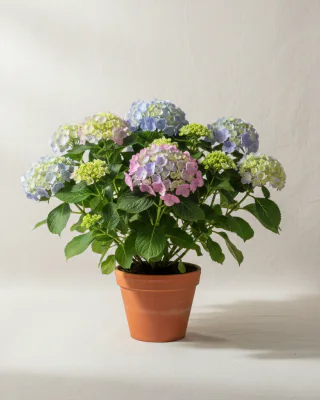
Hydrangea is deciduous. In autumn the leaves yellow and fall and the stems stay bare through winter, especially once it has been somewhere cool.
The fix
Nothing is wrong. Water less while it is bare, just enough that the soil never dries out completely. New leaves follow in spring.
Not a match? Compare the signs below to find the one you have.
How to tell
It started dropping leaves soon after you bought, moved, or repotted it.
The fix
Pick a suitable spot, keep care steady, don’t fertilize, and let it adjust over a couple of weeks. Many plants settle once conditions stop changing.
How to tell
Leaves yellow and then drop, and the soil stays wet for days after watering.
The fix
Ease off watering, check drainage, and inspect for rot in the roots if it feels soft.
How to tell
Leaves drop after the soil has been bone dry for a while. Watch for dramatic wilting first.
The fix
If the soil is bone dry, water thoroughly, then check it more regularly so it doesn’t dry out that far again.
Cold drafts or temperature swings
How to tell
It sits in a draft, near a cold window, or next to a heater, and leaves fall after a cold snap or a sudden temperature swing.
The fix
Move it somewhere with stable, draft-free temperatures.
How to tell
It quietly sheds its lower and inner leaves over weeks while new growth stays small and pale. Hydrangea wants bright, indirect light.
The fix
Give it a brighter position, out of harsh midday sun.
Last reviewed: