



How to propagate Kentia palm
Howea forsteriana
Kentia palm propagates best from seed in spring or summer. Seeds typically germinate within three months to several years.
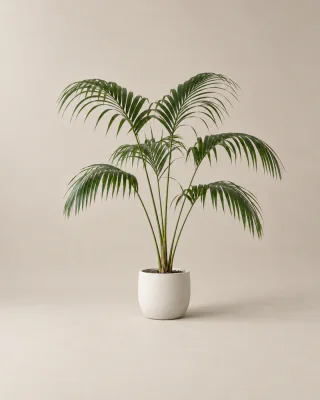
 Not sure it’s this plant?Check yours with a photo, free
Pet-safe
How to propagate by seed
Kentia palm is grown from seed. Palm seed germinates slowly and unevenly, so patience matters more than anything else.
- 01
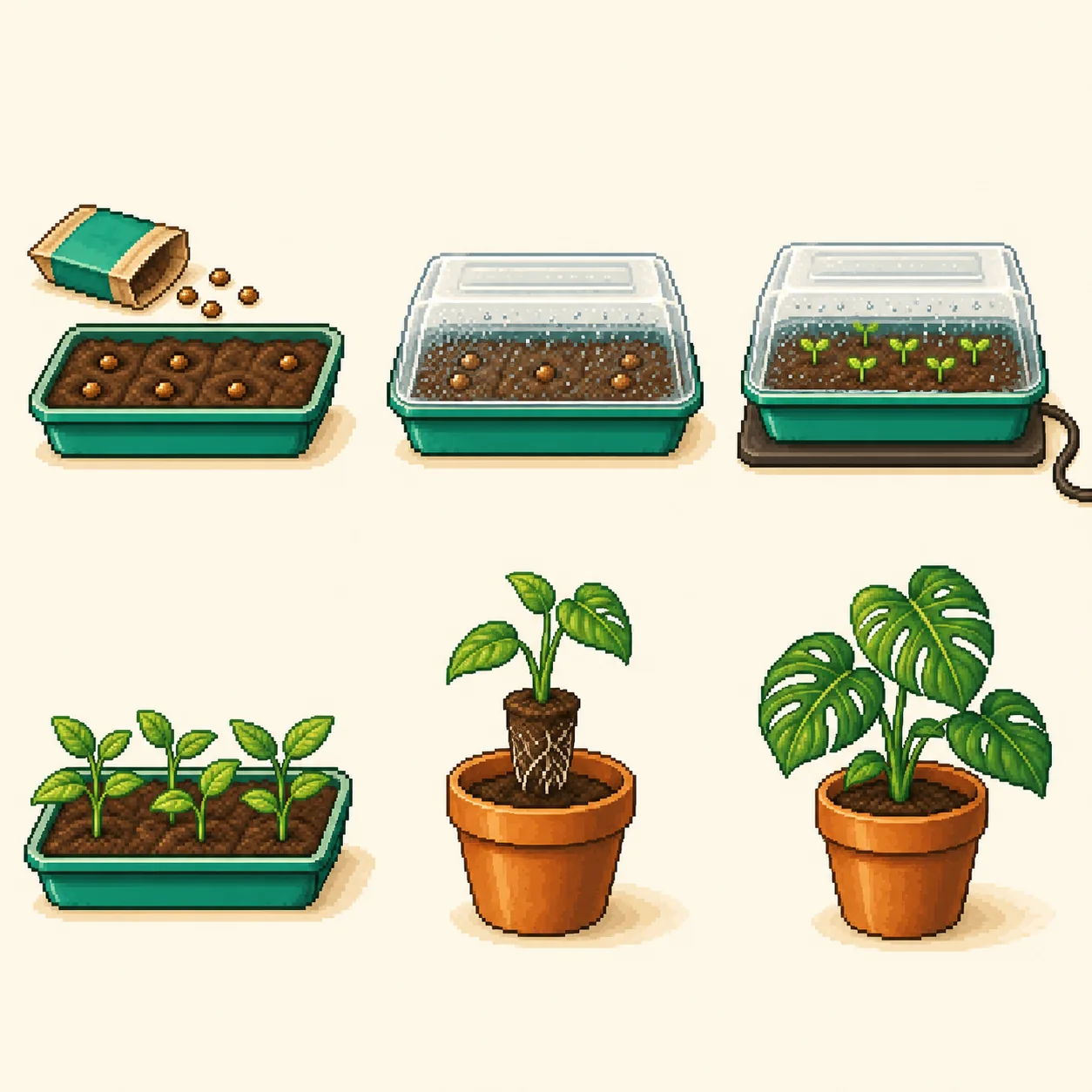
Use fresh seed. Soak it in warm water for a day or two before sowing.
- 02
Sow each seed about its own depth in a deep pot of damp, free-draining seed mix.
- 03
Keep the pot warm, around 25 °C (77 °F), in bright, indirect light. A heat mat under the pot helps.
- 04
Keep the mix evenly damp, never wet, the whole time. Seeds in the same pot can sprout months apart.
- 05
Once a seedling has its first leaf, pot it on carefully without disturbing the roots, and keep it warm until it is growing well.
All Kentia palm guides
Keep reading
Related plants

Common questions
What is the best way to propagate Kentia palm?
The most reliable method for Kentia palm (Howea forsteriana) is seed. It can be challenging: patience and the right conditions matter.
When should I propagate Kentia palm?
The best time is spring to summer, when the plant is actively growing and roots form most quickly.
How long does it take Kentia palm to root?
Seeds typically germinate within three months to several years.
Propagation guidance is based on genus-level horticultural knowledge. Individual specimens can vary.
Sources: UF/IFAS.
5 steps · Three months to several years · Last reviewed: