Zebra haworthia care guide
Haworthia attenuata
A zebra haworthia wants bright light without harsh midday sun, a gritty, free-draining mix and a thorough watering only once the mix has dried out. Wet soil, not dry soil, is what usually kills it.
 Not sure it’s this plant?Check yours with a photo, free
At a glance
- Light
- Bright, shaded from hot midday sun
- Water
- Soak, then let the mix dry out
- Climate
- 16–27 °C (61–81 °F), not below 10 °C (50 °F)
- Humidity
- Ordinary dry room air is fine
- Pet safety
- Pet-safe (non-toxic)
A small succulent that hates wet feet
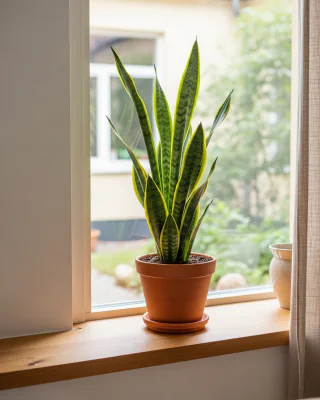
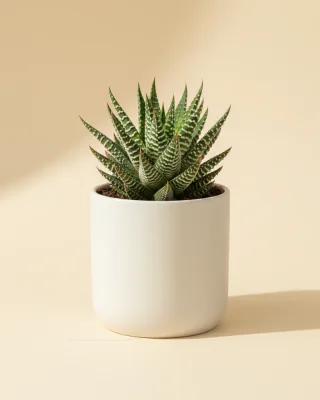
The zebra haworthia is a small, clump-forming succulent from the Cape region of South Africa. Its stiff, narrow, dark green leaves form a star-shaped rosette about 12 cm (5 in) tall and carry bands of raised white bumps, which give it the zebra look. Botanists have moved it to the genus Haworthiopsis, so its current name is Haworthiopsis attenuata, but it is still widely sold as Haworthia attenuata. It grows slowly and can live for decades.
Two things decide success. The first is light: it needs a bright spot, but hot midday sun can scorch the leaves, while too little light makes the rosette stretch and the white pattern fade. The second is water: it stores water in its leaves, so the mix must dry out between waterings. Soil that stays wet causes root rot, which is the main thing that kills it. Lithops, the living stones, is another small South African succulent, but it is far stricter about when it gets water.
It is often mixed up with Haworthiopsis fasciata. A zebra haworthia has white bumps on the inner face of its leaves too, while H. fasciata is smooth there. New rosettes, called offsets or pups, appear around the base. Once they have roots, you can separate them in spring or summer, let the cut dry for a few days and pot them up. A single leaf can also root.
When and how much water
Water thoroughly while it grows in spring and summer, until water runs out of the bottom of the pot, then empty the saucer so it never stands in water. Water again only once the mix has dried out. In warm, bright weather that can mean about once a week, in cooler or darker conditions less often. Water the mix rather than the rosette, since water that sits on the leaves can lead to leaf spot. Tepid rainwater is ideal.
From late autumn to early spring it rests. Keep it almost dry, with just enough water to stop the leaves from shriveling. Wet mix in a cool, dim winter room is the most common cause of root rot. If growth stops and leaves shrivel even though the mix is moist, take it out of the pot, cut away soft or dead roots, let it lie dry for about a week and repot it in fresh, dry mix.
Light and placement
Give it bright light with some protection from hot sun. An east or west window with a few hours of direct sun suits it well. A south window works if a sheer curtain softens the midday sun, because harsh sun can scorch the leaves. It tolerates lower light better than many succulents, but in too little light the leaves stretch and lose their color. If you move it outdoors for summer, do it gradually over a few weeks so it does not burn.
Feeding
It needs very little feed. Give it a low-nitrogen fertilizer at half strength once or twice while it grows in spring and summer. Do not feed it during its winter rest.
Temperature & humidity
Climate16–27 °C (61–81 °F), not below 10 °C (50 °F)
It grows best at about 16 to 27 °C (61–81 °F), so normal room temperature suits it. Keep it above 10 °C (50 °F) and out of cold drafts. It can take a short cold spell but not frost. A cool room in winter is fine as long as you keep it almost dry.
It needs no extra humidity. Ordinary dry indoor air suits it, and it likes good ventilation. There is no need to mist it, and water left sitting on the leaves can cause leaf spot.
Toxic to pets?
No. Pet-safe.
ASPCA lists Haworthia species as non-toxic to cats and dogs, and NC State Extension lists the zebra haworthia as non-toxic to pets. Eating any plant can still upset a pet’s stomach.
Pet-safety information in the JungleBook uses ASPCA reference data where available. It is reference information, not veterinary advice. ASPCA lists the whole Haworthia genus, so this applies to every Haworthia species, including this one.
Common questions
How often should I water a zebra haworthia?
Only when the mix has dried out. Then water thoroughly and let it drain. In warm, bright summer weather that can be about once a week. In winter keep it almost dry.
Why is my haworthia soft and mushy?
Almost always too much water and root rot. Take it out of the pot, cut away soft roots, let it dry for about a week and repot it in fresh, gritty mix. Water sparingly until it grows again.
Why is my haworthia stretching and losing its stripes?
It needs more light. In too little light the rosette stretches and the white pattern fades. Move it to an east or west window where it gets a few hours of sun.
Does a zebra haworthia need direct sun?
A few hours of gentle sun is good for it, but not harsh midday sun, which can scorch the leaves. Bright light with some shade from the hottest sun is ideal.
What soil does a zebra haworthia need?
A gritty, free-draining mix, such as cactus compost or potting compost mixed with grit or perlite. Use a pot with a drainage hole that is not much bigger than the plant.
How do I propagate a zebra haworthia?
Separate the offsets that grow around the base once they have roots, in spring or summer. Let the cut dry for a few days, then pot each one in gritty mix. A single leaf can also root.
Is Haworthia the same as Haworthiopsis?
For this plant, yes. The zebra haworthia was moved from Haworthia to Haworthiopsis, so Haworthia attenuata and Haworthiopsis attenuata are the same plant. Care is the same under either name.
Is a zebra haworthia safe for cats and dogs?
Yes. ASPCA lists Haworthia species as non-toxic to cats and dogs, and NC State Extension lists the zebra haworthia as non-toxic to pets. Eating any plant can still cause a mild upset stomach.
Sources
- This guide follows established plant-care guidance and official ASPCA pet-safety references. How we verify our plant data →
- Sources: NC State Extension supports the name change from Haworthia, the origin, the light, letting the soil dry out, root rot, leaf spot, the 16 to 27 °C (61–81 °F) range, the 10 °C (50 °F) minimum, household humidity, offsets, the difference from Haworthiopsis fasciata and the pet-safety wording. The RHS Haworthia attenuata profile supports the size, the flowers, protection from hot sun, moderate watering in growth, the almost dry winter, the light feed, low humidity, ventilation and mealybugs. The RHS cacti and succulents growing guide supports thorough watering once the surface is dry, never standing in water, rainwater, the winter rest and the gritty compost. Wisconsin Horticulture Extension supports the east or west window, stretching and fading in low light, gradual moves outdoors, weekly summer watering, treating root rot and offsets. The ASPCA Haworthia record supports the pet-safety wording.
Last reviewed: