


How to propagate African milk tree
Euphorbia trigona

Quick answer
Protect skin and eyes before taking a cutting. Let the milky sap stop and the cut callus, then root the piece in sharply draining succulent mix.
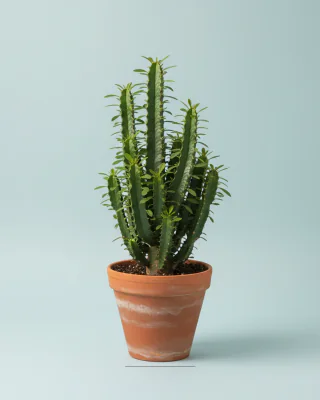
 Not sure it’s this plant?Check yours with a photo, free
Toxic to pets
What plant material to use
Use a firm, healthy stem tip or stem section from Euphorbia trigona. Take cuttings in spring or early summer. Air layering is another option.
How to propagate this plant
Use a stem cutting: make a clean cut, manage the milky sap, let the wound dry or callus, then root the piece in sharply draining mix. Air layering is a separate method. There is no set cutting length or rule on rooting hormone.
Start in spring or early summer in a warm, bright indirect indoor position with cactus or succulent mix that drains freely. Protect the cutting from prolonged wetness while roots form.
Wear gloves and eye protection. Cut a firm, healthy stem with a clean sharp tool, let the latex stop and the wound dry, prepare clean well-drained mix, insert the base without burying foliage, and water lightly while checking for roots.
Signs of roots or failure
A cutting that is progressing stays firm at the base rather than soft. Later, resistance when you tug gently and new growth show that it has rooted. There is no set rooting day or root length.
Treat a leaking or contaminated wound, soft or darkening base, mold, persistent shriveling or no root development as a reason to stop and inspect the medium and cutting.
Aftercare and hygiene
Once rooted, move the cutting to its own well-drained succulent container and keep it in bright filtered or indirect light while growth resumes. Keep watering on the established plant’s dry side rather than keeping new roots wet. There is no set schedule for feeding, pot size or moving it to its final spot.
Use clean tools and containers, keep sap away from skin and eyes, wash or isolate contaminated material, and keep failed cuttings and leftover mix out of the parent pot.
All African milk tree guides
Related plants

Last reviewed: