



How to propagate round-leaf calathea
Calathea orbifolia
A practical guide to making more round-leaf calathea at home: the right method, the right time of year, and what to expect.
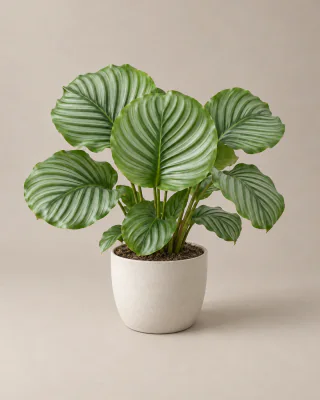
 Not sure it’s this plant?Check yours with a photo, free
Pet-safe
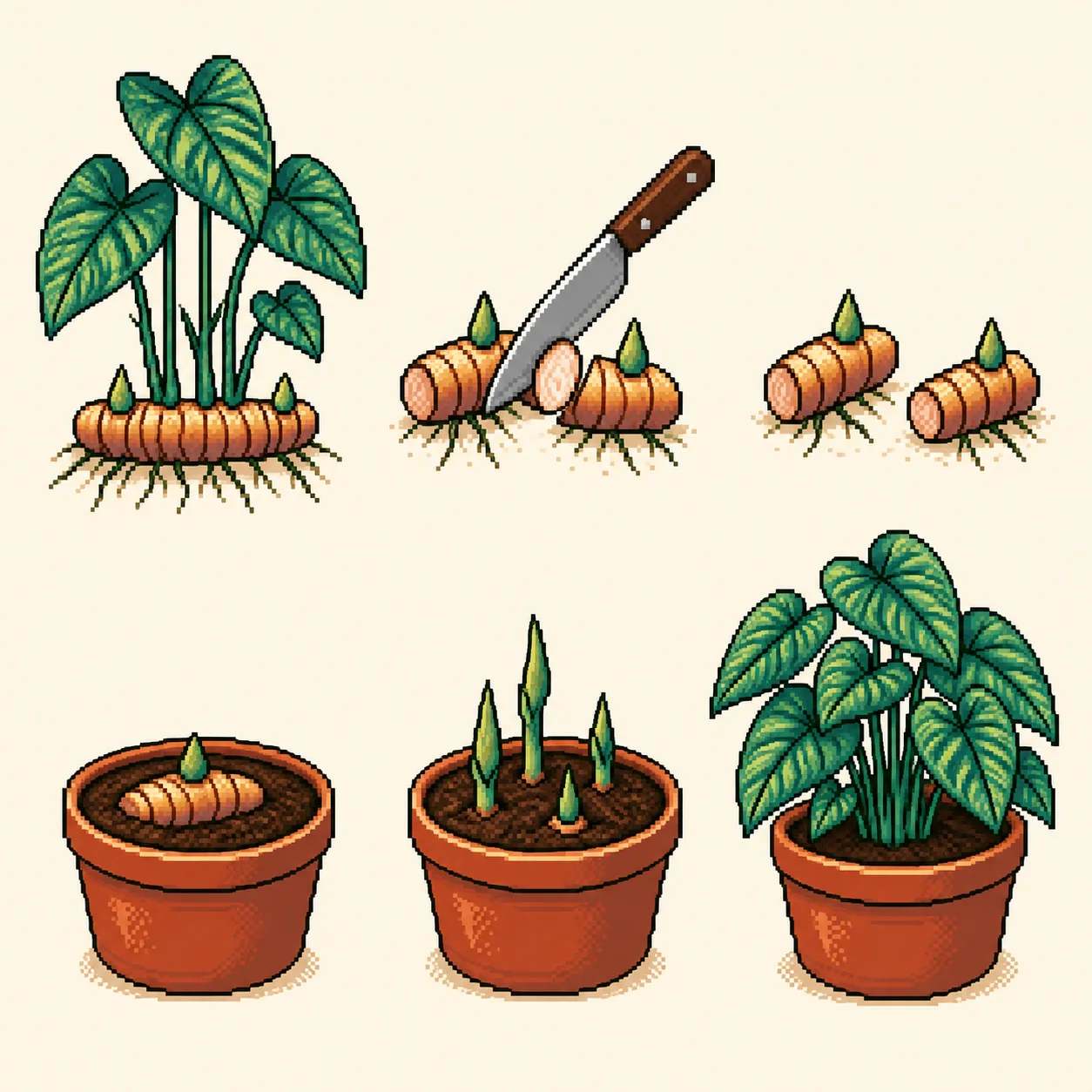
How to propagate by division
Division multiplies round-leaf calathea by splitting the root ball in spring, so each section has its own roots and shoots. The new plants settle in quickly because they already have a mature root system.
- 01
Water the plant thoroughly the day before dividing: well-hydrated roots are more resilient.
- 02
Slide the plant gently out of its pot. If it’s stuck, run a knife around the inside edge.
- 03
Shake off the loose potting mix to expose the root system. For clumping plants, you’ll see distinct crowns or growing points.
- 04
Tease the clumps apart by hand where possible. For tightly bound roots, use a clean sharp knife or pruning shears. Each section needs at least one healthy shoot and a decent portion of roots.
- 05
Pot each division into fresh, well-draining potting mix at the same depth it was growing before.
- 06
Water gently, then keep the divisions out of strong direct sun for 1–2 weeks while they settle. Skip fertilizer for the first month.
- 07
New growth is the sign that the plant has adjusted. After 4–6 weeks, resume normal care.
All round-leaf calathea guides
Keep reading
Related plants
Common questions
What is the best way to propagate round-leaf calathea?
The most reliable method for round-leaf calathea (Calathea orbifolia) is division. It requires some care but is well within reach of most houseplant owners.
When should I propagate round-leaf calathea?
The best time is spring, when the plant is actively growing and roots form most quickly.
How long does it take round-leaf calathea to root?
There is no rooting stage: each division or offset already has its own roots. Fresh new growth is the sign that it has settled.
Propagation guidance is based on genus-level horticultural knowledge. Individual specimens can vary.
7 steps · 4–6 weeks · Last reviewed: